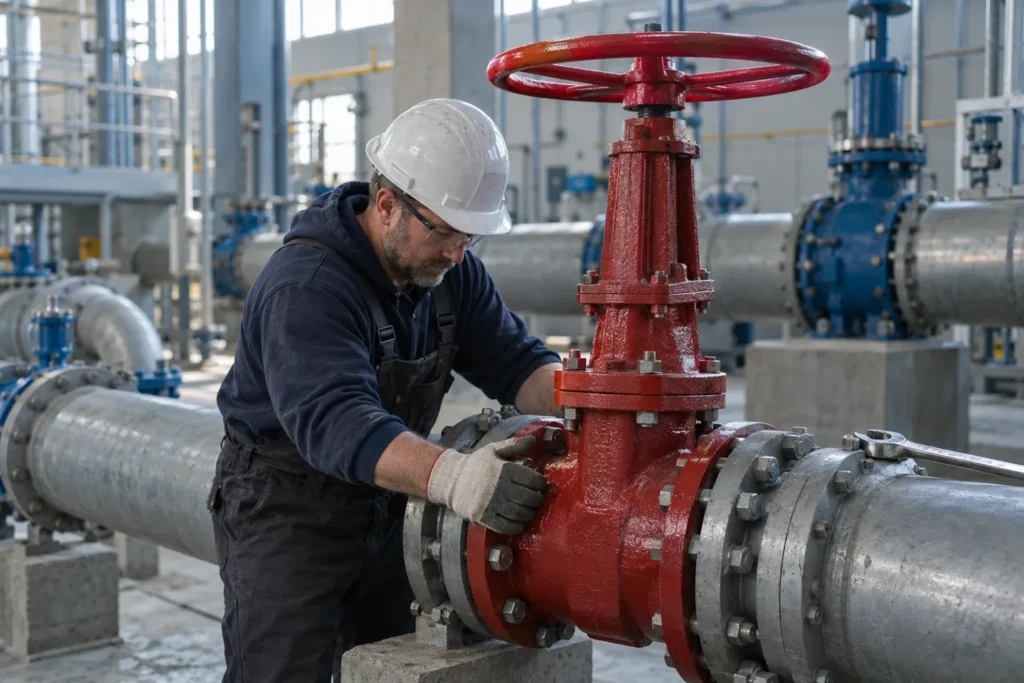
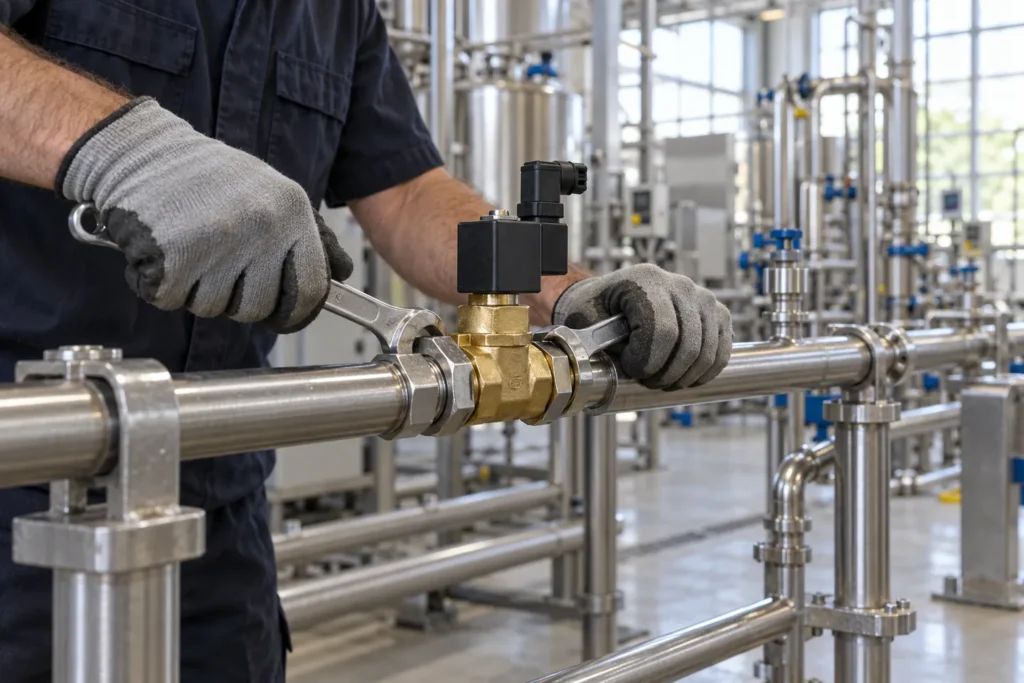
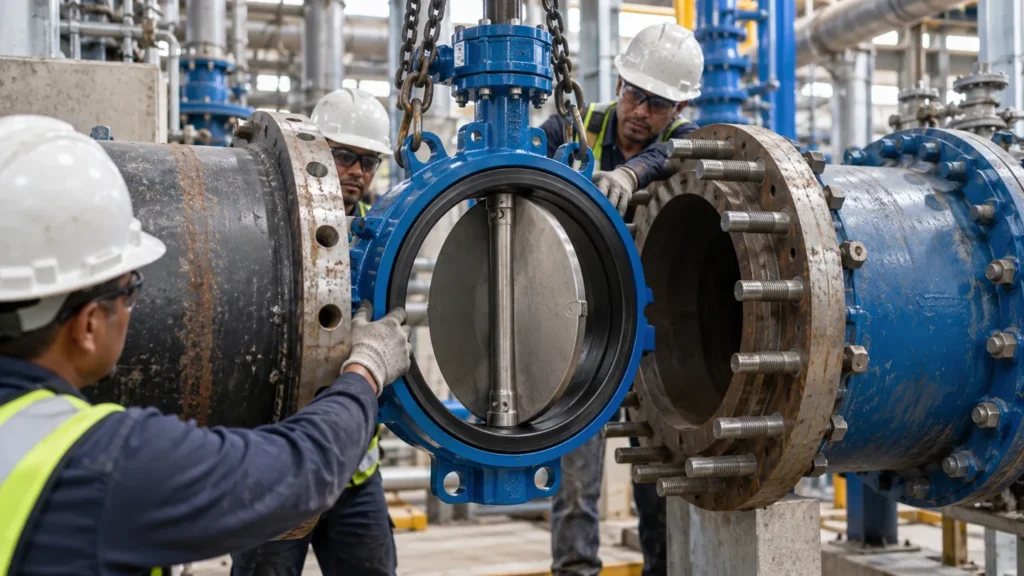
A 1-inch brass gate valve sells for about $11 at a US home improvement store. A 12-inch cast steel flanged unit lists at $3,576 on an industrial supply site. Both are gate valves, and both numbers are correct. The gap between them is not a mystery or a random markup. It is the sum of five specific decisions: size, material, pressure class, purchase channel, and actuation. The layers below break a gate valve price into those five parts, with real listed numbers at every step, so the next quote you read tells you what the money actually buys.
What a Gate Valve Costs by Size
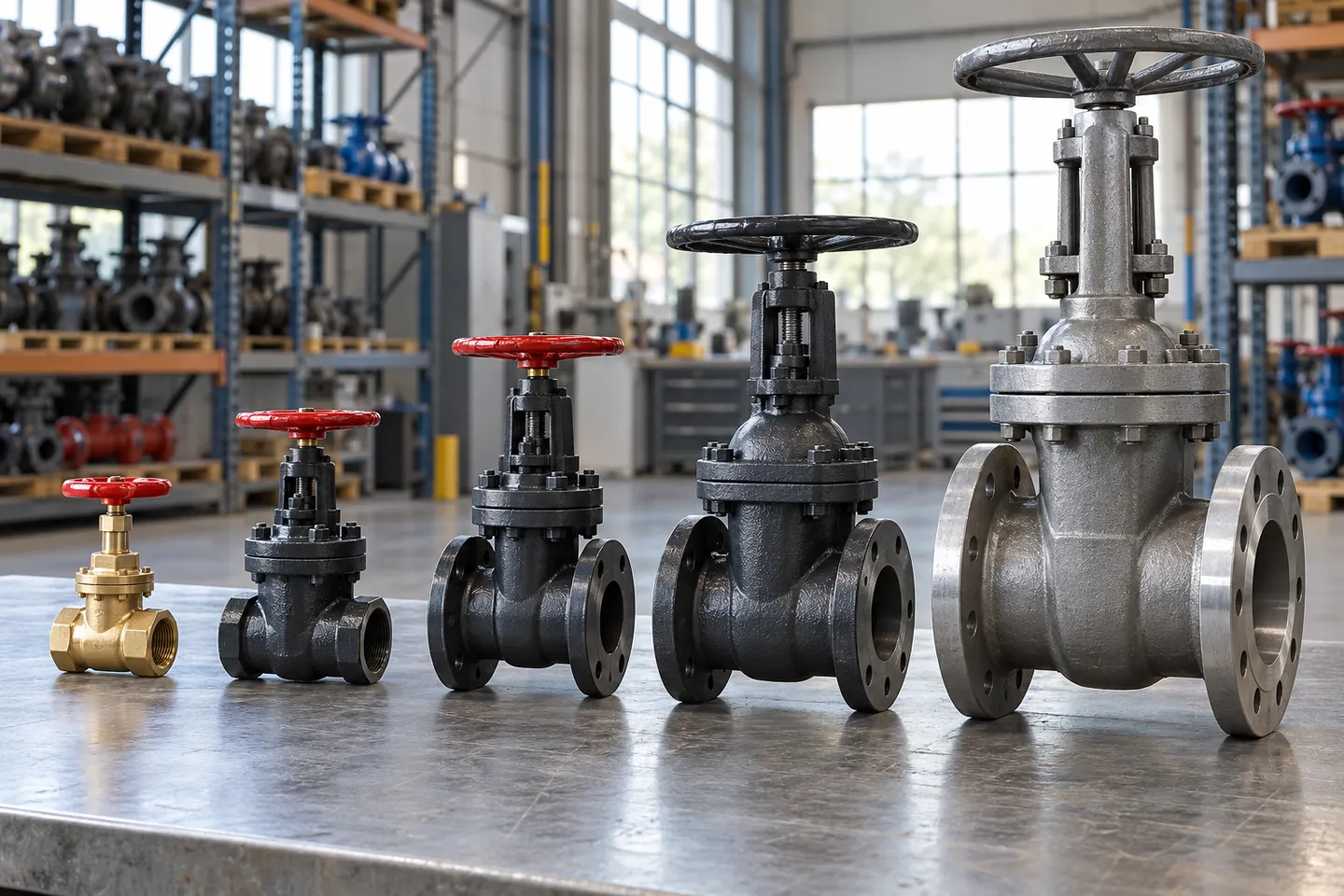
Start with the numbers most buyers actually meet. At Lowe’s, a typical small gate valve runs $11, with most items between $9 and $13 (Lowe’s, 2026). Those are 1/2 to 2 inch brass valves for residential water lines. Step up to an irrigation supplier and the same brass construction moves to $55 to $88 for a 2 inch valve, and $139 to $168 for 3 inch (IrrigationKing, 2026). The valve got bigger and the piping got more serious, so the price climbed before the material even changed.
Industrial listings show the same ladder at a higher floor. A 1/2 inch Class 150 flanged valve in 316 stainless steel lists at $293.75 (PipingNow, 2026). An 8 inch ductile iron flanged valve with a resilient wedge seat is $1,860.55 at a waterworks distributor (USA BlueBook, 2026). A 12 inch cast steel gate valve lists at $3,576.99 on sale, down from $5,890.30 (Valveman, 2026). One distributor’s gate valve catalog spans $153 to $1,287 across stocked sizes and grades (Cooney Brothers, 2026).
Gate valve price bands, US retail and distributor listings, 2026
| Size | Typical price | What the item is |
|---|---|---|
| 1/2-2 in | $9-$13 | Brass threaded, home improvement retail |
| 2 in | $55-$88 | Brass, irrigation supplier |
| 3 in | $139-$168 | Brass, irrigation supplier |
| 1/2 in | $293 | 316 SS flanged Class 150 |
| 8 in | $1,861 | Ductile iron flanged NRS resilient wedge, waterworks distributor |
| 12 in | $3,577 | Cast steel flanged, industrial supplier |
Size drives price for a physical reason. A bigger nominal size means more casting volume, thicker walls to hold the same pressure, and much more flange machining. The material and the labor both scale with the metal you can hold in your hands. The number also moves with the market: irrigation contractors who swap valves for a living are currently asking each other what a 3 inch gate valve costs now, because the answer changed on them (r/Irrigation, 2024).
One discipline applies to every number above: these are single-unit catalog prices, uninstalled and unactuated. They exclude installation labor, they exclude an actuator, and they say nothing about the test certificates a project may demand. Size also explains only the ladder between small and large. It does not explain the spread at the same size, which is where the real money is lost or saved.
Where the 5-10x Spread Comes From: Material and Trim
The material spread
5-10x
A 1-inch brass gate valve and a 1-inch stainless gate valve are the same size. The metal alone moves the price by a factor of 5 to 10.
Marine hobbyists run into this wall first: one reef-keeper posted the complaint that two 1-inch gate valves cost over $100 and walked away to buy ball valves instead (r/ReefTank, 2025). The sticker shock is real, and so is the reason behind it.
Body Materials, From Brass to CF8M
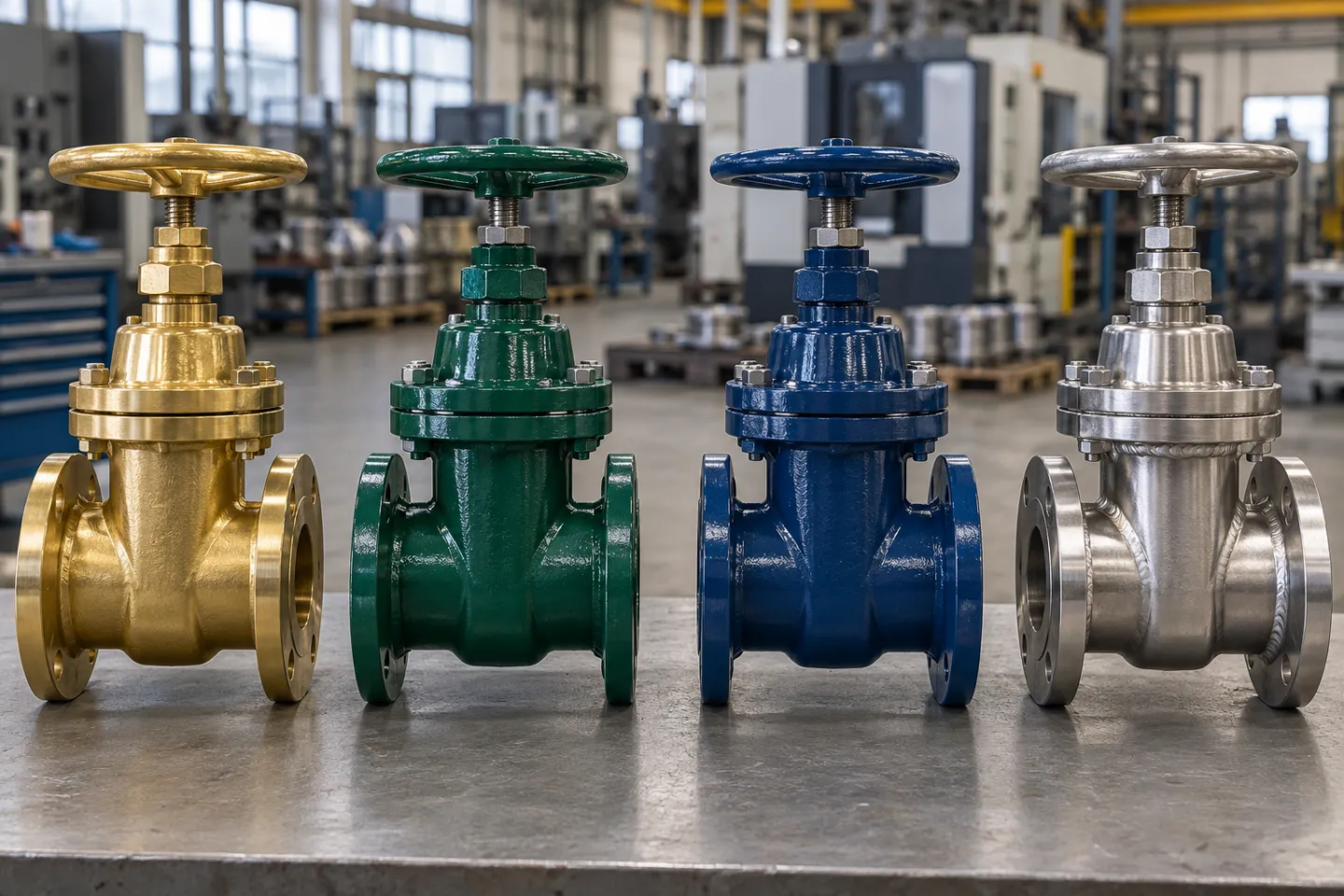
Brass sits at the bottom of the ladder for a reason. It casts cheaply, machines cleanly, and handles neutral water at modest temperatures, which is exactly what residential and light commercial lines need. Cast iron follows for larger water service, and ductile iron has largely replaced it in waterworks because it bends before it breaks. A carbon steel body in grade WCB moves the valve into steam and high-temperature service, and the price moves with it. Stainless steel sits at the top: CF8 (304) for general corrosion resistance, CF8M (316) with molybdenum for chloride and chemical exposure. Industrial suppliers list the full ladder as standard options, WCB through SS304 (CF8), SS316 (CF8M), and SS316L (CF3M), because buyers are expected to choose (manufacturer flanged gate valve specifications, 2026).
The premium at each step buys alloy content and casting care, and each step moves the casting price up a multiple, not a percentage. It also buys an application. Brass in a hot oil line is a failed valve waiting to happen; carbon steel in a food line is a sanitation audit waiting to happen. Before comparing prices, confirm the media temperature limit and the corrosion class you actually need, then demand quotes on that grade only.
Stem and Seat Choices That Move the Number
Two structural choices move the price within one material grade. The first is the stem. A rising stem (OS&Y) lifts the handwheel as the valve opens, giving visible position indication and packing access above the valve. It costs more in material and needs vertical clearance. A non-rising stem turns in place, fits buried or confined installations, and costs less. The same factory’s flanged line shows the rating difference plainly. Rising stem versions go to 64 bar and -20 to 150 °C with PTFE seats. Non-rising versions go to 25 bar and -10 to 80 °C with NBR seats (factory flanged gate valve specifications, 2026).
The second choice is the seat. A resilient seat is a wedge encapsulated in EPDM or NBR; it seals tightly, costs less, and can be replaced when it wears. A metal hard seat survives temperatures and abrasive media that destroy elastomers, up to 425 °C on steam-rated bodies, but it costs more to lap and more to buy. Resilient for clean water, metal for steam and slurry: choose by media, not by price tag.
Body and seat grades, what they cost and where they are required
| Grade | Relative price | Required when | Boundary to check |
|---|---|---|---|
| Brass | 1x (baseline) | Neutral water, low pressure | Scale and dezincification in hot or aggressive water |
| Ductile iron | 1.5-2x | Buried waterworks service | Confirm AWWA-grade coating and wedge encapsulation |
| WCB carbon steel | 2-3x | Steam and high temperature | Verify seat rating: PTFE seats stop near 150 °C, metal seats reach 425 °C |
| SS304 (CF8) | 3-5x | General corrosion exposure | Confirm chloride level before choosing over 316 |
| SS316 (CF8M) | 4-6x | Chlorides and chemicals | Price jumps again for low-carbon CF3M on welded lines |
Every stainless step is a quote you should split out line by line, because suppliers substitute grades quietly. Specify the cast grade (CF8, CF8M, CF3M) in the purchase order, not just “stainless”.
Retail, Distributor, or Factory-Direct: The Channel Gap
The same valve carries different numbers in different channels, and the difference is structural, not haggling room. A manufacturer-published price guide puts valves of 2 inches and below at $20 to $100, and valves of 10 inches and above at $500 to $3,000 or more, factory terms. Compare that with the retail listings above for the same nominal sizes and a 2 to 5 times channel gap appears. Nothing fraudulent separates the numbers. Each channel sells a different bundle.
Retail pricing includes shelf space, split quantities, and painless returns. Distributor pricing adds account terms, project documentation, and local stock you can call the same day. Factory-direct pricing strips all of that out and hands you the jobs the channel used to do: freight, customs, incoming inspection, and document handling. A factory quote prices standard valves at 7 to 10 workdays and custom orders at 15 to 30 days (VINCER, 2026). That number is only cheaper if your team can absorb the rest of the jobs.
What each channel’s price actually includes
| Channel | Price level | Included in the number | You must handle yourself |
|---|---|---|---|
| Retail / home improvement | 3-5x factory | Split quantities, returns, shelf stock | Nothing (that is the point) |
| Distributor / waterworks | 2-3x factory | Stock depth, account terms, project docs | Warehousing between projects |
| Factory-direct / FOB | 1x | The valve and its certificates | Freight, customs, incoming inspection, documentation |
The practical rule falls out of the table: align the channel before comparing the number. A distributor price against a factory quote is not a negotiation, it is a category error. Pay the distributor premium when a stopped line costs more per hour than the premium itself; buy factory-direct when the order fills a container and your inspection process is real.
If the channel math says factory-direct fits your order volume, put a real FOB number next to your distributor quotes.
Request a Factory QuoteMaking Quotes Comparable: Pressure Class, Standards, Actuation
Three quotes on “the same” valve can differ by a factor of two because they are not the same valve. Pressure class is the first hidden variable. A PN16 body and an ASME Class 300 body for the same nominal size carry different wall thicknesses and different test pressures, so they can never be the same price. Standard domain is the second: ASME, DIN/GB/JIS, and AWWA describe different flanges, faces, and test expectations, and waterworks specifications (AWWA) sit in their own world from general industrial service. Document scope is the third. A quote that includes a hydro test, mill test certificates, and certification copies costs more to produce than one that includes none of them. The cheap version is only cheaper until the site asks for paperwork.
Lock the Quote Before You Compare It
Send every supplier the same five-line specification and the quotes become comparable almost by themselves:
RFQ lock-in list
- Size in DN and inches, named standard (ASME, DIN, GB, JIS, or AWWA)
- Body grade and trim grade by cast designation (WCB, CF8, CF8M)
- Seat material with its temperature rating (NBR, EPDM, PTFE, metal hard seal)
- Required tests and documents (hydro test, MTC, certification copies)
- Actuation scope, if any, as a complete package with torque, signal, and protection rating
A quote missing any of the five lines is not cheap. It is unfinished.
Actuation Is the Biggest Single Adder
The largest line item a gate valve budget can gain or lose is actuation. An actuated package prices the valve, the actuator, the torque match, and the controls as one unit. Multi-turn electric actuators sized for gate service span 50 to 10,000 Nm across DN50 to DN300 bodies (VINCER, 2026). The 4-20 mA modulating signals, IP65 to IP68 protection, and ExdII BT4/CT4 explosion-proof grades are ordering fields, not extras. Pneumatic spring-return packages from 5.7 to 4,678 Nm cover the fail-safe positions (VINCER, 2026). Price the actuator as a line item or the whole budget lies.
The market is moving in one direction. The electric actuator market is projected to grow from $18.1 billion in 2026 to $24.0 billion by 2031, a 5.8% CAGR (Knowledge Sourcing Intelligence, 2026). The combined valves and actuators market grows from $75.9 billion to $108.15 billion over the same period, a 7.34% CAGR (Mordor Intelligence, 2026). Translated into procurement: the actuated share of every valve budget grows every year, and a package priced without its automation line is a budget that will be revised upward.
The matrix below condenses the whole station into one decision tool:
Gate valve selection matrix: when the choice stops working
| Solution | Fits when | Switch signals |
|---|---|---|
| Resilient-seated NRS ductile iron PN16 | Buried water service, ambient temps | Seat temp above 80 °C, or Class-rated project specs arrive |
| Rising stem WCB Class 150-300 | Steam and industrial process | Media turns corrosive, or space above the valve disappears |
| SS316 sanitary/corrosion line | Chlorides, chemicals, food contact | Dry budget: CF8 covers the media at lower cost |
| Electric multi-turn package (50-10,000 Nm) | Remote or automated sections | Power unreliable on site, or cycle count too low to pay back |
| Pneumatic spring-return package | Fail-safe close/open required | No clean air supply, or fail position needs power-on reset |
Run every quote through the matrix row by row. If a vendor’s price implies a different row than your spec says, that vendor has not quoted your project.
What to Demand From a Gate Valve Supplier
The specification discipline above only works if a supplier can actually honor it. That reduces the vendor question to a short checklist:
Supplier check
- Certificates that cover the shipment: ISO 9001:2015 quality system, CE, FDA where media touches food, RoHS, SIL where a safety function is specified
- Range coverage across the grades you specified, from DN15 threaded through DN600 flanged, 64 bar bodies, and 425 °C metal-seated steam service
- Documents with the delivery: mill test certificates, 100% inspection photos and video, commissioning video
- Custom capability in function, material, and standard (ASME, DIN, GB, JIS)
- Response speed: quote turnaround in 24 hours for standard items and 48 hours for multi-item projects
One manufacturer that builds against exactly this list is VINCER, a Dongguan valve maker whose actuated gate valve line spans DN50 to DN300 at 10 to 64 bar with metal hard seats rated to 425 °C, paired with multi-turn electric actuators from 50 to 10,000 Nm (actuated gate valve specifications, 2026). We hold ISO 9001:2015 certification on the quality system and CE, FDA, RoHS, and SIL on the product lines (certification page, 2026). We quote standard items within 24 hours and ship them in 7 to 10 workdays; custom orders take 15 to 30 days. Mill test certificates, full inspection photos, and a commissioning video ship in the box as a default, not an upcharge. That is the concrete meaning of “supplier who honors the spec”: the checklist is the product.
When the Cheapest Valve Costs the Most
A plumbing forum thread about a 3/4 inch gate valve stuck open ends with the poster describing debris packed into the seat area as the cause (Plbg.com forum, n.d.). On a boat forum, a failed gate valve turns its handle freely while the gate does not move at all, a stem-to-gate connection gone (TrawlerForum, 2013). A UK diy community puts it bluntly: “Gate Valves always fail”, and the poster’s fix was replacing them with lever ball valves at a cost of “a fiver and 20 minutes” (Screwfix Community, 2012). These are not defective batches. They are the standard failure modes of the product category, and cheaper valves reach them sooner.
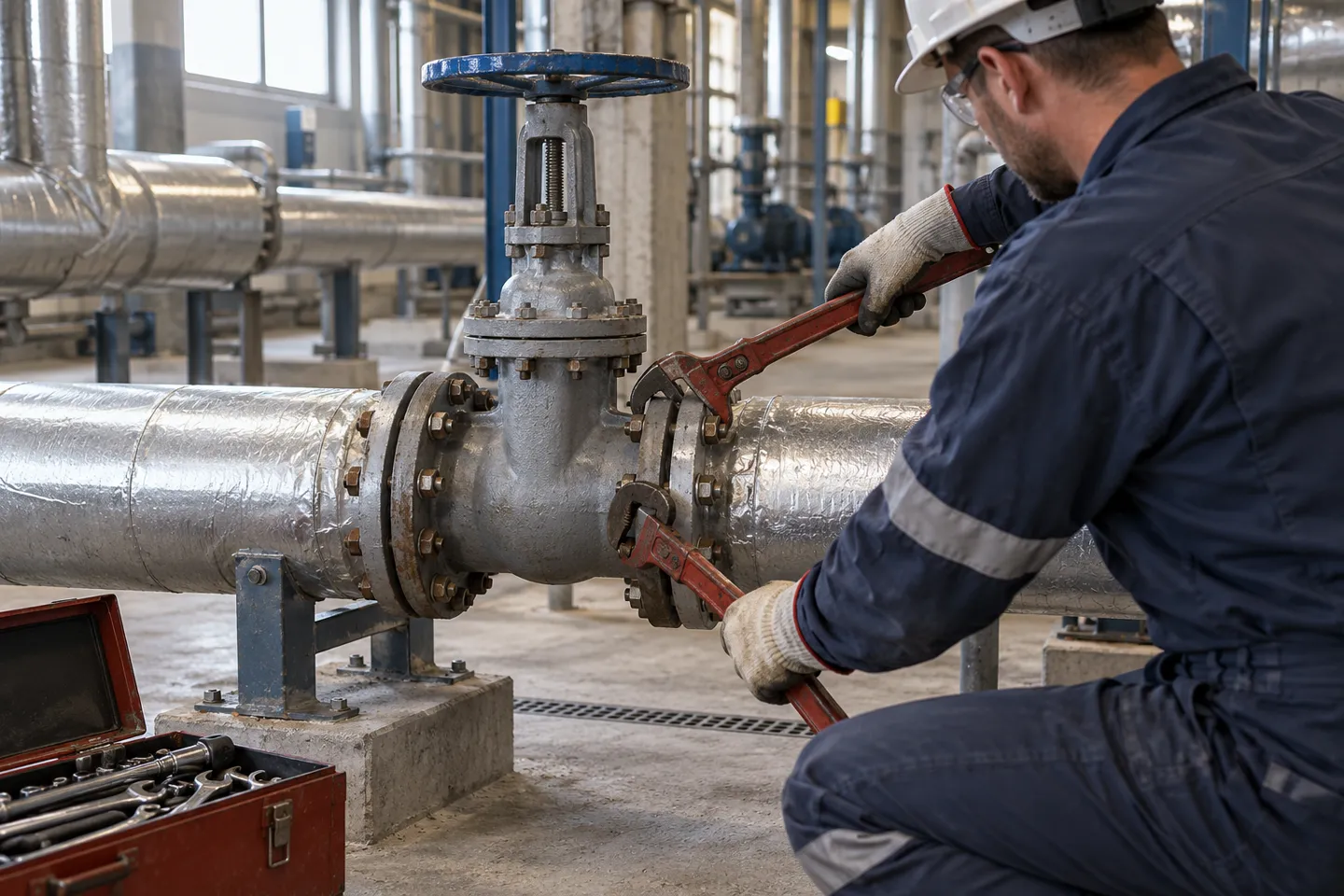
The bill for that failure is mostly not the valve. One plumbing cost estimator puts gate valve replacement at $375 to $600 installed, against a $10 to $300 part. A New York water main contractor makes the same point from the other side (Balkan Plumbing, 2012). For most homeowners the low cost of a new valve makes rebuilding the old one pointless. On an industrial line, swap the plumber’s hourly rate for production downtime and the ratio gets worse, not better.
The failure bill is inverted: the valve is the small line, labor and downtime are the large ones. Debris in the seat, a worn stem thread, or a corroded wedge turns a $50 saving into a $500 callout. The three documents that prevent the worst versions (hydro test, mill test certificate, inspection photos) are exactly the three things a too-cheap quote omits.
Cheap valves get cheap in invisible places: wall casting margins, seal compound grades, and the test bench time that never happens. The defense costs nothing at quote time. Ask which tests were performed, ask for the certificates with the shipment, and treat “we’ll send photos” as a delivery item with a line number.
Budgeting Gate Valves as a Procurement Line
Re-read the layers above as budget lines and the article’s numbers become a procurement method. The material layer says the grade decision is worth 5 to 10 times more than any negotiation: buy the corrosion class the media demands and stop there. The channel layer says align every bid to the same channel before comparing. A factory quote needs your inspection process to be real; a distributor premium is the price of someone else’s stock. The class and document layer says an unfinished quote is not a cheap one, so the RFQ lock-in list is part of the budget process, not a nicety.
The actuation layer deserves its own line because it is the one that moves every year. The 5.8% CAGR in electric actuation and 7.34% CAGR across valves and actuators are market averages. They translate into a simple instruction: price actuated packages early, as complete units, and re-quote the automation line annually. The failure layer is the risk reserve. A $375 to $600 replacement event per failed valve is the expected cost of skipping test documents. The certificates are cheaper than the reserve.
That is the whole argument in one sentence: a gate valve price is five decisions stacked on top of each other, and a buyer who prices each decision separately stops paying for decisions nobody made.
Price Your Gate Valve Specification
Send sizes, grades, and standards. VINCER quotes standard items within 24 hours, with no minimum order quantity.
Get a Factory QuoteReferences
- Lowe’s. “Gate Valves for Reliable Water Control.” 2026. https://www.lowes.com/pl/valves-valve-repair/gate-valves/2514178323
- IrrigationKing. “Brass and Ductile Cast Iron Gate Valves.” 2026. https://www.irrigationking.com/valves/gate-valves.html
- PipingNow. “Gate Valves for Sale – Stainless Steel, Threaded, & Flanged.” 2026. https://pipingnow.com/collections/valves-gate-valve
- USA BlueBook. “Ductile Iron Gate Valve, 8″ FLG, NRS, Resilient Wedge.” 2026. https://www.usabluebook.com/ductile-iron-gate-valve-8-7-flg-nrs-resilient-wedg-300755
- Valveman. “Gate Valves for Steam.” 2026. https://valveman.com/collections/gate-valves
- Cooney Brothers. “Gate Valves.” 2026. https://www.cooneybrothers.com/gate-valvesKnowledge Sourcing Intelligence. “Electric Actuator Market: Size, Share, Trends, Forecast 2031.” 2026. https://www.knowledge-sourcing.com/report/electric-actuator-market
- Mordor Intelligence. “Valves and Actuators Market Size & Share Analysis.” 2026. https://www.mordorintelligence.com/industry-reports/valves-and-actuators-market
- Plbg.com Plumbing Forum. “3/4″ Muller gate valve stuck open.” n.d. https://www.plbg.com/forum/read.php?1,705307,705357
- TrawlerForum. “Failed gate valve.” 2013. https://www.trawlerforum.com/threads/failed-gate-valve.11663/
- Screwfix Community. “Gate valves will not stop water flow.” 2012. https://community.screwfix.com/threads/gate-valves-will-not-stop-water-flow.127879/
- Balkan Plumbing. “Broken Gate Valve Repair Or Fixing Valves That Won’t Close.” 2012. https://www.balkanplumbing.com/gate-valve-repair-not-close-stop-water/
- r/ReefTank (Reddit). “Why are gate valves so expensive.” 2025. https://www.reddit.com/r/ReefTank/comments/1hzylc9/why_are_gate_valves_so_expensive/
- r/Irrigation (Reddit). “Swapped out two 3″ ball valves for gate valves.” 2024. https://www.reddit.com/r/Irrigation/comments/19akrd6/swapped_out_two_3_ball_valves_for_gate_valves/