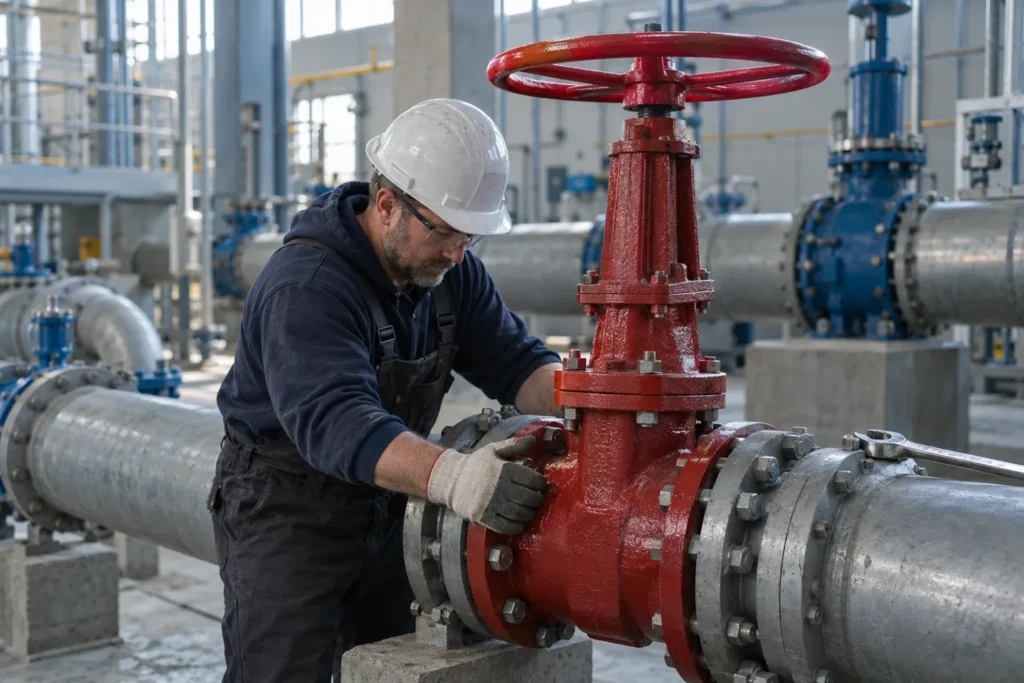
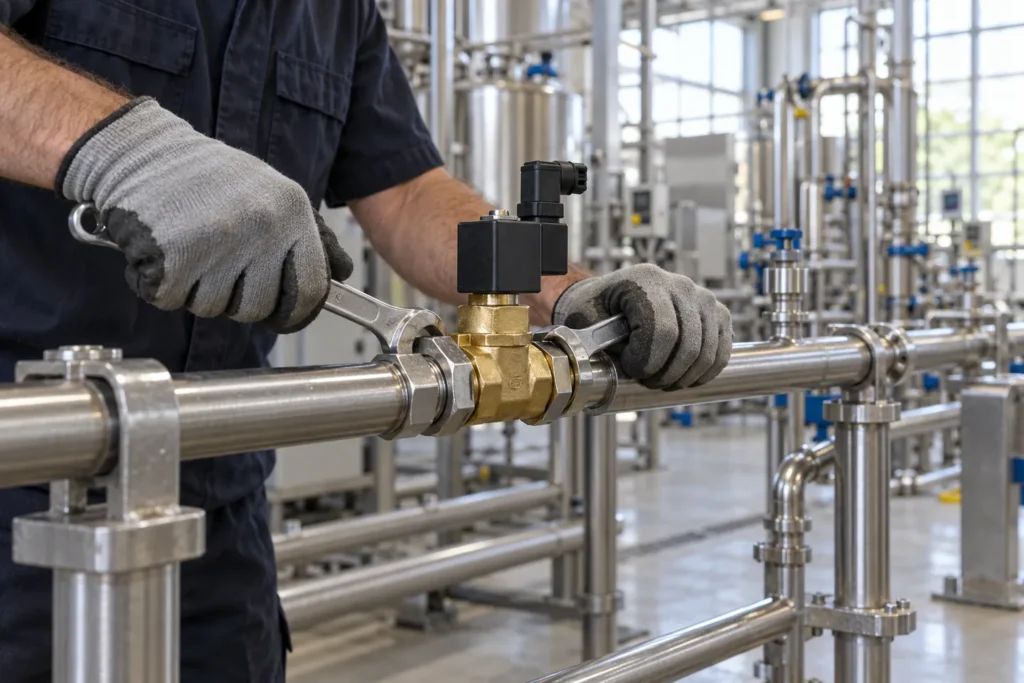
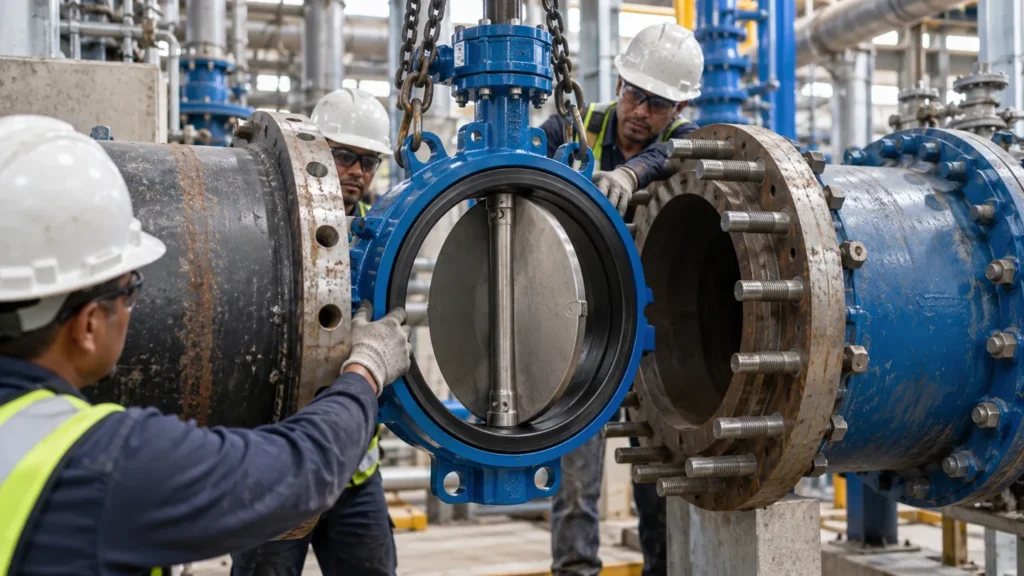
The valve on your main line asks for ten full turns of the handwheel. After a decade of sitting untouched, it may not give those turns back. That fact shapes every decision in a gate valve installation. Which valve you pick, how you set it into the pipe, and what you put in writing before it ships.
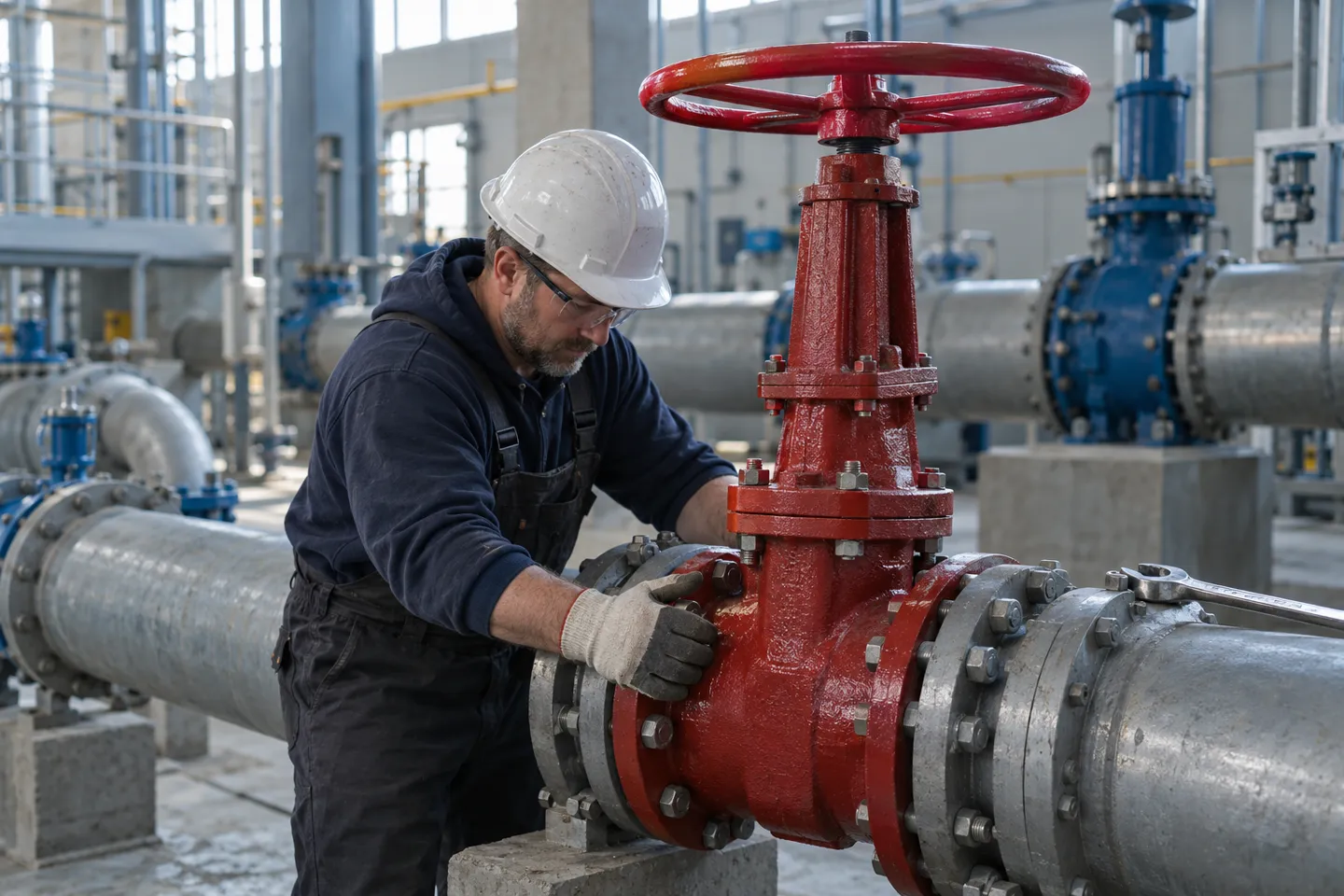
What a Gate Valve Is (and What It Isn’t)
A gate valve does one job. A wedge-shaped gate rises or drops perpendicular to the flow. When the gate is up, the bore through the valve is completely clear. That full opening is why gate valves sit on mains and isolation points where you want almost no resistance while water runs. It is also why a gate valve is a poor throttling valve: a wedge half-lowered into a stream chatters, erodes, and chews up its own seating surfaces.
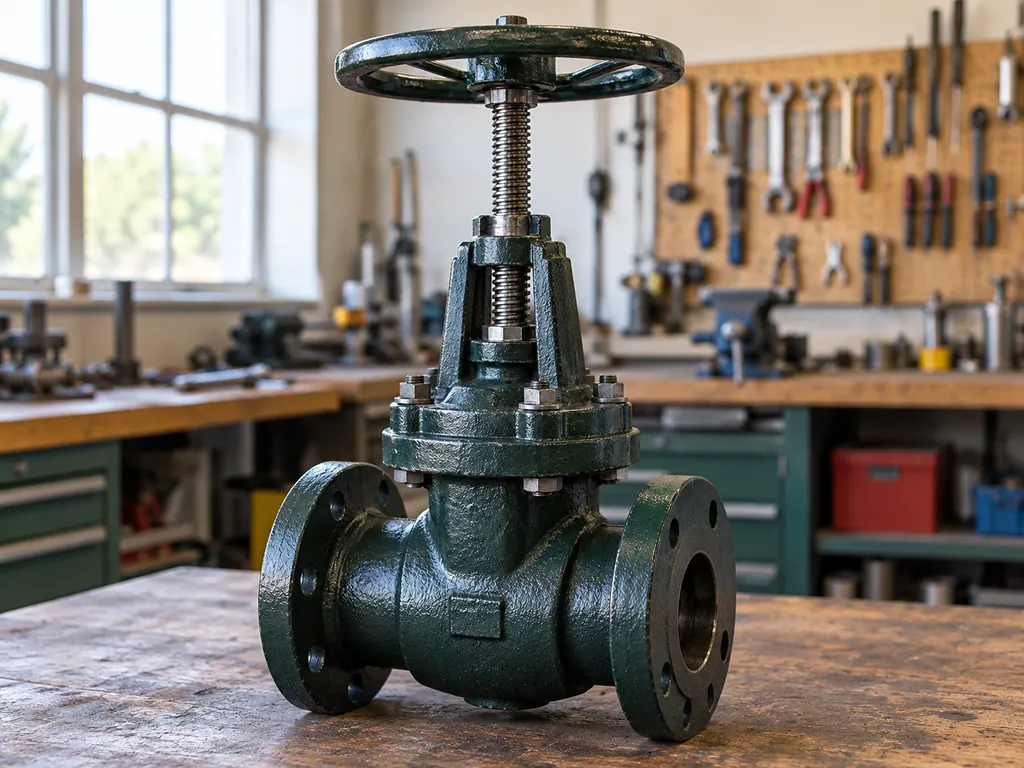
Before you install anything, confirm the valve actually is a gate valve. Home pipes collect lookalikes, and the most common mix-up is with a globe valve. The two cost you differently if you install the wrong one. A globe forces flow through an internal baffle, so it permanently eats pressure on a main. Many globes also carry a fixed flow direction stamped on the body. A gate usually has none.
Two checks before you call it a gate valve
- Stem check: crack the valve open two turns. A rising stem climbs out of the bonnet as you turn. A handwheel that spins in place is either a non-rising gate or a globe.
- Body check: a gate has a tall, narrow bonnet and a wedge behind the seat. A globe has a rounded body with an internal baffle that splits the flow path.
Before any wrench work, the routine is the same for every valve type. Skipping a step is how a five-minute job becomes a flooded weekend. Shut the upstream supply fully. Open a downstream faucet to drain the line and kill the pressure. Wait for the flow to stop before you touch a joint. And if the pipe is old galvanized steel, assume the threads are brittle before your wrench assumes anything.
Gate Valve Types by Stem and End Connection
Once you know it is a gate, the catalogue splits along two axes: how the stem moves and how the valve joins the pipe. Get both right and the rest of the installation is routine.
Rising stem gates lift the stem as they open. You can see valve position from across the room, which plant operators love, and the stem needs open air above the handwheel for its full stroke. In a shallow pit, under a boiler, or against a wall, that travel has nowhere to go. Non-rising stems keep the handwheel at a constant height and drive the gate internally, which is exactly why they are the standard choice for buried service and tight spaces. The catch: you can no longer see the position, and a half-open valve looks like a closed one from the outside.
Install posture, three checks
- Bonnet up, stem vertical: the standard posture.
- If the body carries a flow arrow, follow it.
- Confirm orientation before the valve is bolted in, not after.
Orientation matters more than most guides admit. The standard posture is bonnet up, stem vertical. Lay a gate valve upside down and sediment settles into the wedge pocket, the packing stops draining, and the valve starts its life pre-fouled. Most gate valves seal in both directions, but if the body carries a flow arrow, follow it. Check the flow arrow before the valve is bolted in, not after.
End connections decide the working posture of the whole job.
Connection ends and what they demand
| End type | Typical use | Who usually installs | The one action that matters |
|---|---|---|---|
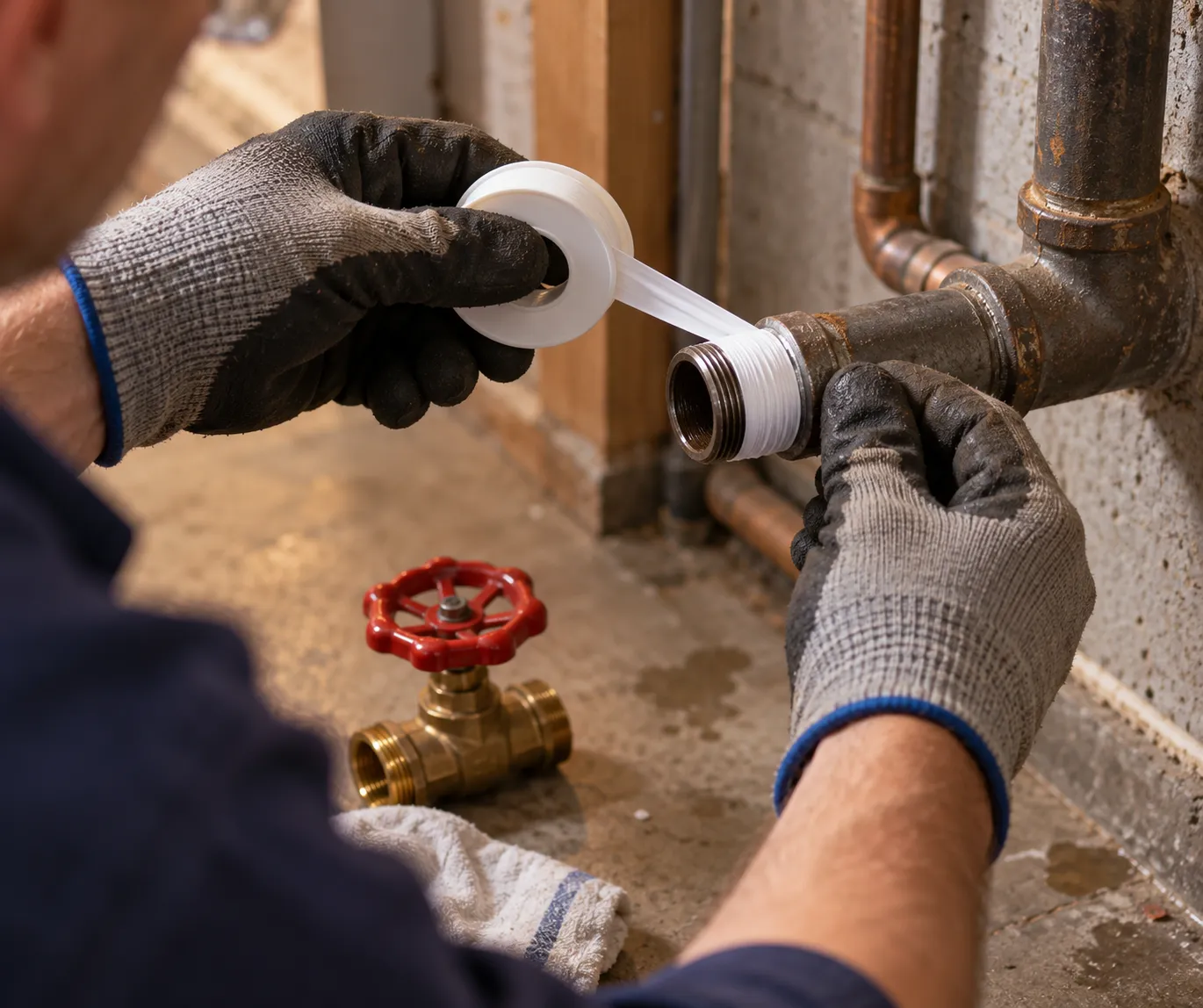
| Threaded | Branch lines and small home mains | DIY and plumbers | Seal with PTFE tape and dope, snug plus a quarter turn, never gorilla-tight brass |
| Flanged | Plant piping and water mains | Pipefitters | Faces parallel before any bolt takes load |
| Socket weld or butt weld | High-temperature and high-pressure steel lines | Certified welders | Weld before the valve goes in, or shield the body from heat |
| PVC solvent or compression | Irrigation, pools, light duty | DIY | Support the pipe so torque never reaches the valve body |
Threaded and flanged ends cover most of what you will meet. ⭐ Threaded make-up is where DIY jobs live and die: layers of tape and a dope thread, snug plus a quarter turn. Brass cracks under wrench heroics. Flanged ends move you into pipefitter territory, and the stakes climb with the bore, which is where the next section picks up.
Repair or Replace, Gate or Ball: The Decision Before Installation
Can the old valve be saved?
Stand in front of a stuck gate valve and the worst move is the confident one. Force a seized wedge and the stem or its brass nut gives up first. Homeowners report handwheels that spin freely while the gate sits still. That means the stem connection has already stripped inside.
Diagnosis takes three moves. First, exercise the valve: turn it slowly toward closed and back, a quarter at a time, and feel for gritty resistance. Sediment on the wedge is the common disease, and gentle full-travel exercise often cures it. Second, watch the packing nut where the stem exits the bonnet. A slight weep when the valve first moves is normal for an old valve, and a patient sixth of a turn on the packing gland usually quiets it. Third, read the total: a valve that travels fully, seals, and only weeps at the gland is a serviceable valve. A valve that spins, passes, or is frozen solid is not.
Do not try to save the valve if any of these is true: the handwheel spins freely without moving the gate, the valve still passes water fully closed, the body or bonnet shows weeping corrosion, or the stem already froze after you forced it. These are replacement signals, not repair projects.
The same session will hand you a second decision, because an old gate valve that gets cut out is usually replaced by something. On forums the default answer is “always a ball valve,” and the case is real: a quarter turn, full flow, and it works after years of neglect. But working plumbers push back with a fair point. Gate and globe valves come apart in the line. You can repack a stem, reseat a wedge, and swap bonnet parts with the valve still in the pipe. A worn-out ball valve has no second act; you replace it. Some water utilities also require a gate valve at the main tap, so the question “which type” sometimes has an answer written in local practice (r/Plumbing on Reddit, 2025).
Gate vs ball for a shutoff position
| Dimension | Gate or globe | Ball |
|---|---|---|
| Repairability | Rebuildable in the line: repack, reseat, swap bonnet parts | Replace the whole valve |
| After years of sitting | Slow exercise often revives it; wedge can still jam | Quarter turn usually works, seals can take a permanent set |
| Closure speed | Slow by design, gentler on long pipe runs | Fast snap, can hammer long mains |
| Utility practice | Some water utilities require gate at the main tap | Accepted for in-house isolation |
| Best role | Rarely touched isolation you may need to rebuild | Daily-operation shutoff and emergencies |
The better layout is not either-or. Keep the serviceable gate as the deep isolation point and put a quarter-turn ball downstream where hands actually reach. One position rebuilds, the other responds.
Money makes the case starker than any table. A proactive swap ran one homeowner about $250 on his own schedule; when the valve quit mid-emergency instead, the plumber’s invoice came to roughly $1,200 (r/askaplumber on Reddit, 2025).
The cost of waiting
$250
Proactive swap, on the owner’s own schedule
$1,200
Emergency invoice when the valve quit mid-crisis
Source: r/askaplumber on Reddit, 2025
One more thing belongs in this decision, even though it looks premature. Ask, now, whether the position will ever need automated operation. The answer changes what you order, and it is far cheaper to answer before installation than after.
VINCER answers exactly these before-you-order questions, returning drawings and sizing notes for manual or actuated gate valves within 24 hours.
Get a Spec ReviewInstalling Flanged and Buried Gate Valves Without Rework
Above a certain bore, the job stops being plumbing and becomes rigging. Flanged gate valves and buried valve stations punish improvisation, and the failure modes are boringly consistent: stress, heat, and starved access.
Flanged installation, five passes
Flanged gate valve install, five passes
- 1Inspect both flange faces and match the gasket to the medium and temperature.
- 2Align the joint: faces parallel, bolt holes true, nothing sprung.
- 3Bolt in a star pattern, two or three gentle passes to even torque.
- 4Keep heat away: weld before install, or shield the body.
- 5Refill slow, vent air, hold the line test, and watch the packing and gasket joints.
Pass one is inspection, and it is where gaskets are chosen. A soft rubber gasket on a hot line cooks into powder; a graphite sheet on cold water is money unspent. Match the gasket to what the line carries and how hot it runs, from the supplier’s data rather than the shelf.
Pass two is alignment, and it deserves more respect than it gets. If the two pipe flanges only meet because bolts are dragging them together, that elastic strain does not disappear at torque. That leftover strain loads the valve body, the body distends slightly, and a wedge that needs a free slide now runs in a warped housing. Downstream, the classic symptom is a valve that binds partway through its travel for no reason anyone can name. Springs and forces never belong in a flange joint; pipe supports and cold alignment do.
Pass three is bolting. Hand-start every stud so the gasket sits square, then tighten in a star pattern, two or three passes, stepping up gradually rather than cranking one bolt dead tight. Compressed evenly this way, the gasket seals and the body takes no side load.
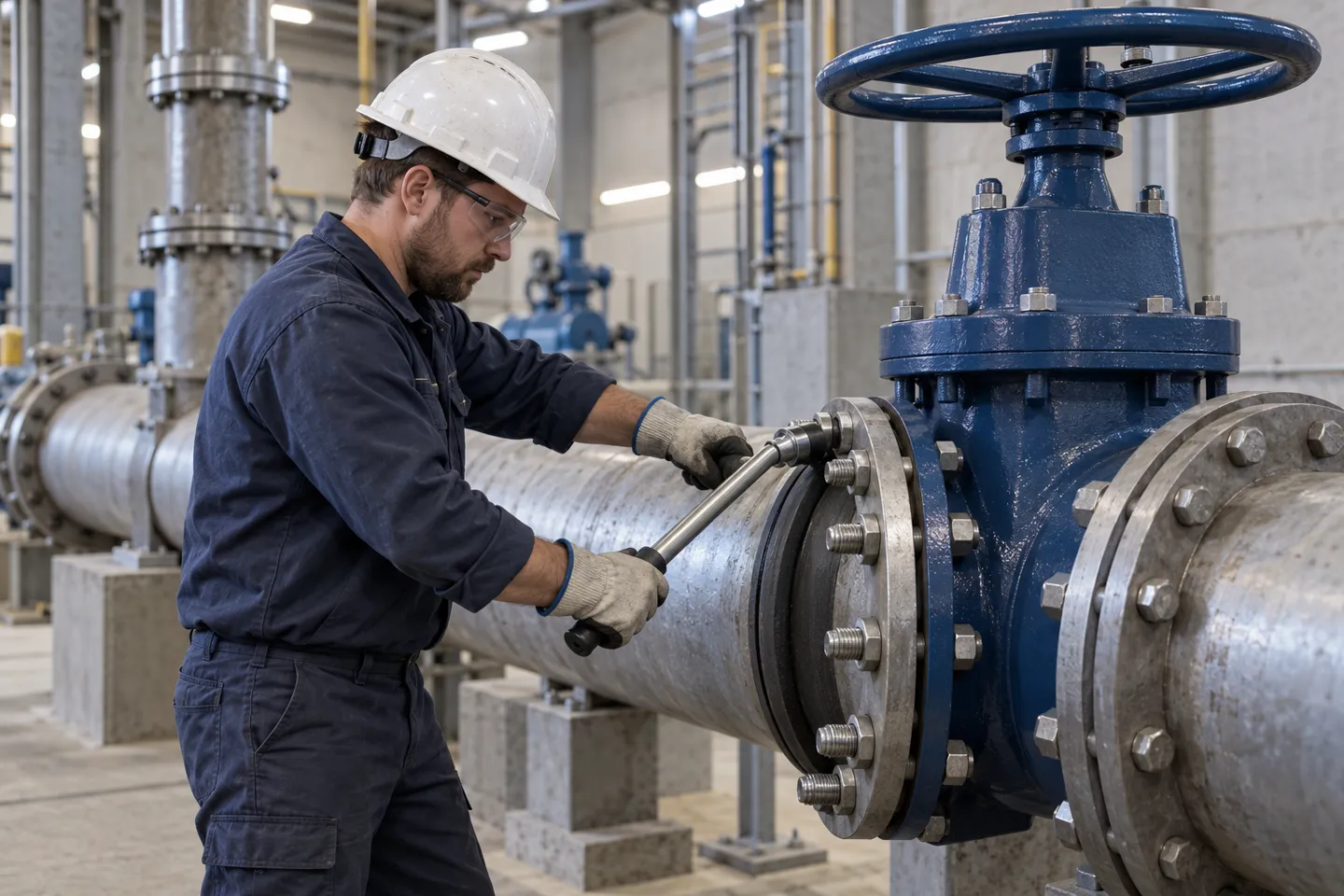
Pass four is heat discipline. Site welders love finishing the joint with the valve in place. Soft seats and packing die at torch temperature. Weld before the valve goes in, or shield the body and keep the heat work on the far side of the flange.
Pass five is the test. Refill slowly and vent high points so the line does not slam the wedge with an air slug. Factory proof runs the shell at 1.5 times rated pressure per API 598 and ISO 5208 conventions (Norite Solution, 2026). Your site line test proves the joints. Hold the test pressure for the code-required stretch and put eyes on the packing gland and both gasket faces.
Two field notes round out the flanged job. Cutting an old valve out of galvanized pipe? Brace the run with a backup wrench. Reaction torque has cracked more upstream pipe than any valve ever installed (r/Plumbing on Reddit, 2026). Big-bore positions deserve one more thought: the day the valve needs service. A 12-inch gate with a broken stem is a shutdown event when no other valve sits on the run. With a second valve, it is a footnote.
Buried valve stations
Buried gates live or die by access. The valve box has to fit the operating key and the stem extension, with swing room to spare. Mueller’s waterworks guidance makes the point with a size comparison: a nine-inch box instead of the common six-inch one (Mueller Company, n.d.). Upsizing is nearly free on install day and pays back on every future visit. Set the riser stem plumb to the center of the box so the key finds it from the surface. Thrust blocking at bends and valve anchors belongs in the same pour, per local waterworks practice. Backfill in compacted lifts, and record the depth and stationing while the trench is still open, because the drawing that saves a dig is the one made before the fill.
Installation boundaries: requirement, failure, check action
| Step | Key requirement | What goes wrong in the field | Check action |
|---|---|---|---|
| Threaded make-up | Sealant plus a backed-up pipe | Reaction torque cracks old galvanized upstream | Backup wrench on the pipe before turning |
| Flange alignment | Faces parallel before bolts take load | Bolts spring the joint, stress binds the wedge in its seat | Feeler-check the gap at four points before tightening |
| Bolt tightening | Star pattern, even passes | One-sided torque leaks the gasket or distorts the body | Two or three passes, cross pattern, to even torque |
| Heat work | No torch on an installed soft-seated valve | Seats and packing die at welding temperature | Weld first and install after, or shield the body |
| Buried valve box | Box sized for key plus stem extension | A six-inch box leaves no swing room for the key | Upsize the box and set the riser plumb to center |
| Post-install test | Slow fill, vent, hold and inspect | Fast refill slams the wedge; small weeps become rework | Vent high points, hold the test, watch packing and gaskets |
Specifying a Gate Valve Before It Ships
Every field failure in the last section has a paperwork twin. A wedge binds because the alignment was forced, and the valve arrived without a face-to-face dimension anyone checked. Worse: the position cannot be automated because nobody specified a mounting interface. Installation quality is decided twice: once with tools on site, and earlier, in the order itself.
Short enough to paste into an RFQ, the order-time list looks like this.
The order-time list
- Size, pressure class, and standard system matched to the project drawing (ANSI, GB, DIN, or JIS).
- Face-to-face dimension per ASME B16.10 or EN 558, so the spool piece fits without springing the pipe.
- Stem type plus extension for buried or restricted duty.
- Body, wedge, and seat materials named against the medium and temperature.
- Factory test records, shell and seat, shipped with the valve.
- 2D and 3D drawings for the skid or equipment builder.
- Lead time split into standard and custom portions.
- Actuation interface declared now if automation may ever come.
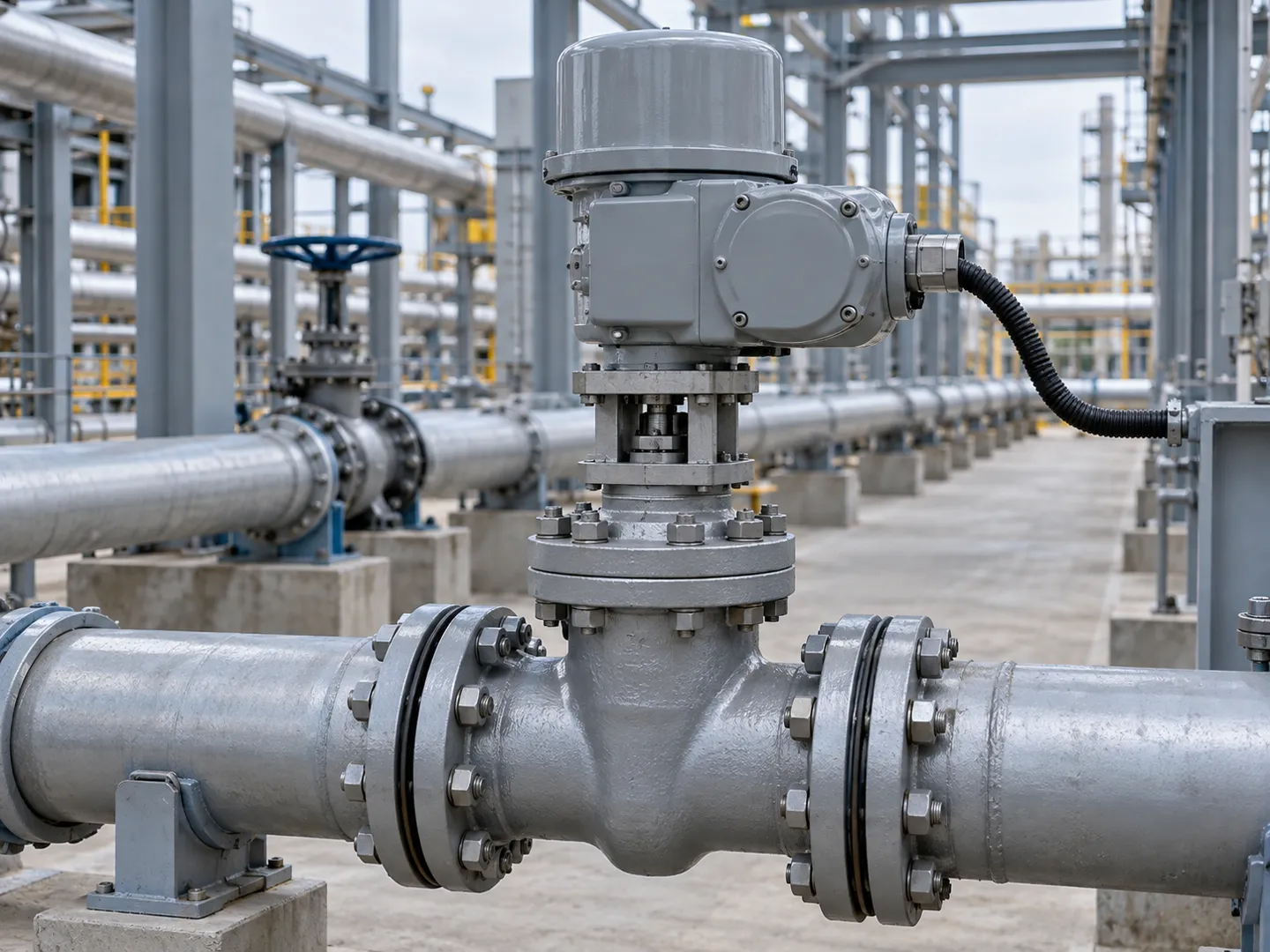
Item 8 is the one that ages best. Multi-turn actuators bolt to gate valves through a standardized flange interface defined by ISO 5210 (ISO, 2017). Published actuator lines commonly span torque ratings from tens of Nm to about 3,000 Nm, with output speeds around 18 to 48 r/min. That range covers gate duty across the common size bands. A valve ordered with the interface and torque sizing in mind accepts an actuator as a bolt-on. A valve ordered without it becomes a cutting-torch project the day someone wants remote closure.
Multi-turn actuation at a glance
- Mounting interface: the ISO 5210 standardized multi-turn flange
- Torque ratings: from tens of Nm to about 3,000 Nm
- Output speeds: around 18 to 48 r/min
Why Installation Failures Are Bought at Purchase Time
Read the cost line again with a project hat on. The $250 versus $1,200 gap from the homeowner’s basement scales up without changing shape. Emergency labor, unplanned shutdown, and rework all bill after the fact. All of it traces back to a decision that was free to make earlier. The site failures in the flanged section, bound wedges and cooked seats and starved boxes, are the same story with bigger numbers.
That is the whole argument for treating the order-time list as engineering rather than administration. Each line item retires one specific field failure. Face-to-face dimensions retire forced alignments. Test records retire acceptance arguments. Declared actuation interfaces retire the later retrofit. Nothing on the list costs what any one of those failures costs.
For project buyers and equipment builders, the pattern is getting more explicit, not less. The industrial valves and actuators market is projected to grow about 5.5 percent a year through 2034 (Fortune Business Insights, 2026). On that curve, the market moves from about $170.6 billion in 2026 to about $261.6 billion by 2034. Actuated positions sit on the growth edge. Large bores and hard-to-reach points are the natural first candidates. If a position is likely to end up automated, order it that way from the start and let the ISO 5210 interface do its job.
Spec the valve once, correctly, and the installation section of this article shrinks to routine. Spec it casually, and no on-site discipline fully saves it.
Turn Your Spec List Into a Quoted Package
VINCER builds manual and multi-turn electric actuated gate valve packages on one line, with drawings, factory test records, and a quote within 24 hours.
Request a QuoteReferences
- ISO. “ISO 5210: Industrial valves – Attachment of multi-turn actuators to industrial valves.” 2017. https://www.iso.org/obp/ui/#iso:std:iso:5210:ed-2:v1:en
- r/askaplumber. “Odds of this gate valve working in an emergency?” 2025. https://www.reddit.com/r/askaplumber/comments/1nwxo0u/odds_of_this_gate_valve_working_in_an_emergency/
- r/Plumbing. “Asked for ball valve replacement on main shutoff, got a gate valve instead.” 2025. https://www.reddit.com/r/Plumbing/comments/1k66za2/asked_for_ball_valve_replacement_on_main_shutoff/
- r/Plumbing. “How to replace gate valve.” 2026. https://www.reddit.com/r/Plumbing/comments/1qbs19x/how_to_replace_gate_valve/
- Terry Love Plumbing Forum. “Stuck gate valve… if I take channel locks to it could I cause a massive leak?” 2013. https://terrylove.com/forums/index.php?threads/stuck-gate-valve-if-i-take-channel-locks-to-it-could-i-cause-a-massive-leak.52881/
- Fortune Business Insights. “Industrial Valves and Actuators Market Size & Growth, 2034.” 2026. https://www.fortunebusinessinsights.com/industrial-valves-and-actuators-market-117377