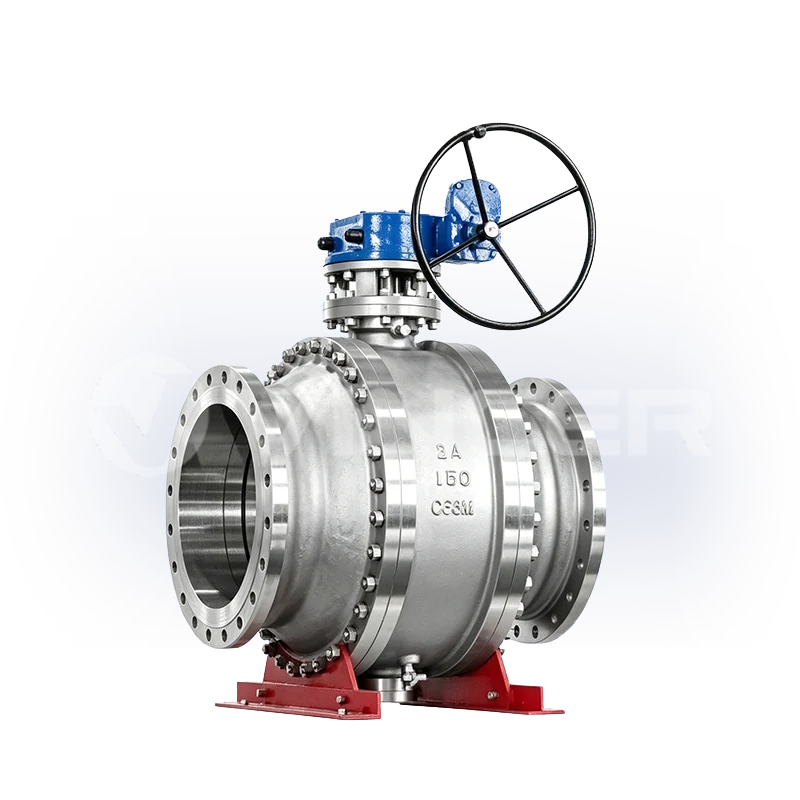
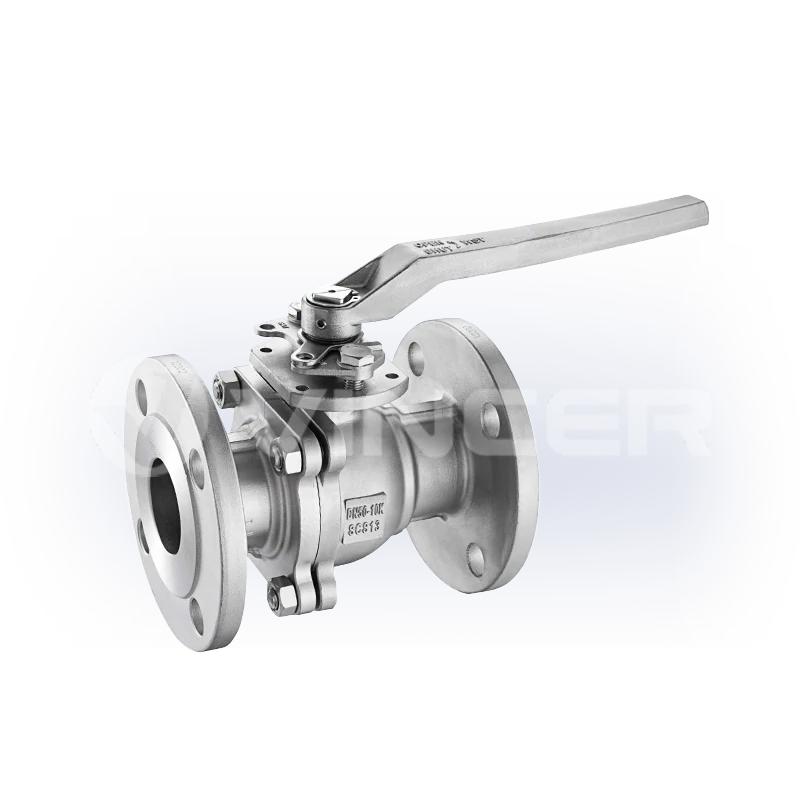
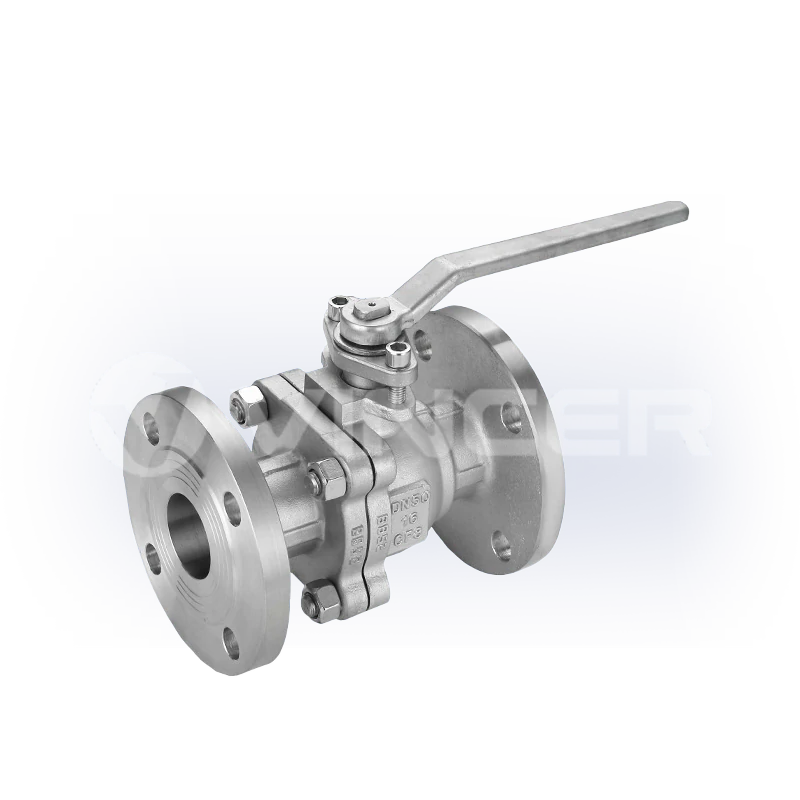
A manual ball valve is a quarter-turn shut-off valve operated by hand using a lever or handwheel. Inside the valve body sits a spherical ball with a through-bore. When the lever is aligned with the pipeline, the bore is open and media flows freely. Rotating the lever 90 degrees turns the bore perpendicular to the flow, blocking it completely. This simple on/off mechanism provides fast, tight shut-off across a wide range of pressures, temperatures, and media types.
Certifications show more than just approval. They reflect the rigorous quality control behind every valve, providing dependable performance for your application.
VINCER manual ball valves are available in flanged, threaded (NPT, BSPT, or G), wafer, socket weld, and butt weld end connections, covering the full range of piping configurations commonly found in industrial projects.
Select models include an ISO 5211 direct mounting pad, allowing an electric or pneumatic actuator to be installed directly onto the valve body without an adapter bracket. This makes it straightforward to automate the valve at any point in its service life.
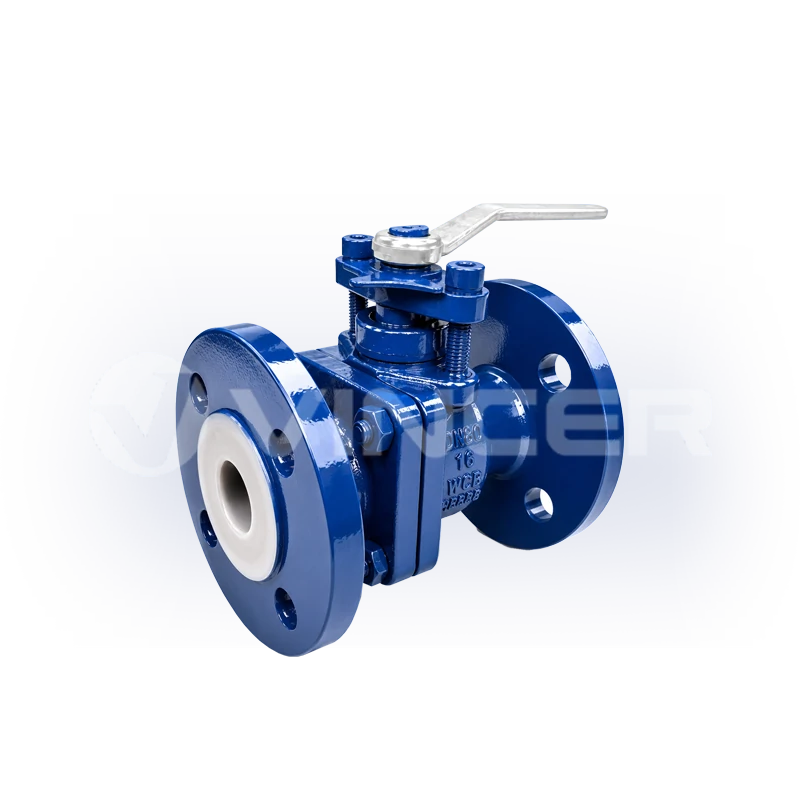
VINCER ball valve body options include WCB carbon steel for general service, SS304 (CF8) and SS316 (CF8M) for applications requiring stainless steel, and full PTFE lining for aggressive media such as strong acids, alkalis, organic solvents, and chlorine.
Non-standard sizes, special materials, and modified configurations are available. Full technical documentation including 2D/3D drawings and material certifications is provided upon request.
A few details will help us send you the right model and an accurate quote:
• By connection type
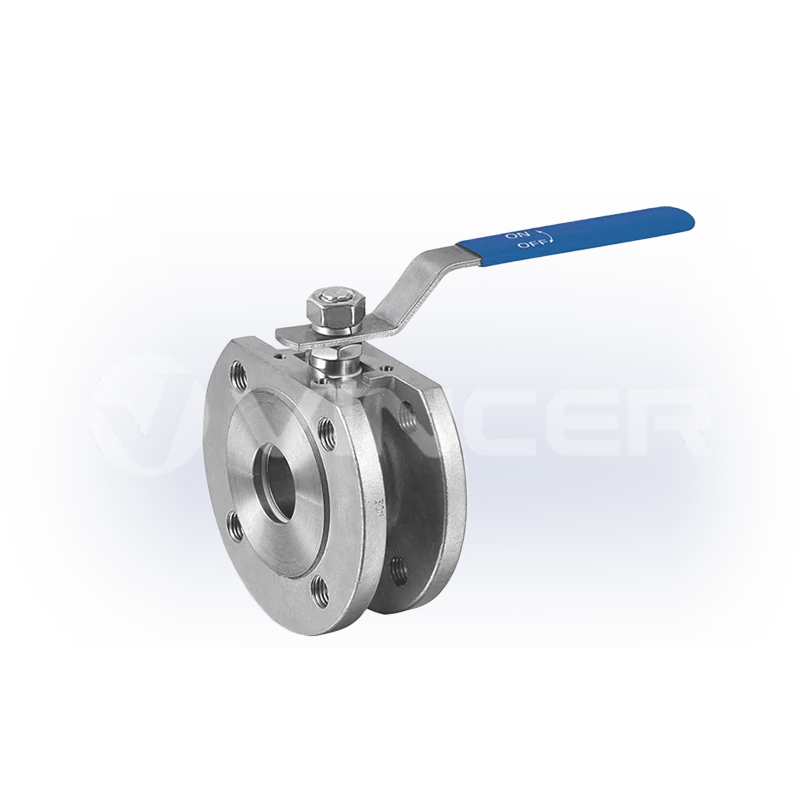
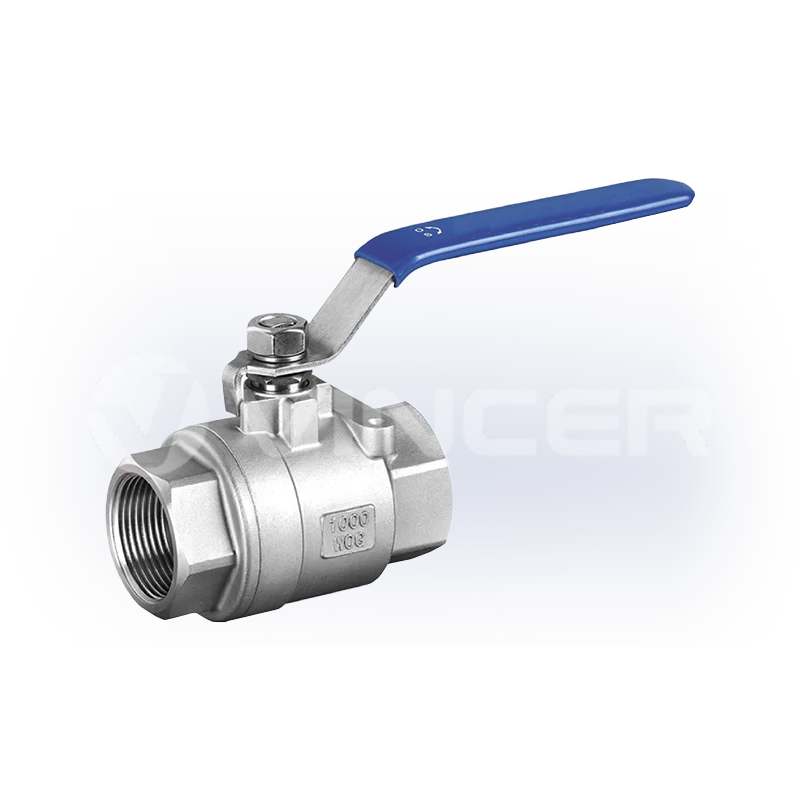
Threaded connections (NPT, BSPT, or G) are the standard choice for small-diameter pipelines (DN15 to DN100) and are easy to install without special tooling. Flanged connections are used for larger diameters, higher pressures, or applications where the valve needs to be regularly removed for inspection. Wafer connections fit between two flanges using through-bolts, reducing face-to-face length significantly and are well suited for compact installations or applications with cleanliness requirements such as food and pharmaceutical processing. Socket weld and butt weld connections provide permanent joints and are common in high-pressure or high-purity piping systems.
• By body design: 2-piece vs 3-piece
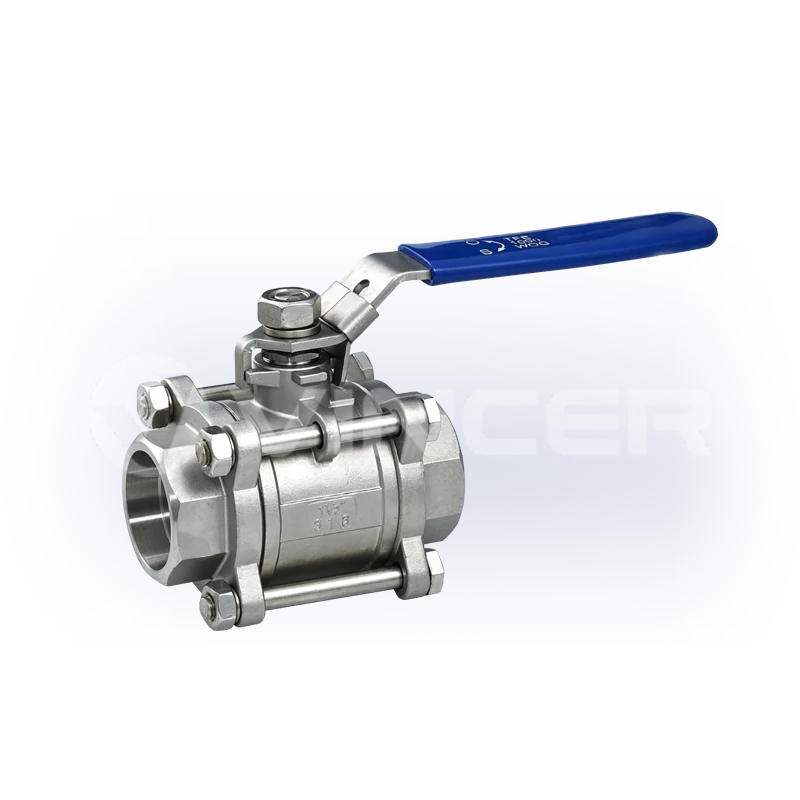
A 2-piece ball valve has a single sealing joint in the body, keeping the leak point count low and the structure simple. A 3-piece ball valve allows the center body to be removed without disconnecting the valve from the pipeline by loosening the end cap bolts, which simplifies in-line maintenance and reduces downtime. The 3-piece design also allows the end caps and center body to be specified in different materials for cost optimization.
• By ball design: floating vs trunnion
Floating ball valves are the standard choice for most applications up to PN 40 / Class 300. In a floating design, the ball is held in place by the seat rings and shifts slightly under pressure to create a seal. Trunnion mounted valves are recommended for high-pressure applications (PN 64 / Class 600 and above) or large-diameter pipelines where the ball needs to be fixed in position to prevent deformation and reduce operating torque.
• By body material
WCB carbon steel is suitable for general service media including water, steam, and oil at moderate temperatures. SS304 (CF8) offers improved corrosion resistance for mildly corrosive media and is a common choice in food processing and general chemical applications. SS316 (CF8M) provides greater resistance to chlorides and aggressive chemicals. For strong acids, alkalis, organic solvents, or chlorine, a PTFE lined valve body is required.
• By connection standard
Select the connection standard that matches your existing piping system. GB standards are commonly used in projects following Chinese national specifications. ASME/ANSI is standard for North American projects and is also widely specified internationally, particularly in oil and gas. DIN is the European standard. JIS is used in Japanese and some Southeast Asian projects. If your project requires a specific standard not listed, contact us to discuss custom options.