
The Lithium Battery Manufacturing Process An Equipment Roadmap
Lithium-ion battery manufacturing is a three-stage industrial symphony. Every stage depends on specialized equipment that directly shapes the performance, safety, and cost of the final cell. Understanding this process flow is the prerequisite to making informed equipment decisions. A machine purchased in isolation rarely performs as expected when it must hand off work to the next station downstream.
Front-End (Electrode Fabrication): Raw active materials are mixed into a slurry, coated onto aluminum or copper current collector foils, dried, compressed under heated rollers (calendering), and slit into precise electrode strips. This stage sets the cell’s fundamental electrochemical character. Coating uniformity and calendering density here determine capacity and cycle life.
Middle-End (Cell Assembly): Anode and cathode electrodes are paired with a separator and either wound (cylindrical/prismatic cells) or stacked (pouch cells), then welded, enclosed, and filled with electrolyte. All of this happens inside a dry room where the dew point is held at or below -40°C to prevent moisture from degrading the electrolyte.
Back-End (Cell Finishing): Assembled cells undergo formation cycling the initial charge-discharge that builds the solid electrolyte interphase (SEI) layer followed by aging and comprehensive electrical testing. This single stage accounts for roughly one-third of total manufacturing cost and takes one to three weeks. Each stage demands equipment with distinct performance characteristics. Let’s start from the front.
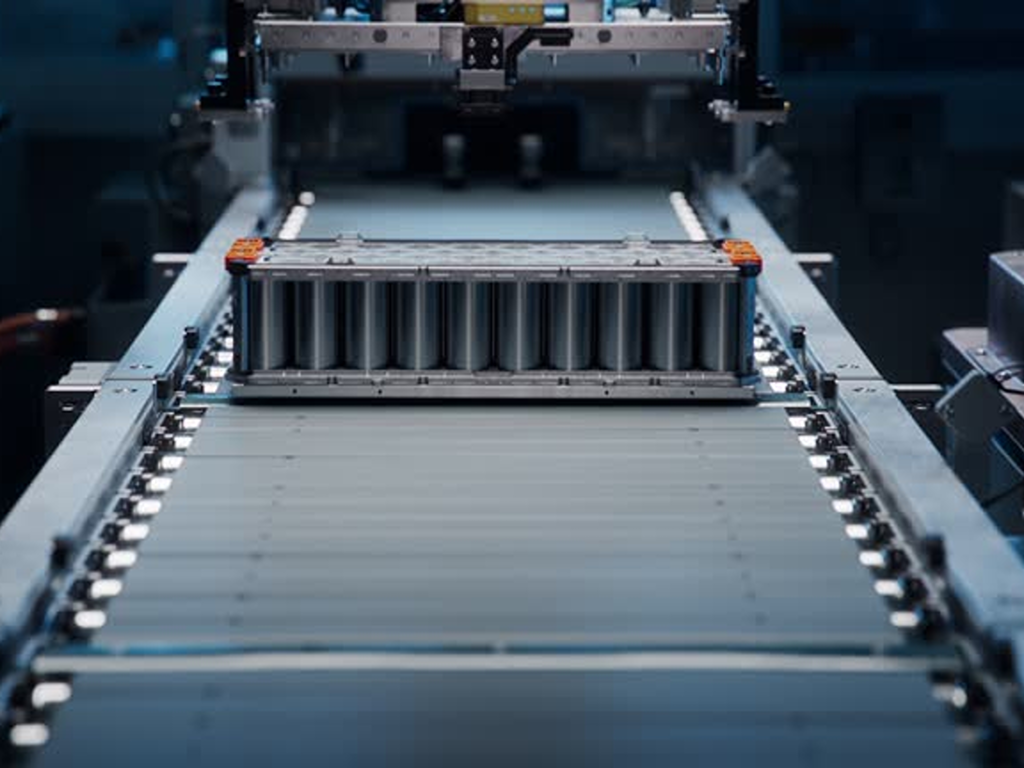
Front-End Electrode Fabrication Equipment The Quality Foundation
Electrode quality isn’t determined by any single machine. It’s the result of mixing, coating, and calendering parameters staying coherent across process steps. A deviation in one stage gets amplified three to five times downstream, so front-end equipment selection is where quality is either built in or permanently lost.
Mixing and Coating Systems Where Consistency Begins
The slurry mixing step disperses active material powders, conductive carbon, and binders into a homogeneous suspension. Planetary mixers handle most batch production today, while continuous extrusion mixing is emerging as an energy-saving alternative that cuts power consumption by up to 95% for the same slurry volume.
From the mixer, slurry flows to the coating station. The slot die coater has become the industrial standard: it extrudes slurry through a precision slot onto moving current collector foil, achieving coating thickness uniformity within ±2.5% at speeds reaching 120 meters per minute. For production lines targeting higher throughput, double-sided simultaneous coating eliminates a complete pass through the line. The key selection criterion is straightforward: ask suppliers for guaranteed thickness uniformity data across the full web width at your target line speed, not just their best-case lab results.
Drying and Calendering Precision Under Heat and Pressure
Drying is the biggest energy consumer in electrode fabrication, responsible for roughly 45% of the front-end energy bill. Traditional hot-air convection ovens remain common, but infrared and microwave-assisted drying are gaining ground by cutting drying time and improving energy efficiency. For facilities in regions with strict environmental regulations, closed-loop solvent recovery systems that recapture over 90% of NMP (N-Methyl-2-pyrrolidone) solvent from exhaust air turn a compliance cost into a material-saving investment.
After drying, the coated foil passes through a heated calender: a precision roll press that compresses the electrode coating to a target porosity, typically 30% to 40% depending on the cell chemistry. Roll temperature ranges from 60°C to 180°C, and pressure uniformity across the roll width is what separates consistent electrode performance from batch-to-batch variation. Integrated calendering-slitting machines that combine both steps in a single pass are becoming the preferred configuration for high-volume lines.
Energy Stats:
Slitting and Cutting Precision at Speed
The final front-end step slits wide electrode rolls into narrow strips matching the target cell dimensions. The tolerance window is unforgiving. A burr exceeding roughly the width of three human hairs on a cut edge can penetrate the separator and cause an internal short circuit. Mechanical slitting remains the workhorse, but laser notching and slitting integrated machines are increasingly specified for their cleaner edges and the ability to create micro-patterns that improve electrolyte wetting during cell assembly.
Cell Assembly and Finishing From Components to Qualified Cells
Once electrodes are prepared, the middle-end assembles them into functional cells. The choice between winding and stacking is determined entirely by the cell format. It is not an interchangeable decision. Cylindrical cells (18650, 21700, the emerging 4680) use high-speed winding machines that can process 24 to over 200 pieces per minute. Prismatic and pouch cells use Z-type stacking, where alternating layers of cathode, separator, and anode are precisely aligned a slower but more spatially efficient method, with advanced machines achieving under 0.4 seconds per piece.
Welding follows assembly: tabs are joined to current collectors (ultrasonic or laser), and cell casings are sealed, all inside a dry room where moisture is rigorously excluded. Precision electrolyte filling systems then dose the exact electrolyte volume under vacuum, with fill accuracy held to approximately ±1% to ensure consistent wetting and performance.
The back-end is where time and capital concentrate. Formation cycling the largest single equipment cost at roughly one-third of total manufacturing expense applies the cell’s first charge-discharge cycles over one to three weeks to build a stable SEI layer. Aging chambers then hold cells under controlled temperatures for electrochemical stabilization. Final testing measures capacity, internal resistance, and self-discharge. Emerging AI-driven adaptive formation systems, which adjust charge current cell-by-cell in real time, are already cutting formation time by over 20% while improving capacity consistency.
In these precision manufacturing environments, the fluid control infrastructure supporting each process step compressed air, cooling water, thermal management fluids, and solvent delivery demands equal attention. Every valve on those supply lines must execute its open-close or modulation function reliably. A single fluid interruption can idle an entire production line. When evaluating equipment, savvy production engineers look beyond the headline machinery to confirm that auxiliary systems, including automated flow control components, carry the same certifications and response benchmarks as the primary equipment.
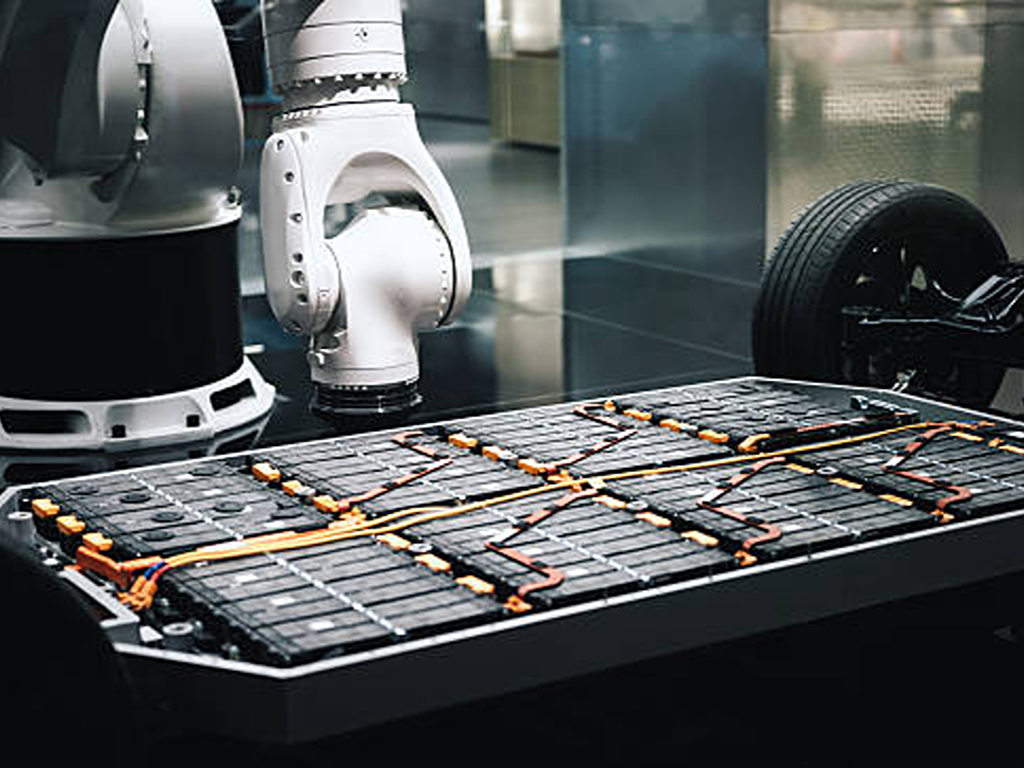
How to Evaluate Equipment Suppliers A Decision Framework
Selecting an equipment supplier is not about finding the lowest purchase price. It’s about identifying an engineering partner who can sustain performance across a five-to-ten-year production lifecycle. The assessment should run along three dimensions: regional strengths, technical hard metrics, and after-sales capability.
Regional Supplier Landscape China, Europe, Japan, and Korea Compared
The global lithium battery equipment market is dominated by Asia, with Chinese manufacturers holding an estimated 14% of the coating equipment segment and roughly 17% of cell assembly. But regional specialization tells a more nuanced story:
| Dimension | China (Yinghe, LEAD, KATOP) | Japan/Korea (Hitachi, PNT, Hirano) | Europe (Manz, Dürr, Schuler) |
| Price Level | Most competitive, 30 50% below European equivalents | Mid-to-upper range | Premium, justified by precision engineering and service |
| Typical Lead Time | 45 90 days standard | 60 120 days | 90 180 days including customization |
| Technical Strength | Turnkey full-line integration, scale-proven manufacturing | Coating precision, winding speed, process know-how | Drying technology, solvent recovery, high-precision calendering |
| After-Sales Model | Remote support with periodic on-site visits | Established local service networks in Asia | Resident engineering support with structured training programs |
A dual-sourcing strategy can reduce supply chain risk, but it introduces a hidden complexity: different PLC architectures (Siemens vs. Beckhoff vs. Mitsubishi) mean your maintenance team must master multiple control systems. The practical compromise is to standardize on one control platform across all lines, even when sourcing equipment from multiple suppliers.
Technical Evaluation Key Metrics That Define Equipment Quality
When you sit across the table from a supplier, these five metrics separate marketing claims from engineering reality:
-
Coating uniformity Demand areal density (mg/cm²) data from an online beta-ray or X-ray gauge, not offline sampling averages. Thickness tolerance should hold within ±2.5% across the full web width at your target speed.
-
Slitting edge quality Burr height should not exceed 15 microns. Confirm that CCD visual inspection is standard on the machine, not an optional add-on.
-
Winding/stacking alignment Electrode-to-separator alignment must stay within ±0.1 mm. The tension control system’s response curve matters more than the rated maximum speed.
-
Welding consistency Laser power variance across the beam path should stay under 1%. Real-time weld quality monitoring is non-negotiable for tabless 4680 designs, where a single undetected poor weld can scrap thousands of dollars in cells.
-
Formation per-channel control Every cell channel should be individually monitored and controlled. Per-cabinet averaging hides the outliers that become field failures.
The Margin Is in the MicronsAt gigawatt-hour scale, a single percentage point of yield improvement translates into millions of dollars in recovered revenue far exceeding the price difference between mid-tier and premium equipment. The five metrics above are not specifications. They are your margin.
After-Sales Support and Long-Term Partnership
A production line’s true cost is written in uptime and yield, not on the purchase order. When evaluating after-sales quality, benchmark against concrete thresholds. Top-tier suppliers respond to technical inquiries within two to three hours. They conduct Factory Acceptance Testing (FAT) before shipment, running dry cycles, safety checks, and defect audits at their facility before the equipment reaches yours. They maintain local spare parts inventories rather than relying exclusively on air freight from headquarters. Training depth is equally telling. A supplier that provides only operator-level training is selling you a machine; one that also trains your process engineers on parameter optimization is building a partnership.
These service expectations extend beyond primary production machinery to the fluid control components integrated throughout the line. VINCER, an automation valve manufacturer serving industrial equipment OEMs, illustrates what comprehensive support looks like at the component level. Their engineering team runs an eight-dimension application analysis covering media type, temperature, pressure, connection standards, control mode, material compatibility, and industry-specific requirements before making a single recommendation. Standard quotations arrive within 24 hours. A dedicated engineering team averaging over ten years of project experience provides remote diagnostics, free replacement parts, and on-site support for critical installations. When evaluating any equipment or component supplier, the benchmark stays the same: does their support infrastructure match the pace of your production?
Technology Trends Reshaping Equipment Decisions
Three technology shifts are actively changing what “future-proof” means for equipment investment. None are speculative all have production lines running today, though at different maturity levels.
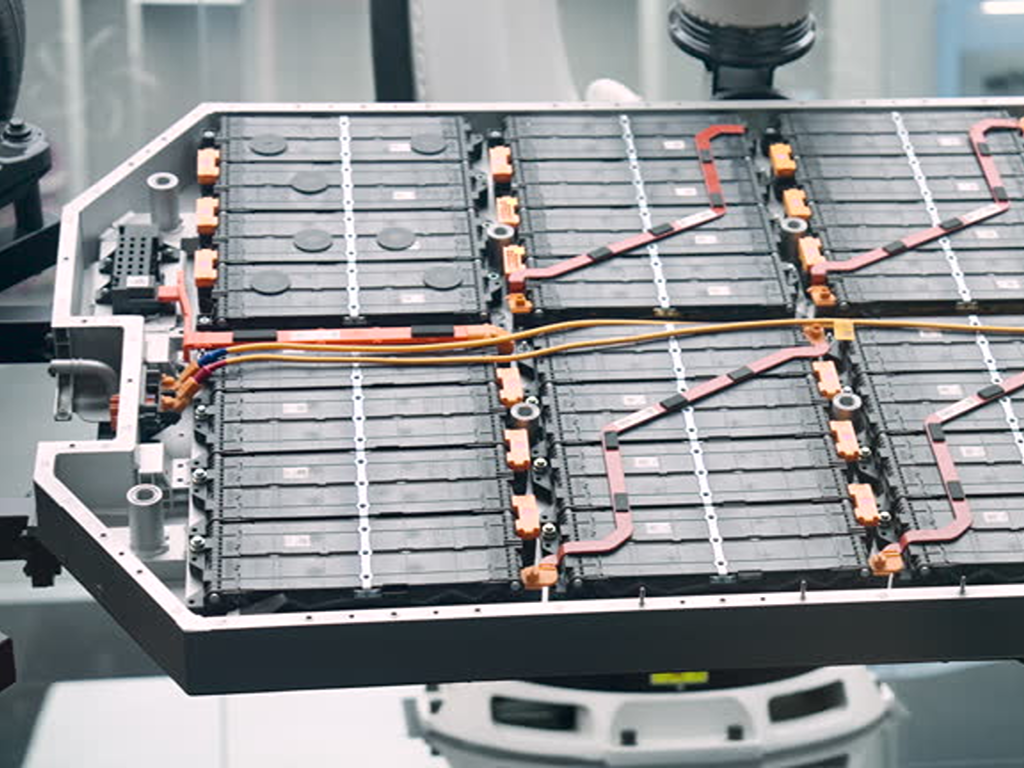
Dry electrode processing eliminates the NMP solvent and the 60-to-80-meter drying oven that together dominate electrode production’s energy footprint. The payoff is substantial: roughly 35% lower energy operating cost and 70% less factory floor space. Today, dry processing is production-ready for LFP cathodes; high-nickel NMC chemistries still face challenges in achieving the film density uniformity that wet processing delivers. For new LFP-dedicated lines, the question is no longer whether dry processing works it’s whether your equipment supplier has demonstrated a production-scale reference installation.
4680 tabless cylindrical cells change the assembly equation entirely. Instead of welding a single tab to the current collector, the machine must weld dozens of electrode edges directly to the can. This demands laser power control within 1% variance across every weld. Winding machines specified for 4680 production need fundamentally different tension and alignment architectures than their 21700 predecessors.
AI and smart manufacturing integration is moving from pilot projects to production floors. Major battery producers are already using AI for production line optimization, and adaptive formation systems that monitor each cell’s electrochemical signature in real time are cutting formation time while improving capacity consistency. The equipment implication is practical: choose machines with open data interfaces and MES/SCADA compatibility, because a production line that cannot feed data to an optimization layer will become a competitive disadvantage within this decade.
Every advanced manufacturing line, whether it runs dry processing or AI-driven control, depends on reliable automation hardware executing physical commands: opening a solvent supply valve, modulating cooling water flow, isolating a process stream during maintenance. The intelligence layer is only as effective as the actuators that carry out its instructions.
Trend Scorecard:
Cost, Compliance, and Getting Started
Equipment spending typically represents roughly 60% of a gigafactory’s total capital expenditure. The global cell manufacturing equipment market valued at over $15 billion in 2025 is projected to more than double by 2030, growing at an annual rate approaching 19%. A single automated production line can range from around $2 million for a pilot facility to over $10 million for a fully integrated gigawatt-hour-scale installation.
These headline numbers make Total Cost of Ownership modeling essential. Energy consumption, maintenance frequency, spare parts availability, and yield rate differences compound across a five-to-ten-year equipment lifecycle. A one-percentage-point improvement in overall yield at gigawatt-hour scale translates into millions of dollars in recovered revenue. That far exceeds the purchase price difference between mid-tier and premium equipment.
On the compliance side, any equipment destined for European or North American markets must carry CE marking and the supplier should hold ISO 9001 certification at minimum. If your cells will serve electric vehicle customers, IATF 16949 traceability requirements cascade backward into your equipment choices. Every process parameter must be logged, timestamped, and retrievable for audit. Build compliance verification into your FAT checklist, not your post-delivery remediation plan.
A practical decision checklist for equipment buyers:
-
Define your cell format and chemistry Equipment is not format-agnostic; this decision locks in your machinery options
-
Set your production scale and automation level Match capital expenditure to realistic volume projections
-
Map equipment to each process stage Front-end quality determines back-end yield
-
Compare regional suppliers across price, lead time, and support Use the framework above as a starting point
-
Evaluate technology future-proofing Dry processing readiness, 4680 compatibility, and data interface openness
-
Model Total Cost of Ownership over five to ten years Energy and yield matter more than purchase price
As you build your equipment supplier shortlist, remember that the fluid control infrastructure supporting every process stage from solvent delivery to cooling loops carries the same stakes as your primary production machinery. Component suppliers like VINCER, whose automation valves are backed by five internationally recognized certifications including ISO 9001, CE, and FDA, illustrate the baseline: if a supplier cannot produce compliance documentation on request, they do not belong in a regulated production environment. The discipline you apply to evaluating your coating line supplier should extend to every component on that line.
Spec Your Production Line’s Fluid Control
Vincer automation valves ISO 9001, CE, and FDA certified with engineering support that responds in 24 hours. Request Valve Specifications (Link to contact form)
References
-
ScienceDirect / iScience. “Advanced lithium-ion battery process manufacturing equipment for gigafactories: Past, present, and future perspectives.” 2025. https://www.sciencedirect.com/science/article/pii/S2589004225009526
-
ScienceDirect / Applied Energy. “Current and future trends in lithium-ion battery electrode production machinery: A comprehensive review.” 2025. https://www.sciencedirect.com/science/article/pii/S0306261925016988
-
Research and Markets. “Battery Manufacturing Equipment Market Global Forecast to 2030.” 2025. https://www.researchandmarkets.com/reports/5703171/
-
TOB New Energy. “Lithium-Ion Battery Manufacturing Trends 2026: A B2B Buyer’s Guide.” 2026. https://www.tobmachine.com/blog/lithium-ion-battery-manufacturing-trends-2026-a-b2b-buyer-s-guide_b156
-
SEMCO Infratech. “Lithium Battery Assembly Line: Process, Machines, and Applications.” https://www.semcoinfratech.com/lithium-battery-assembly-line-process-machines-and-applications/
-
VINCER Valve. Official Website. https://www.vincervalve.com/
-
VINCER Valve. Certifications. https://www.vincervalve.com/certification/
-
VINCER Valve. About Us. https://www.vincervalve.com/about-us/
-
VINCER Valve. Contact for a Quote. https://www.vincervalve.com/contact-for-a-quote/
 English
  French
  Spanish
  Italian
  German
  Dutch
Dutch  Portuguese
  Korean
  Russian
  Chinese
  Finnish