What a Control Valve Actually Is (and Why the Word Is Overloaded)
A compact electric globe control valve package lists at $433 on Belimo’s US shop. A 12-inch cast steel industrial globe valve tags at $9,219, down from a $16,134 list price. Both are sold under the same product name. Anchor on the first number and the second will shock you. Anchor on the second and you will overpay for a hundred small valves that never needed that class of hardware.
Before any of those numbers make sense, the word itself needs a cleanup, because “control valve” carries at least three different products. If you came here for a car part, you want a heater control valve, and those run from about $4 to $50 at auto parts stores (AutoZone, 2026). Search by your vehicle’s part number instead. If you are pricing a home water pressure regulator, you are mostly buying a plumber’s labor, not the valve. One homeowner was quoted $860 to install a $70 part (r/DIY thread, 2025). Neither of those products is what this article prices.
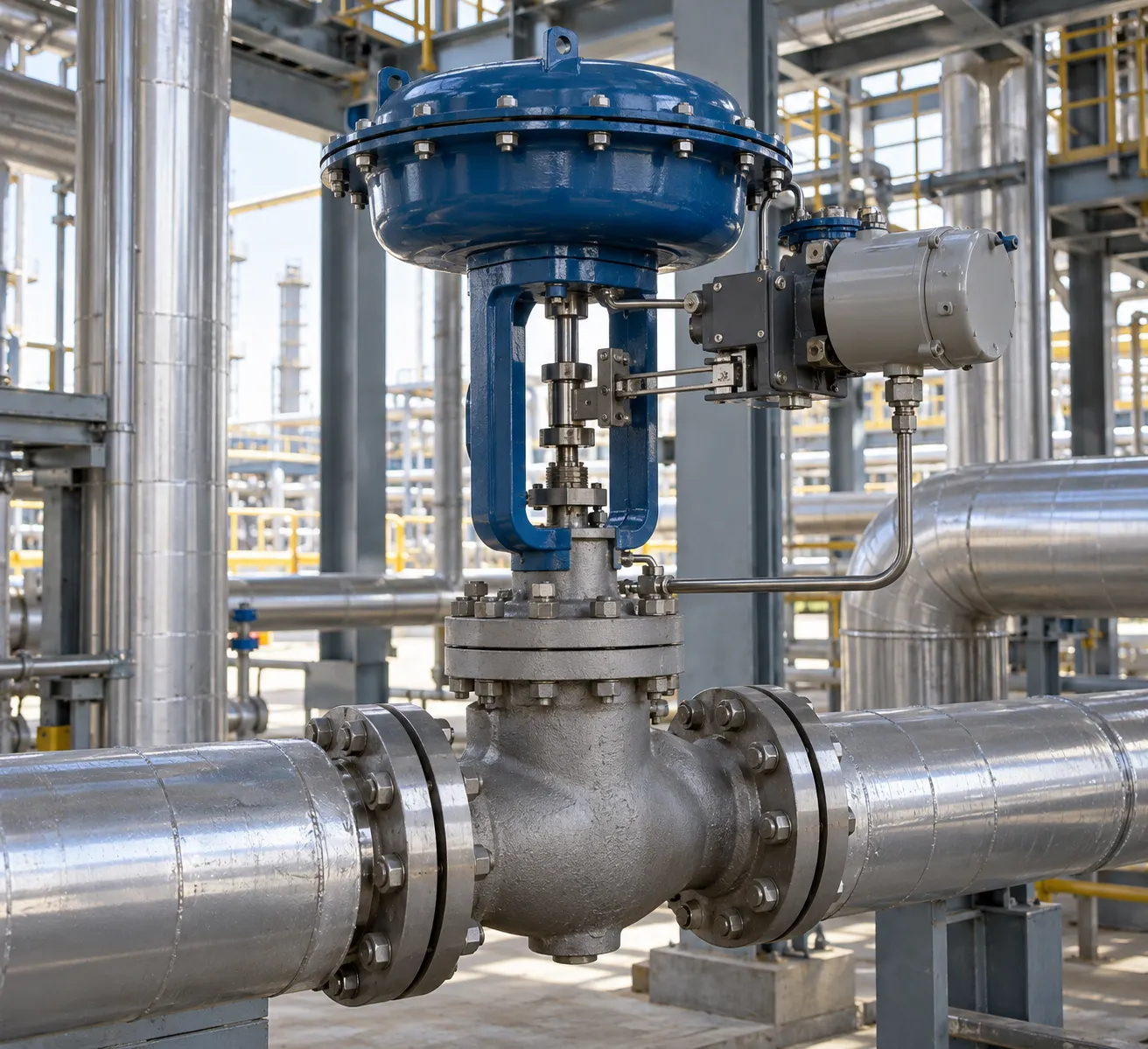
This article is about the process control valve: a throttling body, an actuator, and usually a positioner, working together as one modulating package. It is the device that holds a flow, a pressure, or a temperature at setpoint while the process around it drifts. That package structure is exactly why its price scatters. You are never buying one thing. You are buying four or five things bolted together, and each of them has its own price ladder.
This page reads a control valve price the way a supplier builds it, layer by layer: body and trim, actuation, signal accessories, supply tier, and total account. By the last section you should be able to take two quotes for the same nominal valve and say, line by line, why one is 40% cheaper.
The Body and Trim: Where the Base Price Comes From
Everything the process media touches sets the floor of a control valve price: the body casting, the trim inside it, and the class of tightness the seat can promise. Four variables do almost all of the work.
Throttling Structure: Straight-Pattern vs Quarter-Turn
Straight-pattern globe bodies dominate precision work. Within them, a single-seat globe is the economical default. A double-seat balances pressure across the plug. A cage-guided trim handles high differential pressures and reduces cavitation noise. A bellows-sealed version buys zero fugitive emissions for volatile or toxic media. Each step up adds machining and testing, and each step shows up in the quote.
Quarter-turn valves take the other side of the trade. A segmented V-port ball valve or a butterfly valve moves more flow per dollar of body casting and per degree of actuator rotation. That is why rotary designs keep gaining share in general service. The give-up is fine throttling near closed and pressure drop control at low flow. Scarce variants fill the gaps: diaphragm valves for corrosive slurry on a budget, plug valves for tight shutoff in small lines. Neither needs more than a sentence here, but both belong on your mental map so a supplier cannot surprise you with them.
Material Ladder: WCB to CF8M and Beyond
The body material ladder is short and unforgiving. WCB carbon steel is the default for water, steam, and non-corrosive media. CF8 (304 stainless) and CF8M (316 stainless) step up for corrosive or hygienic service. Beyond that sit alloy bodies and PTFE-lined bodies for acids, chlorine duties, and other media that eat metal. The rule is simple: the media chooses the material, and the material moves the base price. Skipping the check does not save money; it schedules a failure.
Size and Pressure: The Multiplier
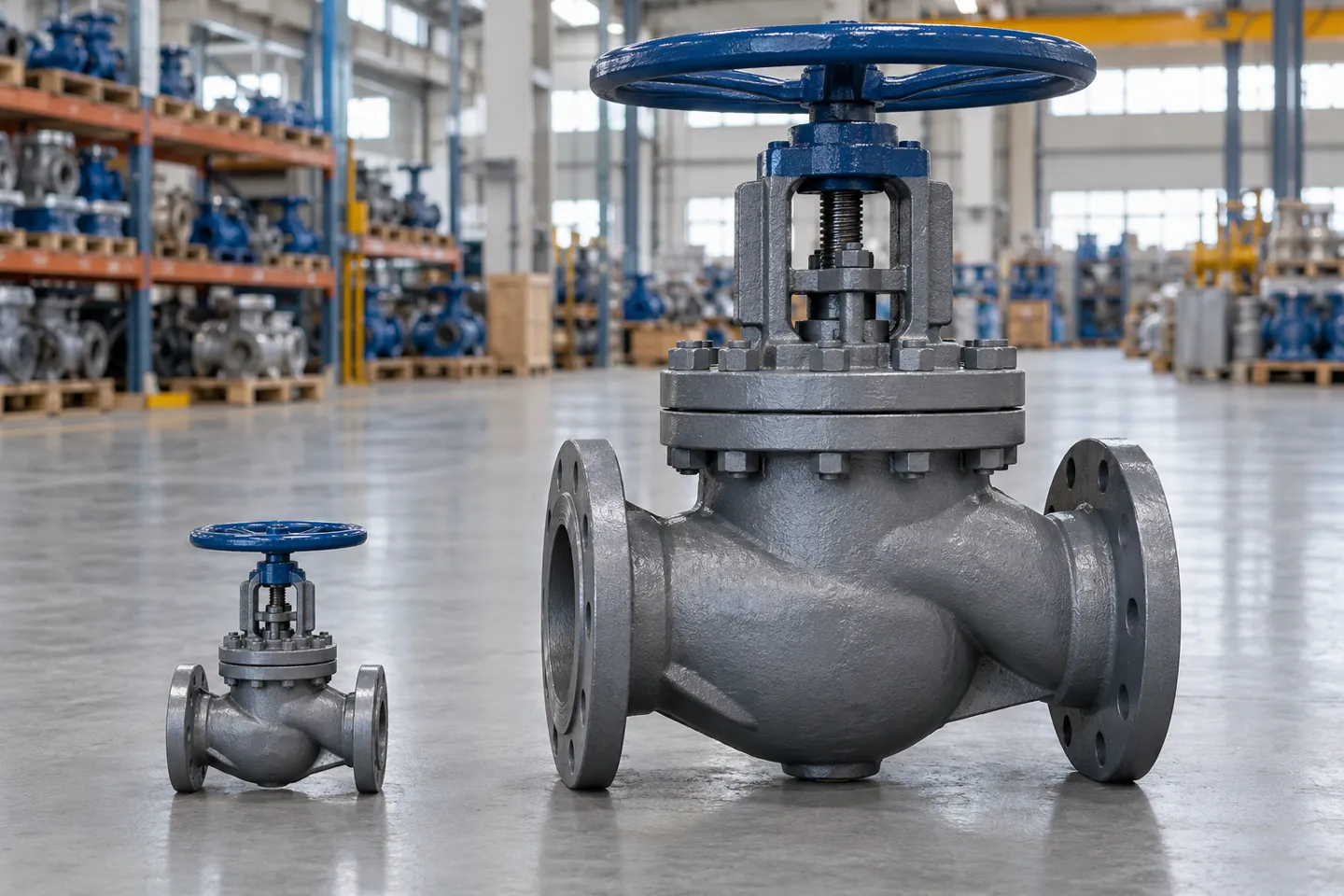
Size scales a control valve price faster than most buyers expect, because it scales three things at once: casting mass, flange class, and actuator torque. A DN15 (1/2″) globe valve and a DN200 (8″) globe valve are not the same product at different prices; they are different manufacturing problems. Pressure rating adds on top: PN16 to PN40 is a modest step, PN64 or ANSI Class 600 changes the flange, the wall thickness, and often the whole trim design. This is why any honest price list has to ask for size and rating before it says anything useful.
Leakage Class: The Hidden Price Lever
Seals are where quotes get quietly cheap. ANSI/FCI leakage classes run from Class I to Class VI, and Class VI, the bubble-tight seat, costs real money in soft seats, lap-finished plugs, and seat-leak testing. Many mid-market quotes default to a lower class and simply do not mention it. If your process cannot tolerate a dripping valve at shutoff, Class VI (or the relevant equivalent) must be written into the inquiry. Write it in and the price moves. Leave it out and the price stays low while the valve weeps.
Put the four variables together and the spread at the top of this article stops looking strange. These three listings are all real, live catalog prices for products sold as control valves:
What the Same Name Costs Across Three Classes
| Listing | What it actually is | Listed price | Base-price driver |
|---|---|---|---|
| Belimo US shop, compact electric globe control valve package | HVAC-scale modulating assembly, DN15 class | $433 (larger assemblies listed to $6,044) | Small body, soft-seat trim, integrated electric actuator |
| Tameson, modulating control valve package | Brass ball valve with modulating electric actuator | from about $1,393 | Actuated package, general service |
| ValveMan, SVF Flow Control globe valve | 12-inch cast steel industrial globe, Trim 8, Class 150 flanged, API 600 | $9,219.99 (list $16,134.56) | Large casting, industrial trim, NACE-capable materials |
It is the single most useful fact in this entire control valve price guide. Hold onto it when a quote looks too good or too bad.
The same catalog name
$433$9,219
One product name, a 20x spread, and not a cent of it is brand premium. The spread is structure.
Manual, Pneumatic or Electric: The Actuation Price Order
Above the body sits the actuator, and the actuation decision changes both the sticker price and the operating cost of every valve on the project. The sticker order is stable across the industry. A manual handwheel is the baseline. Pneumatic actuation sits in the middle. Electric actuation costs the most up front, with modulating and intelligent packages at the top of the range.
The comparison that actually matters is wider than price:
Three Actuation Routes Compared
| Dimension | Manual | Pneumatic | Electric |
|---|---|---|---|
| Upfront cost | lowest | middle; rises with cylinder size | highest; rises again for modulating and intelligent versions |
| Control capability | none beyond open/close | good modulating with a positioner | precise modulating, native signal handling |
| Fail-safe behavior | none | spring-return closes or opens on air loss | needs spring-return or battery backup to fail predictably |
| Energy dependency | none | instrument air supply and I/P converter | power supply, and signal wiring |
| Best fit | infrequent duty, accessible valves | plants that already run instrument air | remote or precise duty, no air infrastructure |
Pneumatic control valve price quotes hide their own tail. The actuator is only the visible part; instrument air needs a compressor, dryers, and distribution, plus a positioner and an I/P converter per valve. If your plant already runs instrument air, pneumatics are superb value. If it does not, the honest comparison adds that infrastructure to the pneumatic column.
Electric control valve price quotes hide a different tail: failure behavior. A plain electric actuator stops where it stops when power dies. If the process needs the valve to go to a safe position on power loss, you must specify a spring-return actuator or a battery backup, and both are priced options. Say so in the inquiry, or the default will not include it.
One variant closes the middle. A self-operated control valve uses process pressure itself as the actuator, with no external power or air. It is worth a look for simple pressure or temperature regulating duty.
The market is voting on this question as we speak. The global control valve market is projected to grow from USD 10.81 billion in 2026 to USD 13.99 billion by 2032. Within it, actuators are projected to hold the largest component share in 2026 (MarketsandMarkets, 2026). Automation is turning the actuator and positioner from accessories into the main event. Budget structure should follow: the era of pricing a control valve by its casting alone is over.
Inside a Control Valve Quote: Line Items and Apples-to-Apples Comparison
Two quotes for the same nominal DN80 globe control valve can land 40% apart, and neither supplier is necessarily lying. The difference lives on the lines, and a buyer who compares totals is comparing the wrong objects. Reading a quote is a process, and it has four steps.
Reading a quote, in four steps
Read the line items
Body, trim, actuator, positioner, extras
Hunt the dropped lines
Positioner, I/P, solenoid, MTC, test
Fix one parameter sheet
Nine parameters, sent to every supplier
Compare line by line
Deviation list against your sheet
The Standard Line Items
A complete control valve quote is a parts list in disguise. The body and trim carry the base price from the previous section. The actuator adds the second block. The positioner adds the third. It translates a 4-20 mA signal into stem position, and it is the line that makes the assembly a control valve instead of a remote-controlled switch. Then come accessories, and then documentation and testing, which we will fight for in a moment.
The Lines Quotes Quietly Drop
When a quote looks suspiciously lean, check for these lines before you celebrate the price:
- A positioner. Without one, your 4-20 mA signal has nothing to talk to. The assembly you bought is an expensive switch.
- An I/P converter or the positioner’s input card, if the control system speaks current and the positioner does not.
- A solenoid valve for trip duty, and a limit switch box for remote position indication.
- An air filter-regulator, if the actuator is pneumatic.
- Material test reports (MTC) for body and trim.
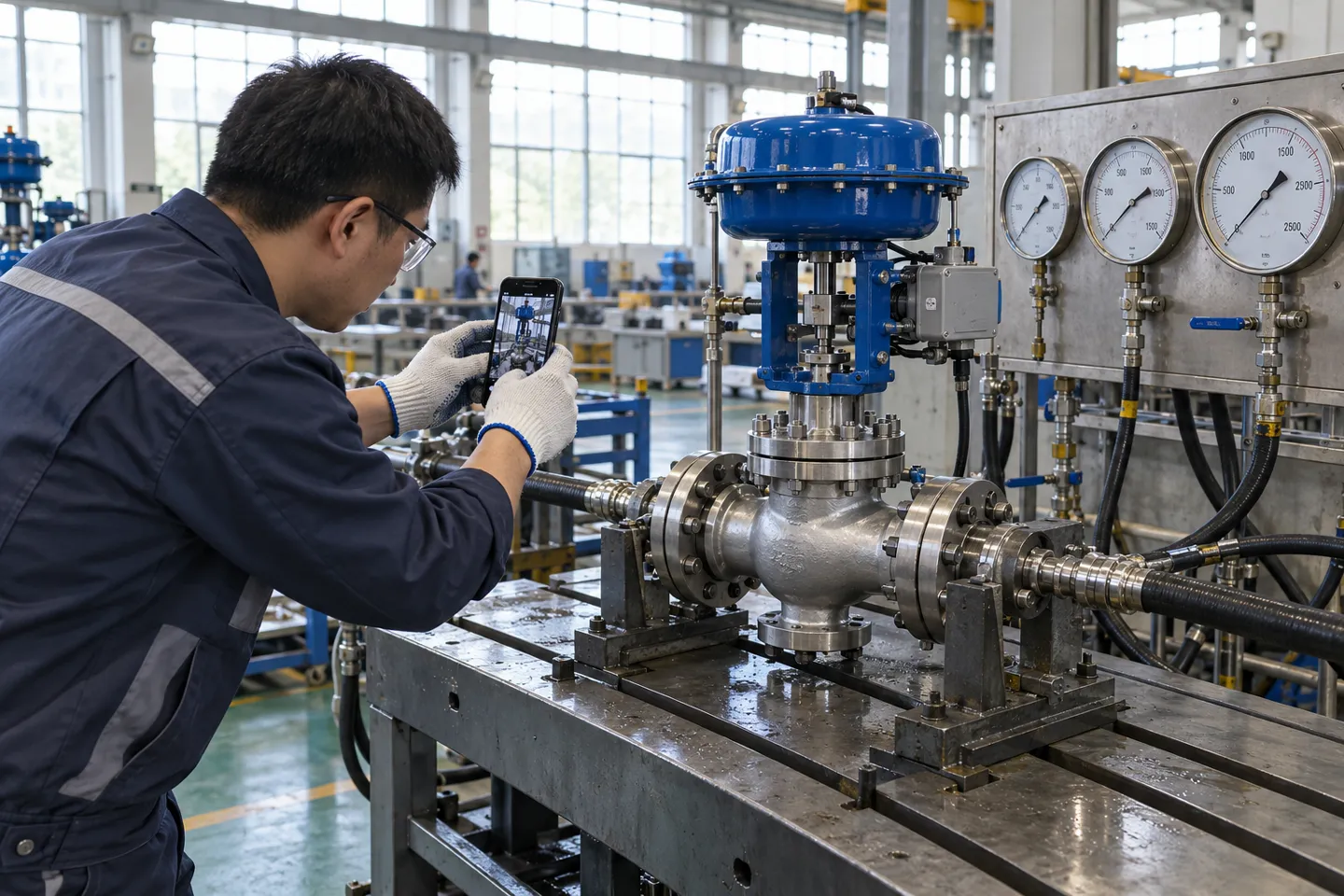
- A factory pressure test, with results, or better, a test photo and video of the actual serial number you bought.
Each deleted line is a real saving for the supplier and a real cost for you later. You pay it as commissioning delays, surprise purchases, or a valve that cannot be integrated. This is where the profit lives in low quotes, and where the buyer’s leverage lives too: every line on this list is negotiable when you ask for it by name.
Running an Apples-to-Apples Comparison
The fix for incomparable quotes is to make the inquiry itself comparable. Send the same parameter sheet to three suppliers and require a line-item quotation and a signed deviation list against your sheet. Nine parameters make the sheet complete for most process duties:
RFQ parameter sheet
- Media and concentration
- Temperature range, minimum to maximum
- Upstream pressure and differential across the valve
- Design flow rate with computed Cv or Kv
- Connection standard and size (ANSI, DIN, JIS, GB, threaded or flanged)
- Leakage class (state Class VI explicitly if bubble-tight shutoff matters)
- Actuation method and fail-safe position (spring close, spring open, or last position)
- Signal protocol (4-20 mA, HART, RS485) and supply voltage
- Documentation package (MTC, pressure test report, test photos or video)
With those nine lines fixed, a quote has nowhere to hide. A supplier who deviates must say where, in writing, on the deviation list. A supplier who matches must price each block. Suddenly the 40% gap has an address: this trim is hardened, that leak class is lower, the other one never included a positioner. That is what apples-to-apples means in practice, and it is the difference between negotiating and gambling.
When Cheap Is Expensive: Failure Costs and the Boundary Matrix
The anatomy method has a boundary, and it is worth stating honestly: in gentle service, buying close to the floor of the market is rational. The trouble starts when a low price meets the wrong duty. The failure archive is consistent about where the money leaks back out.
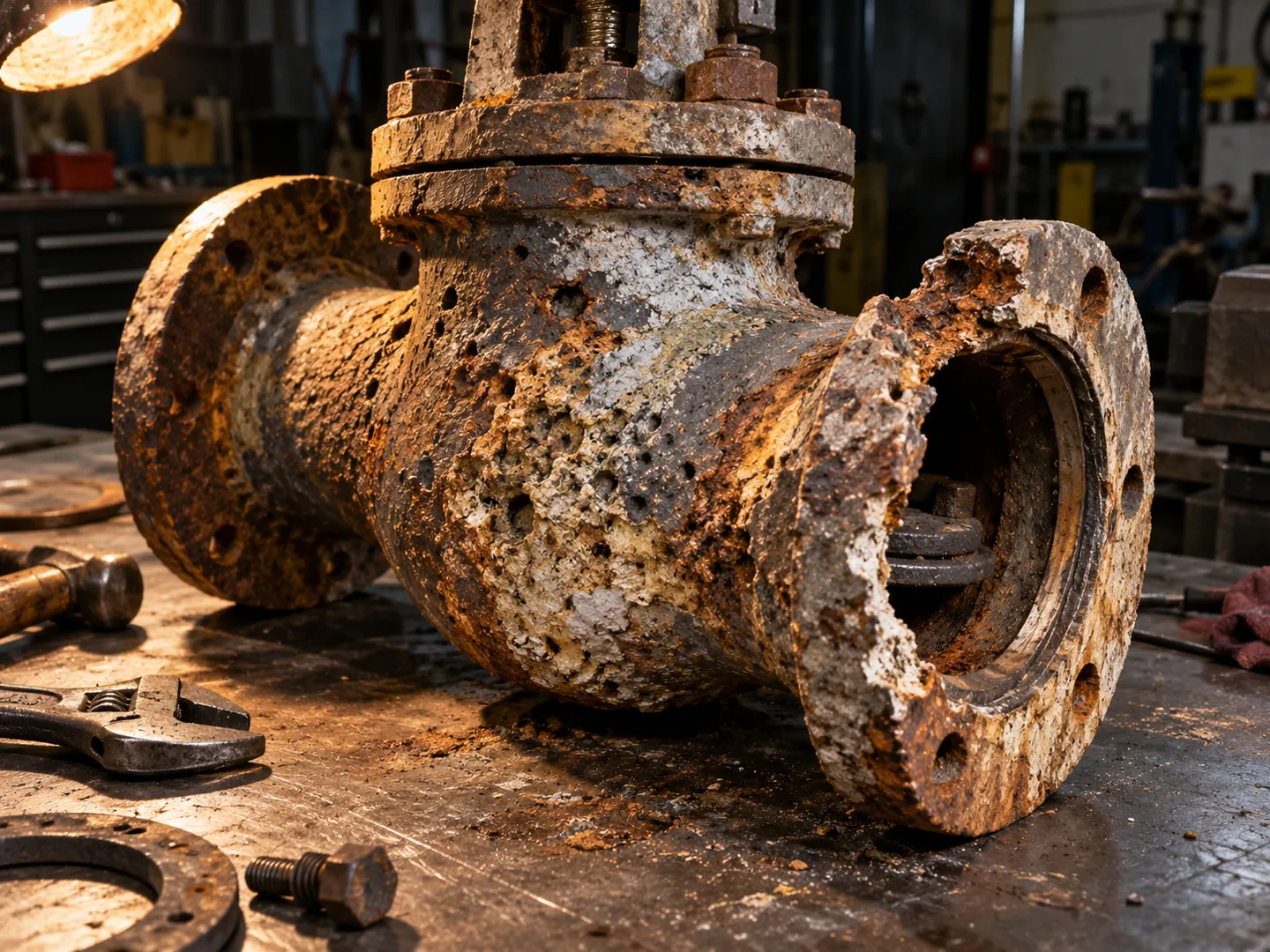
One valve industry blog documents a chemical dosing line fitted with a low-cost carbon steel valve. The media ate through it within months. The specialty-alloy replacement cost roughly three times more, before counting the downtime. In the desalination trade, suppliers live with a harsher version of the same lesson. Inspection teams check incoming valves against the purchase order’s material specification. A body that does not match the paperwork is rejected at the dock, and the whole project waits. High-pressure cleaning service tells the third story: bodies thin enough to be cheap crack under sustained pressure, and grit in the water scores solenoid seats until they stop sealing.
A valve that fails rarely fails alone. It takes its downtime, its replacement freight, and its project schedule with it. Price the failure, not just the valve.
The pattern generalizes into a matrix. Find your duty in the left column, and read what must not be cheapened:
Where a Low Control Valve Price Becomes Expensive
| Working condition | Do not cheap out on | How it fails | Confirm first |
|---|---|---|---|
| Corrosive media (acids, chlorides, dosing lines) | body and trim material, MTC | through-wall corrosion in months | media compatibility chart and material certificates |
| High differential pressure | hardened trim, leakage class | seat wire-drawing, hunting, noise | differential across the valve and a real Cv calculation |
| Steam and high temperature | temperature-rated trim, extended bonnet | seal blowout, actuator heat damage | media temperature and bonnet or stem extension type |
| Sanitary or food contact | 316L contact parts, hygienic certificates | audit failure, contamination | surface finish and FDA or 3-A documentation |
| General water, air, and mild duty | (a lean standard build is fine) | rarely fails from spec | match the basics and buy on price |
Read the last row twice. Mild service is exactly where the anatomy method pays its dividend, because you can strip the options that severe duty forces on other buyers and still get a sound valve. Severe service inverts the rule: the trim, the certificates, and the fail-safe are the product, and the casting around them is just packaging.
Where to Buy: Three Supply Tiers and What Each Gets You
Once the specification is solid, the control valve price question becomes a sourcing question, and the market has three tiers.
Western brand catalogs sit at the top on price and on paper. The list prices quoted earlier ($433 to $9,219) live here. So does deep documentation, global service networks, and lead times measured in months for anything non-standard. You are buying certainty, and the invoice says so.
Chinese manufacturers form the middle tier, and the structural price gap is real. Comparable actuated valves commonly land far below Western list. Quotation turnaround is measured in hours or days instead of weeks. Customization (sizes, materials, standards) is a normal offering rather than an exception. Quality within this tier is not uniform; it tracks the supplier’s documentation discipline. Five checks sort a capable factory from a trader with a website in minutes:
- material test reports against your specified grade
- factory pressure test photos or video of your actual serial numbers
- a written leakage class commitment
- 2D and 3D drawing support
- a sample policy you can actually use
Ask those five questions and the tier’s variance collapses.
Marketplace listings are the third tier: fast, cheap, and documented nowhere. For a non-critical spare or a bench experiment it is the right tool. For project mains it is how valves end up in the rejection stories above. When the crate arrives with no MTC and no test record, your inspection team is doing the manufacturer’s quality control for free, after the fact.
The screen for all three tiers is one question: can this supplier prove, for this exact serial number, what the material is and how the valve was tested? A yes with documents attached is a supplier. Anything else is inventory.
A quote that survives the five checks
Put a supplier through those five checks today: Vincer answers a written specification with an itemized, documented quotation inside 24 hours.
Get a Documented QuoteThe Business Ledger: From RFQ to a Long-Term Supply Deal
A one-time RFQ rewards the anatomy method once. A repeat buyer gets paid by it every year. That includes an EPC running multiple projects or an equipment OEM building the same machine forty times a year. For them the ledger has three more lines on it.
Lock the Line Items, Then Negotiate the Price
The framework agreement is where quote anatomy turns into leverage. When the line-item specification is frozen in the contract, yearly price negotiation has a fixed baseline. The trim does not silently downgrade. The leakage class does not drift. The discussion is about numbers instead of configurations. Volume is the second lever. Actuated packages that look ordinary at piece price become genuinely cost-effective at quantity or under a pricing contract. That is why OEMs standardize on them early. Raw material swings are real. So keep a price adjustment clause tied to material indices in any multi-year agreement. Neither party should be tempted to settle the difference in invisible trim quality.
Platform Consolidation, Spare Parts, and Lead Time
OEMs save twice from the same discipline. Consolidating machine designs onto a small set of valve platforms turns fragmented small orders into a few large ones. Unit price improves and the spare parts closet shrinks in half at the same time. Wear parts deserve their own contract line: seats, seals, solenoid coils, and positioner modules should carry a supply commitment. A machine that cannot get a $40 coil is a machine that cannot ship. Lead time belongs in the ledger too, as a contractual item with real consequences; on many projects the valve delivery date is the pipe-work date.
The long-term ledger, item by item
- Freeze the line items in a framework agreement, then negotiate price yearly against that fixed baseline.
- Keep a price adjustment clause tied to material indices in any multi-year deal.
- Consolidate machine designs onto a small set of valve platforms to grow order size and shrink the spares closet.
- Give wear parts such as seats, seals, solenoid coils, and positioner modules a contractual supply commitment.
- Write lead time into the contract as a dated line, because the valve date is the pipe-work date.
This is also where the supplier choice stops being a price comparison and becomes an operations decision. VINCER publishes standard lead times of 7-10 working days for standard valves, and around 20 working days for custom builds (standard pneumatic control valve lead times). Simple quotes go out inside 24 hours; multi-product proposals inside 48. Our pneumatic globe control valve line runs DN15-DN300 at PN10-64, with 4-20 mA positioning and spring-return fail-safe. Every order ships with material test reports plus pre-shipment inspection photos and video of the actual units. When a coil burns out two years from now, the engineering support behind every quote is the same team. You get free replacement parts and remote video guidance. That part of the control valve price never appears on the quotation, but it always appears in the ledger.
The market context makes the point durable. A control valve market growing at 4.4% a year, with actuators taking the largest component share, favors suppliers fluent in actuation, signals, and documentation. Choose vendors on those terms and the long-term account takes care of itself.
If your application sits outside standard catalogs, VINCER’s custom valve solutions team quotes non-standard sizes, materials and standards directly from your drawings.
Price Your Control Valves Line by Line
Send Vincer your parameter sheet. You get an itemized quotation, material certificates, and pre-shipment test video of your actual valves. Standard valves are quoted within 24 hours, custom builds within 48.
Request a QuoteReferences
- Tameson. “Modulating Control Valve Price collection.” 2026. https://tameson.com/collections/modulating-control-valve-price
- MarketsandMarkets. “Control Valve Market Size, Share & Growth Analysis, 2032.” 2026. https://www.marketsandmarkets.com/Market-Reports/control-valve-market-111759647.html
- AutoZone. “Heater & Coolant Control Valves.” 2026. https://www.autozone.com/cooling-heating-and-climate-control/heater-control-valve
- r/DIY. “$860 to replace?” 2025. https://www.reddit.com/r/DIY/comments/1mldq82/860_to_replace/