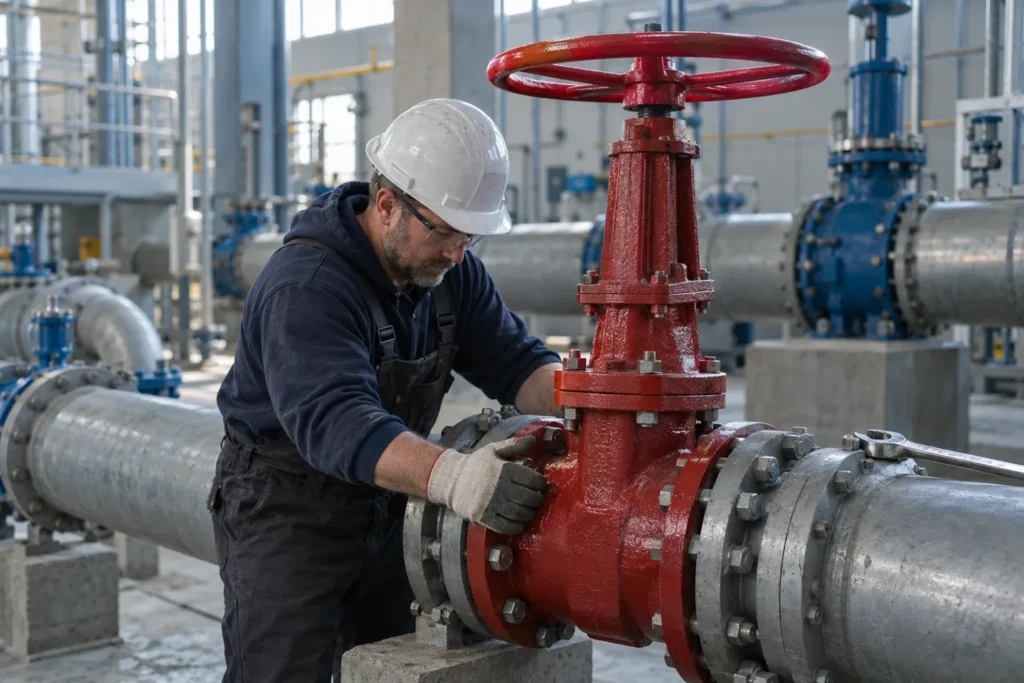
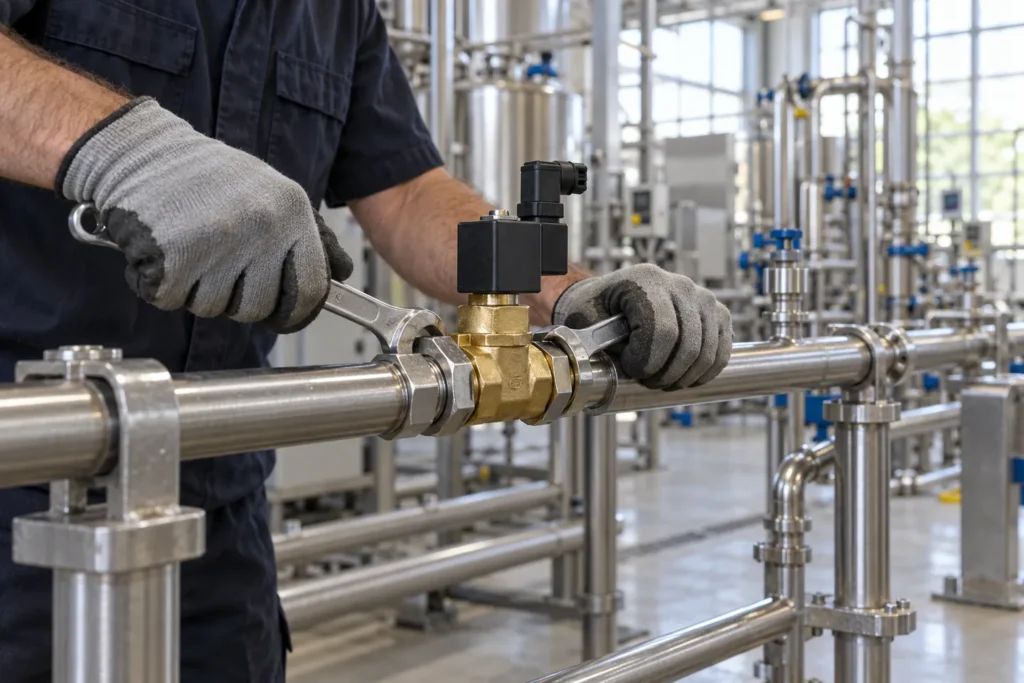
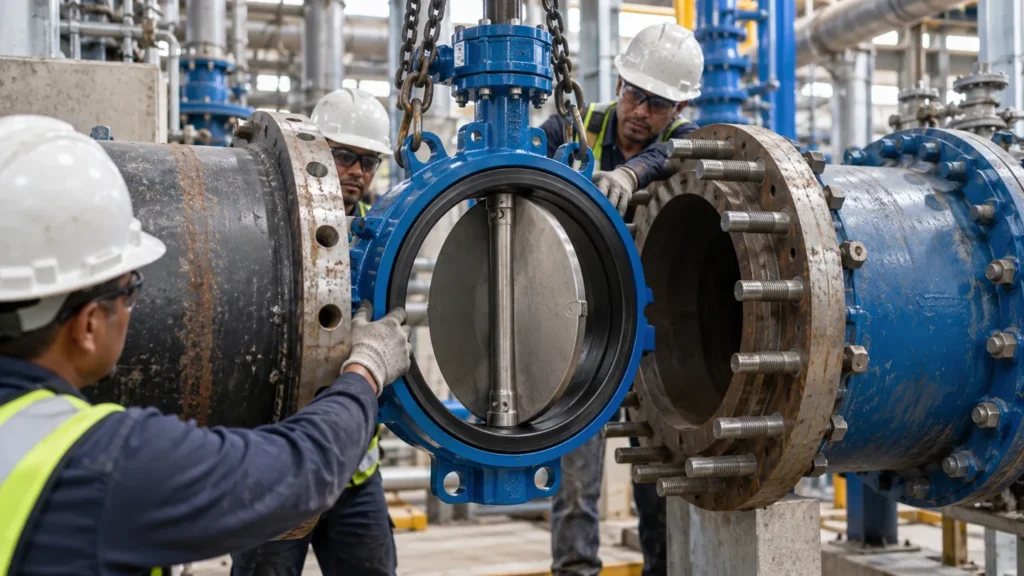
A check valve has no handle, no actuator, and no operator. Flow pushes it open; backflow snaps it shut. That simplicity is why the smallest ones cost less than a pizza. It is also why one product category can hold an $8 fitting and a $4,000 engineered valve without either number being wrong. The valve stays cheap until your spec gets serious. The moment a drawing calls out stainless steel, a flange standard, or a pressure class, you have left the retail aisle and entered a different market. This guide walks that whole distance, because “check valve price” means something different at each stop, and buyers who know which stop they are on rarely overpay.
What a Check Valve Actually Costs: Three Price Worlds
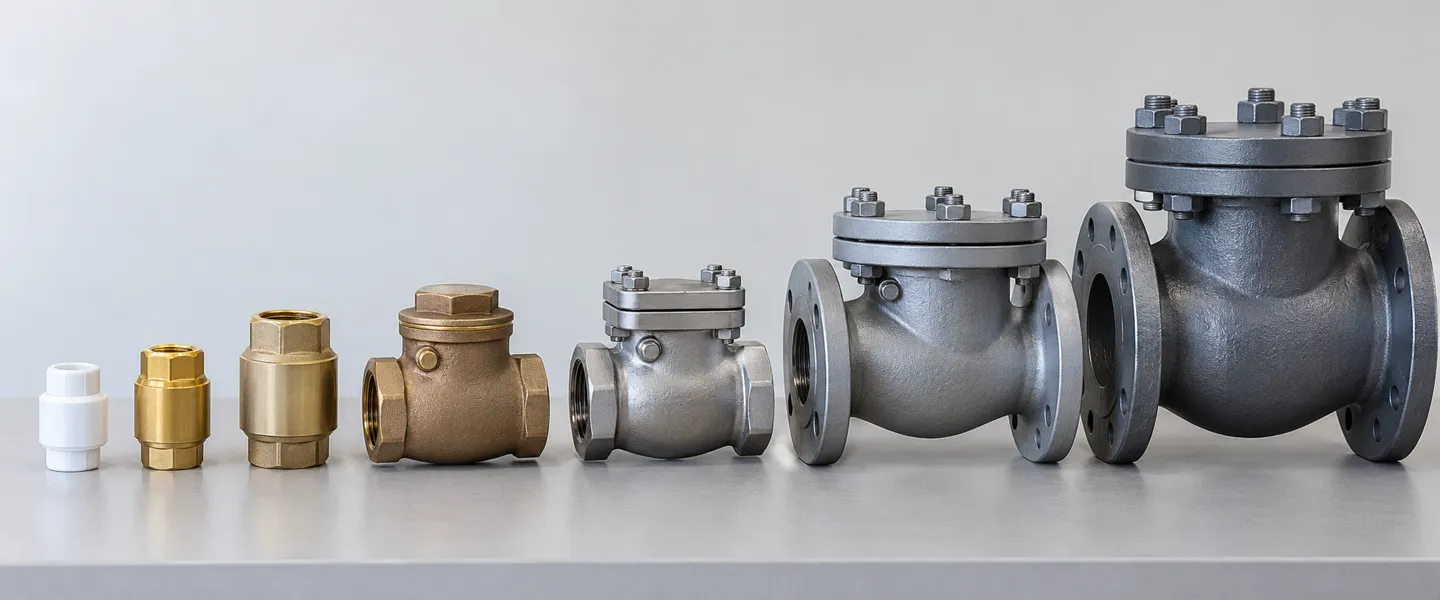
Type “check valve” into any hardware search and you get three overlapping price worlds, not one market. The retail world runs roughly $10 to $333 for the PVC, brass, and bronze valves sold in home improvement quantities, with a typical item around $27 according to Lowe’s category data (Lowe’s, 2026). Home Depot’s full plumbing range stretches from about $10 to $2,000 once larger iron and steel bodies join the shelf (The Home Depot, 2026).
The professional distribution world starts where threaded steel and stainless begin. A 1-inch PVC ball check lists around $114, discounted from a $142 list. A 3/4-inch 316 stainless swing check runs near $150, and industrial-focused distributors open their check valve assortments around the $195 mark.
The industrial world is priced in flange classes, not shelf bins. Municipal-grade swing checks list between roughly $1,200 and $3,100 depending on size and coating, and specialty elastomer check valves for custom line sizes reach about $4,100. Duckbill and foot valves are the edge cases here: they solve silt and priming problems the mainstream types don’t, which is why they sit at the top of the range.
The practical takeaway: before comparing any number, place it in its world. A 2-inch case makes the boundaries concrete. Retail shelving puts a 2-inch plastic or brass valve around $25 to $60. Distribution pricing for a 2-inch bronze or stainless threaded unit lands near $100 to $300. A 2-inch flanged steel valve engineered to a pressure class moves into several hundred dollars and up. Same words, three invoices.
Three Price Worlds of Check Valves
| Price world | What you get there | Typical price band | 2-inch example |
|---|---|---|---|
| Retail shelf | PVC, brass, bronze threaded valves | $10-$333 (typical H$27) | $25-$60 |
| Professional distribution | threaded steel and stainless, trade counter | H$100-$500 | $100-$300 |
| Industrial flanged | pressure-class steel and stainless flanged units | $1,200-$4,100 | several hundred dollars and up |
Which Type You Buy Sets Both the Part Price and the Service Call
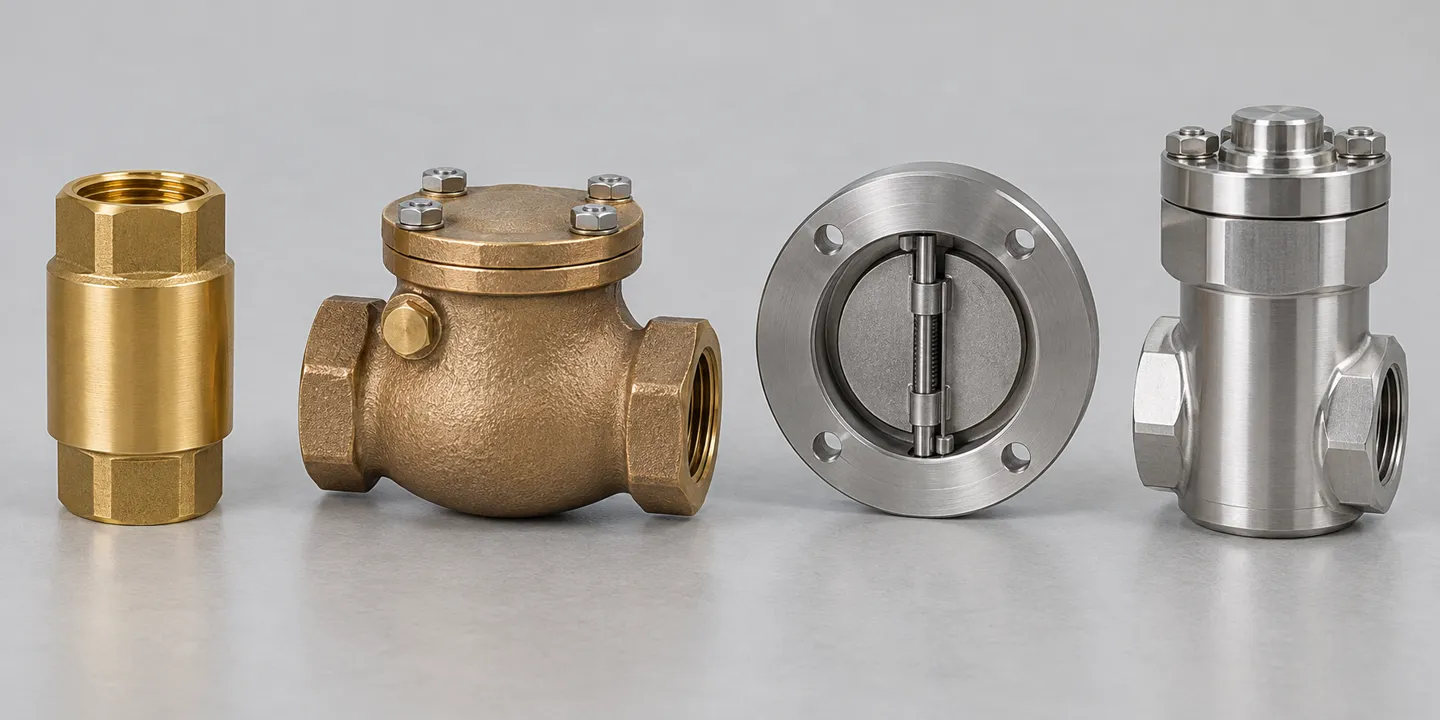
Type selection is the first multiplier on price, and it is visible right on the shelf. Ball and plastic inline checks sit at the bottom. Swing checks, the trade’s volume workhorse, step up modestly. Dual-plate wafer designs charge more for compactness and fast closure. Spring-assisted lift and silent checks cost the most per size, because what you are buying is water hammer control. The ladder holds across every world: each rung buys a different closing behavior, not just a different brand.
The part price is also the smallest line on the invoice when the valve goes into a wall or a pit. Homeowners report replacement jobs that dwarf the hardware. One sump pump swap ran about $2,800, and the 2-inch cast-iron part itself retails near $100 to $120 (r/Plumbing, 2023). Another reports $850 to replace two 3/4-inch copper check valves in one HVAC loop (r/hvacadvice, 2026). Trade-side reports fill in the arithmetic. Pros pay $50 to $100 per valve at cost and quote customers around $175 for a pool-grade replacement.
The invoice dwarfs the part
Part price: $30 to $120 on a typical swap.
Labor line: one to two hours at $150 to $250 per hour, plus drain-down and access work.
Expected bill: about $300 for a routine visit; $850 to $2,800 when the valve hides in a wall or a pit (r/pools, 2026).
Ranges as reported in r/Plumbing, r/hvacadvice, and r/pools threads, 2023 to 2026.
That arithmetic carries a boundary worth stating plainly. The cheapest closing mechanism is cheap for a reason: a bare swing disc slams shut on reversing flow and wears fastest under frequent cycling. Contractors who install the bottom-rung valve into a hammer-prone or high-cycle line buy themselves a call-back that costs more than every dollar saved on the part. The valve type ladder is priced the way it is because each rung removes a failure mode.
Why Two “Identical” Check Valves Differ 30% in Price
Procurement engineers meet a sharper version of the same puzzle. Two quotes arrive for what reads as the same valve, same size, same “stainless steel,” and one is 30% cheaper. Nothing about the cheaper quote is necessarily a scam. The price gap lives in three specification axes that the phrase “stainless steel” quietly erases.
Material Grade: CF8 and CF8M Are Not the Same Valve
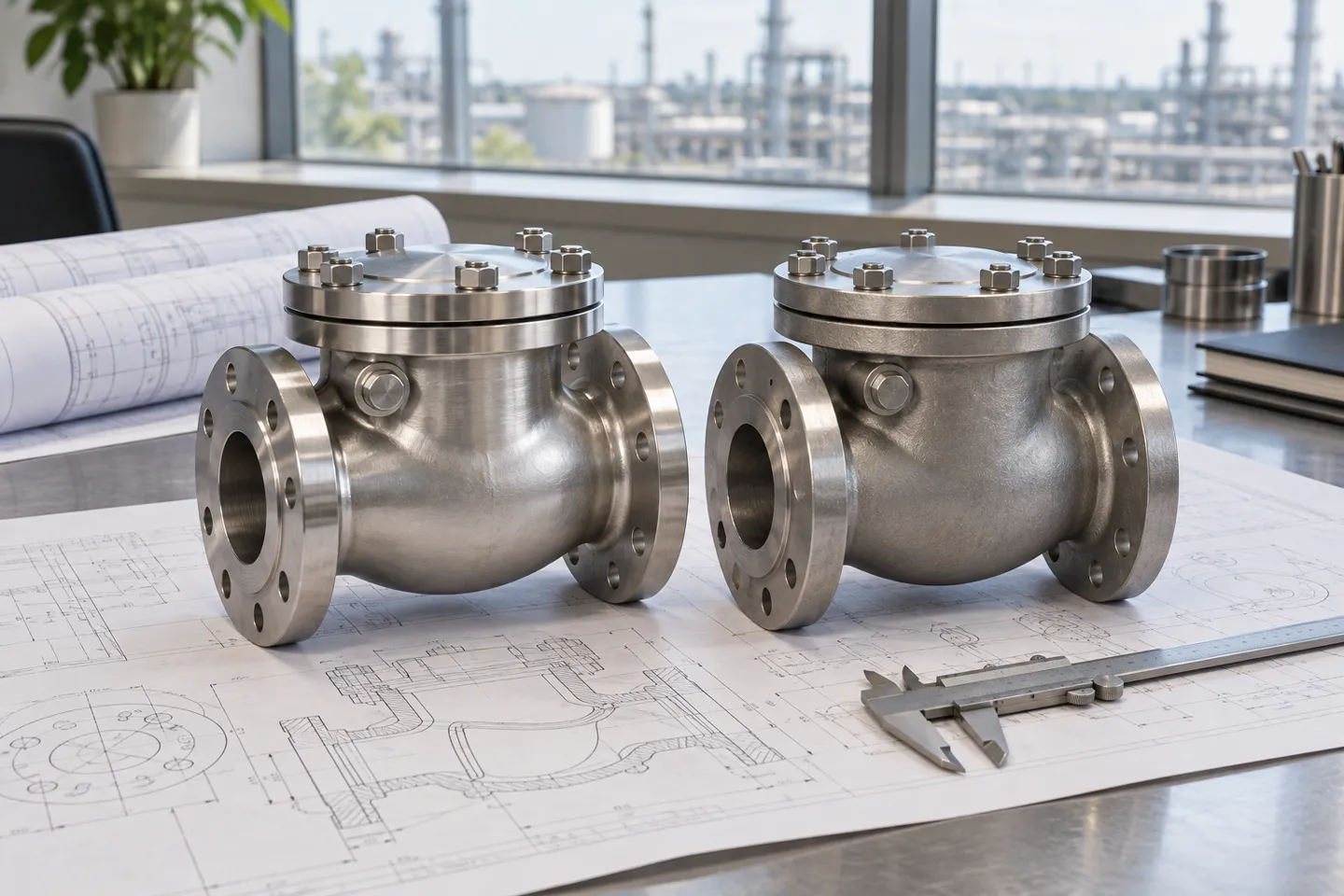
Body material is the largest single price axis. The industry ladder runs PVC, then brass and bronze, then WCB carbon steel, then CF8 (the cast grade of 304 stainless), then CF8M (the cast grade of 316 stainless, with molybdenum added for chloride resistance). One sourcing engineer documented the exact stakes. Across orders of nominally identical valves, quotes in CF8M came in roughly 30% above CF8 equivalents, and both are honestly described as “stainless steel” (flangedswingcheckvalve.com, 2026). The boundary follows the medium: chlorides, acids, and potable or food-contact service push you up the ladder; dry air and oil leave the bottom rungs perfectly sound.
Pressure Class and Temperature: The Rating Moves the Price and the Safety
Pressure class is the second axis, and it is priced in the pressure-temperature curve, not the number alone. A Class 150 valve is not “good for its class” at every temperature; the allowable pressure falls as temperature climbs along a published derating curve. One documented failure bought this lesson expensively. A DN100 316 stainless valve was quoted at Class 150 for 180°C steam service. It passed the ambient-temperature hydrotest, then leaked during warm-up, because the steam-side rating of the class was never checked (flangedswingcheckvalve.com, 2026). Seat design brackets the same axis from below: soft seats (NBR, EPDM, PTFE) hold roughly -20 to 150°C, while metal-seated designs carry service to 425°C and price accordingly. Catalog depth matters here too. A line that spans wafer checks at DN15 to DN200 in PN10/16/25, plus flanged swing checks to DN600 with metal seats, lets you step across that curve instead of jumping vendors.
Connection and Structure: Wafer Is Cheaper per Unit and Sometimes Not Cheaper
The third axis is how the valve attaches and closes. Wafer designs sandwich between the line flanges and cost the least per unit; flanged bodies bolt up directly and cost more in cast weight and machining. But the wafer discount carries a precondition: the mating flanges must actually be drilled and spaced for wafer installation. One buyer saved $60 per valve choosing wafer over flanged on a DN200 line, then paid $470 in replacement costs plus a week of delay. The existing flanges could not carry the wafer style at all (flangedswingcheckvalve.com, 2026). Facing finish belongs in the same sentence: raised face (RF) and flat face (FF) flanges are not interchangeable on mating surfaces, and quotes that blur them are not comparable.
Put the three axes together and the 30% mystery dissolves into a readable spec. Every price difference traces to a grade, a rating, or a connection choice, and each carries its own failure mode if ignored.
What Moves a Check Valve’s Price, and What Happens If You Ignore It
| Price axis | What moves the number | Verify before comparing | Failure mode if ignored |
|---|---|---|---|
| Material grade | PVC ’ brass ’ WCB ’ CF8 ’ CF8M (H30% steps) | full grade designation and MTR | corrosion, rejected lots |
| Pressure class and seat | PN10-PN40 / Class 150-300, soft seat to 150°C, metal seat to 425°C | P-T curve at working temperature | leaks at warm-up |
| Connection and structure | wafer vs flanged, RF vs FF | mating flange drill pattern and facing | rework, delay, remachining |
Comparing Quotes Without Getting Burned
Once the three axes are readable, the buying problem changes shape. It is no longer “which price is low” but “which quotes can be compared at all.” Industry experience is blunt on this point. Unit price is the easiest number to compare and the most misleading. A checklist of six other dimensions decides whether that number survives contact with the delivery truck (flangedswingcheckvalve.com, 2026).
Step One: Make the Quotes Say the Same Words
Align the specification line by line before looking at money: full body grade (CF8M, not “stainless steel”); pressure class with the P-T curve at your working temperature; flange standard and facing (ASME, DIN, GB, or JIS; RF or FF); structural type (wafer, swing, lift, dual-plate); and connection standard. A quote that writes “stainless steel” has told you nothing yet. One documented order found the hard way. 24 valves arrived badged CF8M, but the mill test reports showed carbon content in the CF8 range. The whole lot went back. With re-shipping at $180 per unit, air freight, and a stopped job site, the 18% saving on the low quote went to zero and past it (flangedswingcheckvalve.com, 2026).
A quote that already names the cast grade, the pressure class, and its temperature basis is a quote you can compare line by line: ask Vincer for one.
Send Your Spec for a QuoteStep Two: Verify Before the Valve Ships
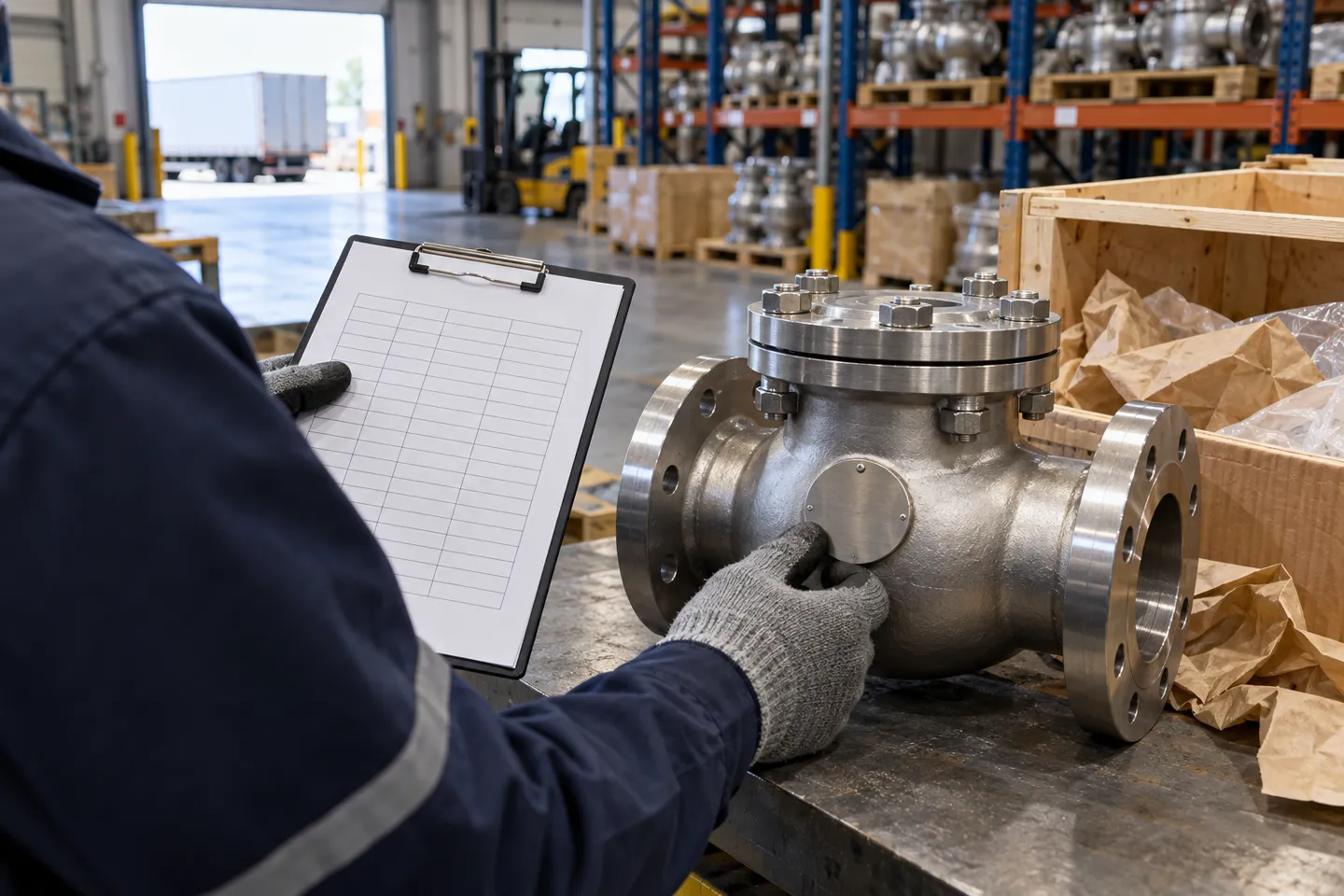
Mill test reports (MTRs) matched to heat numbers are the certificate of the exact melt that became your valve. The verification is mechanical: ask for the MTR, check the heat number against the nameplate at receiving, and open-box sample the lot. The same engineer’s lesson list includes a small lot where two of six swing checks had machining burrs holding the disc slightly open. The defect was worth about $400 and surfaced only at installation, along with the goodwill it cost with the contractor. Suppliers who send pre-shipment inspection photos and test videos are telling you which side of that checklist they live on.
Step Three: Price the Ownership, Not the Unit
The last step is the one that reorders the whole comparison. In a 40-year lifecycle study of 12-inch valves, the swing check was the cheaper unit at purchase. Yet once maintenance and pumping energy entered the account, it cost almost twice as much in total as the dual-plate valve beside it (Sotoodeh, 2018, citing Val-Matic research). The same inversion appears in the quote pile. $212 per unit with a 36-month warranty and bundled freight is a different instrument from $178 ex-works with 12 months and freight billed separately. A single warranty replacement in service erases the $34 difference many times over (flangedswingcheckvalve.com, 2026). Downtime is the multiplier that makes small differences large. One valve distributor’s cooling-tower guidance opens with a simple observation: a stopped line costs tens of thousands per day. That is why their answer to chronic cycling failures was a premium silent check, one that has run since 2012 without replacement.
Quote Alignment Matrix: Six Lines to Match Before Comparing Prices
| Comparison line | How it hides in a quote | Action to take | Cost of skipping it |
|---|---|---|---|
| Material grade | “stainless steel”, CF8 vs CF8M | require full grade + MTR with heat number | lot rejection, $180/unit reship + downtime |
| Pressure rating | “Class 150” with no temperature basis | check P-T curve at working temp | leaks at warm-up |
| Flange spec | “flanged” unlabeled | confirm standard (ASME/DIN/GB/JIS) + facing (RF/FF) | won’t bolt up |
| Structure type | wafer quoted vs flanged drawn | verify mating flanges accept wafer | $60 saved ’ $470 rework + 1 week |
| Warranty | bare unit price | compare warranty window (12 vs 36 months) | one replacement erases the gap |
| Freight terms | FOB vs delivered | normalize to landed cost per site | logistics surprises at delivery |
The 40-Year Ledger
2×
In a 40-year lifecycle study of 12-inch valves, the swing check that was cheapest at purchase cost almost twice as much in total as the dual-plate beside it, once maintenance and pumping energy entered the account.
Sotoodeh, 2018, citing Val-Matic research. Unit price answers the wrong question; the matrix above answers the right one.
Buying Past the Distribution Layer
At some volume, every distributor margin becomes a line item worth questioning. Buying direct from the manufacturing plant is how project buyers and wholesalers resolve that question, and the mechanics are simpler than the reputation suggests. A factory quote is built from the same axes you just learned to read: material grade, pressure class, standard system, and quantity. What direct buying removes is the reseller layer; what it asks in return is batch commitment and clear communication.
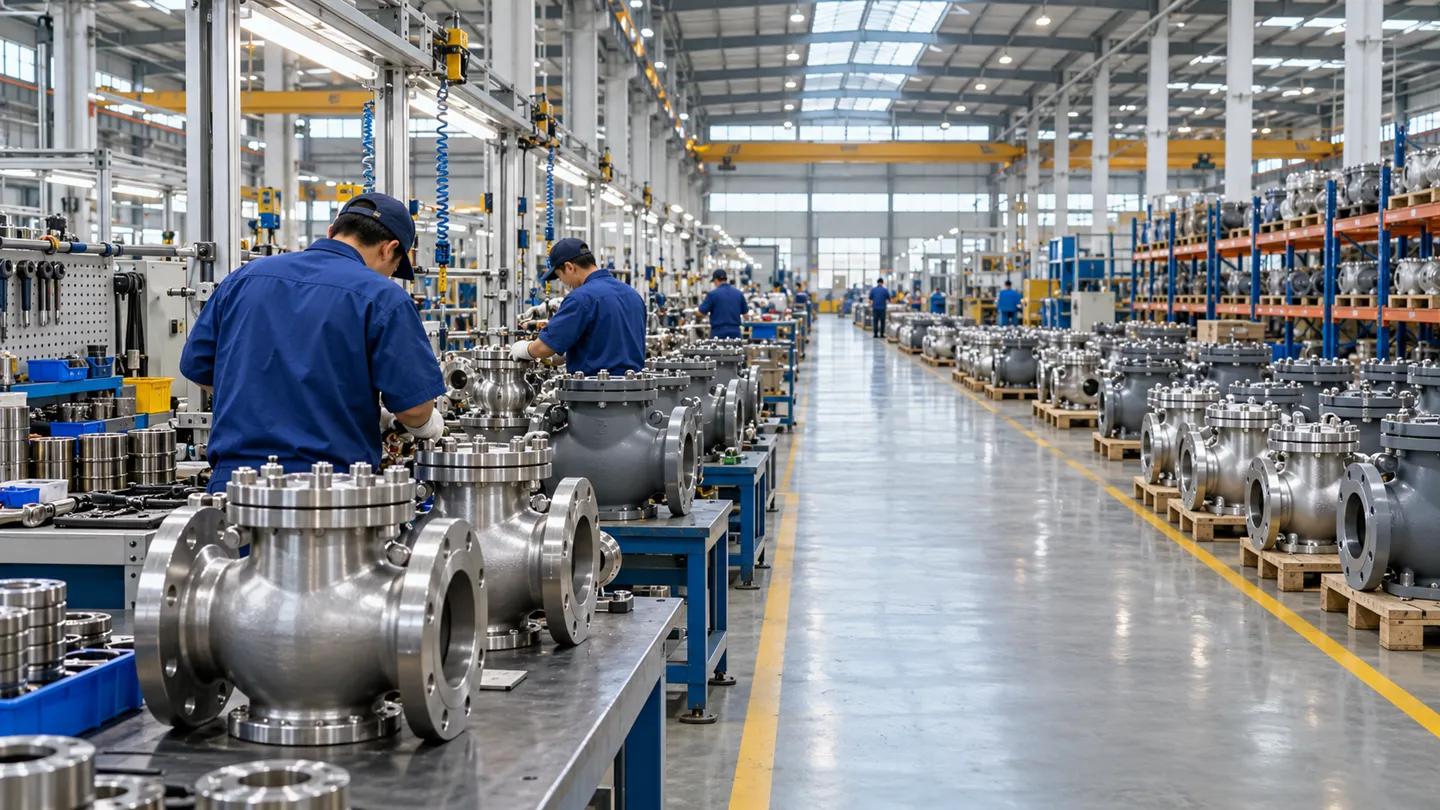
The process itself runs in six steps: send an inquiry with the working parameters, confirm the requirement with the supplier’s engineers, receive a solution and quotation, confirm and place the order, production with inspection, delivery. The step that controls both price and speed is the first one. An inquiry that states medium, temperature, pressure, connection standard, and control requirement can be quoted in about 24 hours for a simple case, or a 48-hour initial plan for a multi-product project. Vague inquiries wait in queue. A manufacturer publishing 7-10 working day lead times for standard products and 15-30 days for custom builds is telling you its production queue honestly. For a project buyer, schedule certainty is itself part of the price (Vincer Valve, 2026).
The Direct Order Path
Send the inquiry with working parameters
Medium, temperature, pressure, connection standard, control requirement; a complete one is quoted in about 24 hours, a multi-product project in about 48.
Confirm the requirement with the supplier’s engineers
Spec ambiguities are cheapest to kill here, before they become steel.
Receive the solution and quotation
Every line names the grade, the class, and the standard, so it reads like the matrix.
Confirm and place the order
Batch commitment is what the factory price asks in return.
Production with inspection
Ask for MTRs and pre-shipment photos here, not after delivery.
Delivery
7 to 10 working days for standard valves; 15 to 30 for custom builds.
Minimum order reality is friendlier than most buyers expect on commodity lines. The wafer check valve series, for example, is offered from a single piece with the full grade selection (WCB, CF8, CF8M) and PN10/16/25 classes. That lets a buyer test a supplier with one order instead of betting a project on it (Vincer Valve, 2026).
As the manufacturer behind the wafer and flanged check valve lines referenced above, Vincer quotes the way this article recommends comparing. Every quote names the grade to the cast designation and states the pressure class with its temperature basis. Flange standards cover ANSI, GB, DIN, and JIS, so it drops into your existing drawing without translation. Standard valves ship in 7-10 working days and custom builds in 15-30. Mill test reports and pre-shipment inspection photos are available on request. Our wafer check valve range is open from single-piece quantities, in case you want to verify the discipline before committing a project to it.
The Buyer-at-Scale Ledger
For wholesalers and project purchasers, the check valve category pays out on two very different shelves. The volume shelf is wafer-class commodity: low unit price, fast turnover, quoted against catalog. The margin shelf is the verified mid-to-high spec. Think named grades with clean MTRs, certificates that match heat numbers, metal seats rated to 425°C, and quote sheets already aligned to the six-line matrix. The first shelf wins the order; the second shelf wins the re-order.
That inverted logic is the real ledger. The 30% material gap, the 40-year cost doubling, and the 18% quote that evaporated all point one way. In a commodity category, the durable advantage is not the lowest number; it is the quote that survives verification. Stock and quoting effort should tilt toward valves that can pass the matrix, with commodity wafer lines carrying the traffic. That is the structure the failure cases in this article quietly argue for. Certificates, inspection videos, and honest lead times are not overhead in that structure; they are the product features the buyer-at-scale is actually shopping for.
If you want to test a manufacturer’s quote against this matrix, Vincer’s check valve lines and certifications page are online. A single-piece wafer order is enough to run the comparison.
Put a Manufacturer’s Quote Against This Matrix
Send your size, medium, and pressure class. Vincer quotes wafer and flanged check valves with named grades (WCB, CF8, CF8M), stated pressure classes, MTRs and pre-shipment photos on request, and wafer orders open from a single piece.
Request a Check Valve QuoteReferences
- Lowe’s. “Check Valves for Water Flow Control.” 2026. https://www.lowes.com/pl/valves-valve-repair/check-valves/2072701023
- The Home Depot. “Check Valves.” 2026. https://www.homedepot.com/b/Plumbing-Valves-Check-Valves/1-1-2/N-5yc1vZca2uZ1z1draa
- r/Plumbing. “Seems awful high for a valve replacement (sump pump).” 2023. https://www.reddit.com/r/Plumbing/comments/1863lua/seems_awful_high_for_a_valve_replacement_sump/
- r/hvacadvice. “Check valve replacement insane cost?” 2026. https://www.reddit.com/r/hvacadvice/comments/1qs8u6h/check_valve_replacement_insane_cost/
- r/pools. “Check Valve Question.” 2026. https://www.reddit.com/r/pools/comments/1tdjoye/check_valve_question/
- flangedswingcheckvalve.com. “Swing Check Valve Sourcing: 8 Checks I Now Run After $7,400 in Costly Mistakes.” 2026. https://www.flangedswingcheckvalve.com/blog/swing-check-valve-sourcing-8-checks-i-now-run-after-7400-in-12.html
- Sotoodeh, K. “Comparing Dual Plate and Swing Check Valves and the Importance of Minimum Flow for Dual Plate Check Valves.” American Journal of Industrial Engineering, 5(1). 2018. https://pubs.sciepub.com/ajie/5/1/5/index.html