
If you have ever specified a standard gate valve on a wastewater, slurry, or pulp line — only to find it jammed, leaking internally, or impossible to close fully within six months — you already know the frustration. The valve itself was not defective. It was simply the wrong tool for the job.
What follows is a breakdown of why that happens, what separates a knife gate valve from a conventional gate valve at the design level, and how to make the right call for your application.
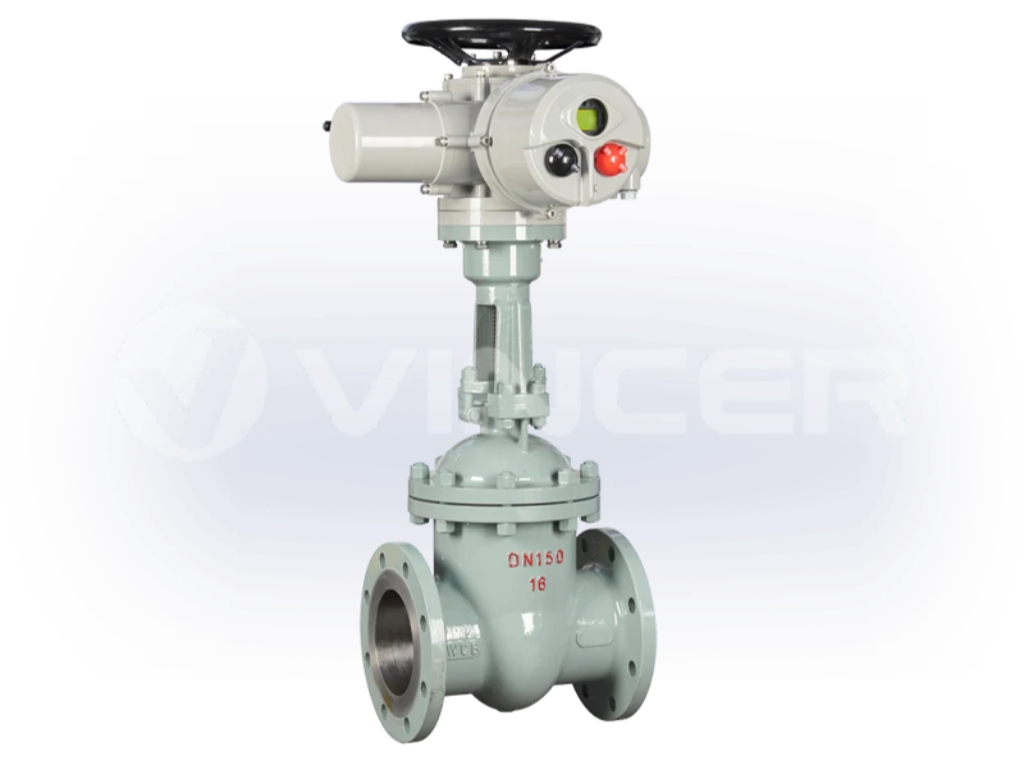
The Design Philosophy — Why the “Pocket” Makes All the Difference
Every standard gate valve has a built-in design feature that makes it the wrong choice for certain media — and the right choice for others. That feature is the body cavity, or “pocket,” beneath the gate. Understanding this single geometry difference is the key that unlocks every other comparison between these two valve types.
How a Standard Gate Valve’s “Pocket” Traps Debris — And Why It Fails
A conventional gate valve seals by driving a wedge-shaped or parallel disc into a recessed seat pocket at the bottom of the valve body. This pocket is essential for achieving a tight metal-to-metal shutoff — but it comes with a hidden cost.
In any media containing suspended solids, the pocket becomes a settlement basin. As flow passes through the valve, heavier particles drop into this cavity. Over weeks or months, the accumulated debris compacts into a hardened layer. The failure chain is predictable: the gate can no longer travel to its fully seated position, the sealing surfaces get scratched by trapped grit, internal leakage begins, the stem binds under uneven load, and the valve becomes inoperable.
Failure Chain:
-
Gate Can’t Seat
-
Seals Scratched
-
Internal Leak
-
Stem Binds
-
Valve Fails
A DN200 gate valve on a wastewater treatment sludge line can accumulate 20 mm of compacted solids in its bottom pocket within three months — enough to prevent full closure entirely. Think of it like sand building up against the bottom of a doorframe: at some point, the door simply will not shut.
How a Knife Gate Valve Cuts Through the Problem
A knife gate valve solves this through a fundamentally different geometry. There is no bottom pocket. The body is through-conduit — a straight, unobstructed bore from inlet to outlet. The gate itself is a thin, beveled blade (typically with a 45° to 60° single-side bevel) that slices downward through the media column.
As the blade descends, it physically cuts through fibers, pushes solids aside, and seats against a resilient or metal seat ring. When the valve opens, any residual material on the blade face is scraped clean by the seat and packing skirts — a self-cleaning action built into every stroke cycle.
This is why the knife gate valve was originally developed for the pulp and paper industry, where stringy wood fibers would catch between a standard gate and its seat, making shutoff impossible. The blade cuts through what a wedge cannot.
The trade-off is sealing precision. A knife gate valve under low differential pressure or vacuum conditions will not achieve the same bubble-tight shutoff as a well-machined wedge gate on clean media. Each design optimizes for a different problem.
Comparison:
-
Gate Valve — The Pocket: Debris settles in body cavity. Accumulates. Jams.
-
Knife Gate — The Blade: Blade cuts through. Self-cleans every stroke. No trap.
Application Match — Where Each Valve Type Belongs
The choice between these two valves is never about which one is “better.” It is about what is flowing through your pipe. Match the valve to the media, and you will have a reliable system. Get it wrong, and you will be replacing valves — or shutting down your line.
A simple rule of thumb: if your media leaves visible residue at the bottom of a glass after ten minutes of settling, you need a knife gate valve.
Quick Diagnostic: If your media leaves visible residue at the bottom of a glass after ten minutes of settling, you need a knife gate valve.
Clean Media — Gate Valve Territory
For clean water, steam, oil, natural gas, and refined products, the conventional gate valve remains the industry standard — and for good reason. Its wedge-to-seat geometry delivers bidirectional zero-leakage shutoff when tested to API 598. Full-port design keeps pressure drop minimal. And with pressure ratings extending from Class 150 to Class 2500, it covers everything from municipal water mains to high-pressure steam lines in power plants.
Typical applications include potable water distribution networks, fire protection mains, crude oil pipelines, boiler feedwater systems, and HVAC chilled water circuits. In all of these, the media is clean enough that debris accumulation in the body pocket is a non-issue — the valve’s design strengths are fully utilized without its weakness being triggered.
Solids-Laden and Viscous Media — Knife Gate Valve Territory
Once solids, fibers, or high-viscosity fluids enter the picture, the knife gate valve becomes the only practical choice. Its through-conduit, no-pocket design is purpose-built for exactly these conditions.
Wastewater treatment plants use knife gate valves on raw sewage intake, primary sludge, and return activated sludge lines — applications where stringy solids and grit will destroy a standard gate valve in months. Mining operations rely on them for tailings slurry, flotation concentrate, and fly ash handling, where abrasive particle concentrations routinely exceed 20% by weight. Pulp and paper mills install them on pulp stock, black liquor, and white liquor circuits, where long cellulose fibers wrap around any surface irregularity they can find.
Cement plants and bulk solids handling facilities use knife gate valves to isolate cement powder, lime slurry, and fly ash — media that settle rapidly when flow stops, packing solid within minutes. Chemical processors specify them for corrosive slurries and viscous polymer melts. Even food and beverage plants use specialty knife gate valves on high-viscosity products like molasses, honey, and fruit pulp, where a standard gate’s pocket would become a sanitation nightmare.
Industries:
-
Wastewater: Raw sewage, sludge
-
Mining: Tailings, slurry
-
Pulp & Paper: Fibers, black liquor
-
Cement: Powder, lime slurry
-
Chemical: Corrosives, polymers
-
Food & Bev: Viscous products
In each of these cases, the question is not “is a knife gate valve better?” It is “can any other valve type survive this service?”
The Gray Zone — When Either Could Work
Not every application falls cleanly into one category. If your media contains less than 1% solids by weight, with particle sizes under 0.1 mm, a standard gate valve can often handle the service — provided the solids are non-abrasive and non-settling. Similarly, if you need guaranteed bidirectional tight shutoff, the conventional gate valve has a clear edge unless you are willing to pay the 40–60% premium for a bidirectional knife gate valve design.
Installation constraints can tip the balance the other way. A knife gate valve’s face-to-face dimension per MSS SP-81 is typically 60–70% shorter than a comparable gate valve built to API 600. Taking DN150 as an example: a Class 150 gate valve measures roughly 355 mm face-to-face, while an equivalent knife gate valve measures around 120 mm. In a congested pipe gallery, that difference matters.
| Condition | Recommended Valve |
| Solids < 1% wt, particles < 0.1 mm, non-abrasive | Gate valve feasible |
| Bidirectional tight shutoff mandatory | Gate valve (or bidirectional knife gate at premium) |
| Tight installation space, weight-sensitive | Knife gate valve |
| Trace solids, uncertain future media | Knife gate valve (safer hedge) |
Technical Specs at a Glance — Pressure, Sealing, and Installation
For quick reference, here is how the two valve types compare across the key engineering dimensions. Use this table when you need hard numbers, not narrative.
| Dimension | Gate Valve | Knife Gate Valve |
| Design standard | API 600, API 603, API 6D | MSS SP-81 |
| Pressure range | Class 150–2500 | PN10–PN16 (approx. Class 150) |
| Sealing direction | Bidirectional (standard) | Unidirectional (standard); bidirectional available |
| Face-to-face (DN150) | ~355 mm (API 600) | ~120 mm (MSS SP-81) |
| Weight (DN150, carbon steel) | ~90–120 kg | ~35–55 kg |
| Body materials | Cast iron, WCB, SS304/316, alloy steels | Cast iron, SS304/316, WCB, specialty alloys |
| Seat/seal materials | Metal-to-metal (standard), Stellite overlay | PTFE, reinforced PTFE, EPDM, Viton, metal hard-seal |
| Actuator compatibility | Electric, pneumatic, hydraulic, gearbox | Electric, pneumatic, hydraulic, gearbox (lower torque requirement) |
| Temperature range | Up to 650°C (alloy body / stellite seat) | PTFE ≤ 260°C, EPDM ≤ 120°C, metal hard-seal ≤ 800°C |
The pattern is clear: gate valves are heavier, thicker, and built for high-pressure integrity. Knife gate valves are lighter, slimmer, and optimized for media-handling capability over sealing precision.
Key Stats:
-
4× – Lighter on average
-
70% – Shorter face-to-face
-
Class 150–2500 – Gate valve pressure range
Beyond Purchase Price — Why Total Cost of Ownership Changes the Equation
Most valve comparison articles skip this, but the purchase price of a valve typically represents only 15–25% of what you will actually spend on it over its service life. The real question is not “which valve is cheaper to buy” — it is “which valve is cheaper to own.”
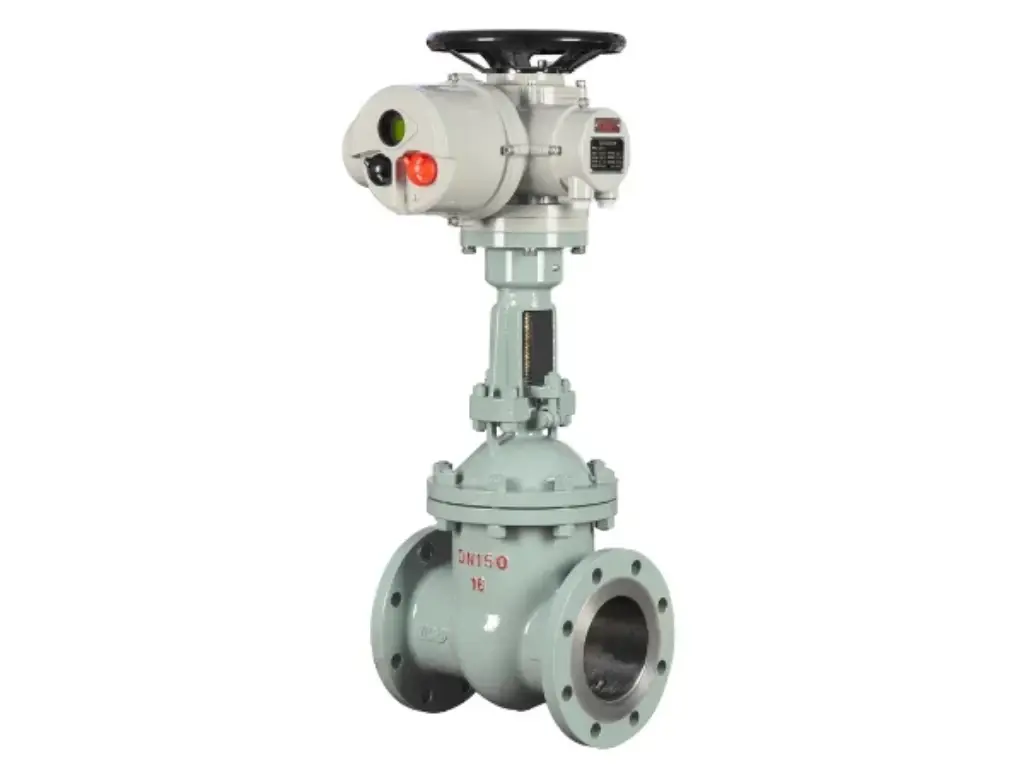
Upfront Cost vs 5-Year Lifecycle Cost
Take a DN150 carbon steel gate valve and knife gate valve, both installed on a wastewater sludge line.
The knife gate valve may cost roughly 20–30% less upfront. But the real gap emerges in maintenance. On a sludge line, a standard gate valve typically requires unclogging or seat repair every 3–6 months — an operation that demands crane access, disassembly, and line downtime. The knife gate valve, by contrast, may run 2–3 years between seal replacements, and each replacement costs roughly 15–20% of the valve’s purchase price in labor and parts.
Over five years, the gate valve on this service line might incur 8–10 maintenance events versus 1–2 for the knife gate valve. When you factor in labor, replacement parts, and — critically — the cost of each shutdown, the total cost of ownership difference can reach a factor of three to five in favor of the knife gate valve.
On clean water service, the numbers reverse. A well-maintained gate valve in clean media can operate for 20+ years with minimal intervention. In that context, its higher upfront cost amortizes into near-zero annual maintenance — making it the cheaper valve to own by a wide margin.
The Hidden Cost of Downtime
The largest cost in any valve failure is rarely the valve itself. It is the production time lost while the valve is being repaired or replaced.
For a municipal wastewater treatment plant, an unplanned bypass caused by a jammed isolation valve can trigger regulatory non-compliance penalties. For a mining operation, one hour of processing line downtime can cost $5,000–50,000 depending on throughput. For a chemical plant, the figure can climb past $100,000 per hour. A single four-hour shutdown to unclog a gate valve on a slurry line can cost more than the entire installed cost of all the knife gate valves on that circuit combined.
Supplier responsiveness is part of that equation. When a valve fails, the difference between a supplier who ships in 7–10 working days and one who takes a month is measured in lost production hours. VINCER, for example, maintains 7–10 day standard lead times, with emergency semi-custom orders delivered in 15–18 days — well inside the industry-typical 20–25 day window. For international projects, that speed can mean the difference between a minor operational hiccup and a contractual penalty. If you need a firm delivery commitment tied to your project schedule, requesting a delivery timeline with your valve specification is a straightforward step.
The 3-Step Decision Framework
Here is a straightforward decision framework you can apply to your own project, built on everything covered so far — the design logic, application mapping, technical specs, and cost picture.
-
Analyze Your Media: Solids, fibers, or grit? Choose knife gate valve. Clean water, oil, gas, or steam? Choose gate valve. This single question resolves roughly 80% of selection decisions.
-
Check Your Operating Conditions: High pressure (>Class 300) or sustained temperature above 260°C? Gate valve. Bidirectional shutoff needed? Gate valve or bidirectional knife gate. Tight space or weight limit? Knife gate valve.
-
Run the TCO Math: Compare five-year maintenance costs. For trace solids (≤1% wt), the knife gate valve is the safer hedge — it handles clean media adequately while a gate valve facing unexpected solids will fail.
The right valve is determined by your media, not by the valve catalog. If you need engineering support to confirm your selection, VINCER’s engineering team provides technical consultation with a 12-hour response guarantee and remote diagnostic support — helping you move from shortlist to installation with confidence.
References
-
Manufacturers Standardization Society. “MSS SP-81: Stainless Steel, Bonnetless, Flanged, Knife Gate Valves.”
-
American Petroleum Institute. “API 600: Steel Gate Valves — Flanged and Butt-Welding Ends.”
-
American Petroleum Institute. “API 598: Valve Inspection and Testing.”
 English
  French
  Spanish
  Italian
  German
  Dutch
Dutch  Portuguese
  Korean
  Russian
  Chinese
  Finnish