
Introduction
Water is no longer considered as a utility in the modern industrial environment but rather a strategic resource. The need for reliable water treatment solutions is absolute, whether it is to supply the municipal, to process industries, or to clean up the environment. Effective industrial water treatment has a dual purpose: it has a dual purpose to safeguarid human health and the life of industrial infrastructure through corrosion and scaling prevention. Nevertheless, the most urgent question to project managers, system engineers, and stakeholders is: What is the actual cost of a water treatment plant?
The solution is not often a one-man figure. The calculation of the cost of a water treatment plant is a complicated game of weighing upfront capital costs against decades of operational reality. To make this investment without a granular knowledge of the cost drivers is to sail in a fog without a compass. This article gives a comprehensive dissection of the financial framework of water treatment facilities, which gives the insight to make informed, data-driven decisions.
What is Water Treatment Plant and Its Reality Cost
A Water Treatment Plant is a special industrial plant that combines physical, chemical and biological treatment for the purification of raw influent, be it a municipal tap, a river or industrial waste containing various contaminants into water that is of high quality standards. But most project managers fail in the definition of its Reality Cost.
The Total Life-Cycle Cost (LCC) is the reality cost of a WTP. The so-called Iceberg Effect in the industry is that the Capital Expenditure (CAPEX) is the tip of the iceberg above the waterline, but the maintenance costs and Operational Expenditure (OPEX) is the giant, submerged weight below the waterline that can sink the profitability of a project over 20 years. A cheap plant with low quality valves or inefficient pumps will ultimately cost three times the initial cost in repairs and energy wastage. The reality cost should then be calculated in Cost Per Cubic Meter of treated water per m 3 of the total functional life of the plant.
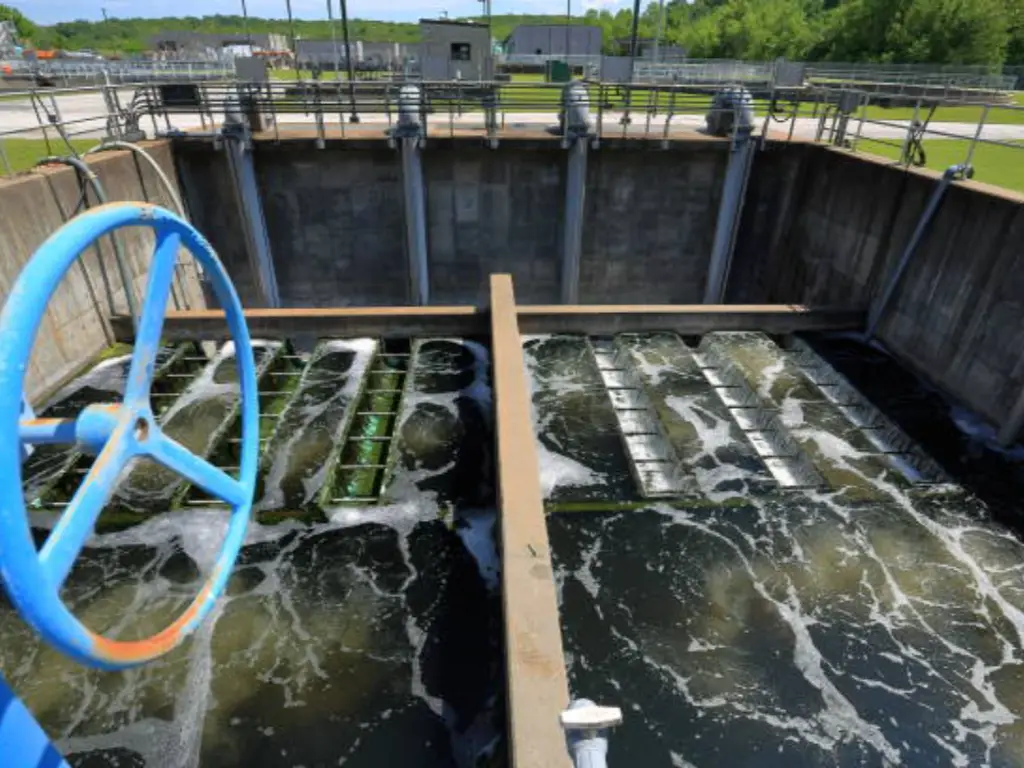
Estimated Cost Ranges by Plant Scale and Type
The functional requirements and operational volume of a water treatment plant are the basic determinants of its financial architecture as shown in the comparative data below, utilizing various treatment technologies to achieve specific goals.
Costs by Type of Treatment
The gap between your source water and your desired purity determines the technology train that you will need.
Treatment Type | Application/Purpose | Primary Cost Drivers | Estimated CAPEX (USD) | Why the Variation? |
Surface Water (Potable) | Municipal drinking water from rivers/lakes | Turbidity, Pathogen count | $1.5M – $15M | Requires extensive sedimentation basins and large-scale disinfection systems. |
Seawater Desalination (RO) | Fresh water for coastal industries/cities | Total Dissolved Solids (TDS) | $5M – $150M+ | High-pressure requirements necessitate expensive alloys and energy recovery devices. |
Industrial Wastewater | Textile, Chemical, or Mining discharge | COD/BOD, Heavy Metals | $2M – $25M | Complexity of chemical precipitation and secondary waste management. |
Ultra-Pure Water (UPW) | Semiconductor & Pharma manufacturing | Conductivity, Particle count | $500k – $8M | Multi-stage polishing (EDI, UV, Ion Exchange) for extreme precision. |
Greywater Recycling | Commercial buildings, Irrigation | Biological Load (BOD) | $200k – $2M | Lower pressure requirements; simpler filtration/chlorination allows for cost savings. |
Cost Ranges by Plant Scale
The scale determines whether the plant is a product (modular) or a project (civil construction).
Plant Scale | Typical Capacity | Estimated CAPEX (USD) | Key Cost Difference Reasons |
Small (Rural/Containerized) | 50 – 500 m³/day | $150,000 – $800,000 | Ideal for small communities, these often feature a small footprint and “Plug-and-Play” skids. You pay for factory testing and low onsite labor. |
Medium (Industrial/Commercial) | 1,000 – 10,000 m³/day | $1M – $12M | Industry-specific customization. Costs rise due to specific standards (e.g., FDA for food or ATEX for oil) and a higher level of system automation. |
Large (Municipal) | > 50,000 m³/day | $25M – $200M+ | Civil works dominance and massive concrete structures drive these upfront capital costs. |
Deep Dive: Breaking Down CAPEX vs. OPEX
In order to control the budget of a water project, it is necessary to consider the line items that consume capital and those that support life-cycle operations.
Capital Expenditures (CAPEX): Where the Upfront Money Goes
CAPEX is the initial investment costs that is needed to convert a piece of land into a working facility (Day 0). It is broadly categorized into three non-negotiable pillars:
Civil Works and Infrastructure: This is the “Skeleton” of the plant. This involves site preparation and the selection of durable construction materials. Civil costs are influenced by the facility’s general arrangement, involving reinforced concrete basins and storage reservoirs. Civil costs in industrial areas are usually between 300 and 700 dollars per square meter of footprint. In case the project is corrosive chemicals, the concrete should be lined with special epoxy or HDPE that can cost an extra $50,000 to 200,000 to a medium-sized project. Lack of investment in quality civil works causes ground subsidence and shearing of pipes which are disastrous to repair after construction.
Process Equipment and Mechanical Systems: This is the main mechanical engine. It includes high-pressure pumps, membrane housings, filtration media and, most importantly, the automated flow control network. One centrifugal pump of high efficiency to operate an RO system may cost between 20,000 and 60,000. Automated valves (the gatekeepers of the process) may cost between 800 and 3500 per unit based on the type of actuator and material (e.g. Duplex SS316 in seawater). These systems contribute 35 to 50 percent of the total CAPEX. High-quality components from reputable fabrication shops are essential to prevent future budget drains.
Engineering, Design and Permitting: Before a single pipe is laid, a lot of capital is burned in hydraulic modeling, P&ID (Piping and Instrumentation Diagram) development and structural engineering. The 8-15 percent of the total CAPEX is usually spent on professional fees for system engineers and navigating regulatory requirements. In extremely controlled areas such as the US or Europe, environmental impact assessment and discharge permits may cost more than 100,000 dollars by themselves. This phase is to make sure that the plant is not only operational but also legal.
Operational Expenditures (OPEX): The Long-Term Financial Drain
OPEX is the total expenditure of maintaining the balance between the biological and chemical processes. These costs will outweigh the original CAPEX over a period of 20 years.
Energy Consumption (Pumping and Aeration): This is usually the largest continuing cost, 30-55 percent of total OPEX. In reverse osmosis (RO) plants, enormous quantities of electricity are used to overcome osmotic pressure by high-pressure pumps at a cost of between $0.15 and 0.55 per cubic meter of treated water. Aeration blowers (that supply oxygen to bacteria) are used in wastewater treatment, and they are 24/7 running and may use up to 60 percent of the total energy of a facility. When your plant is using inefficient manual valves or old motors, your power bill is literally a hole in your pocket that is growing every month.
Staffing and Labor Requirements: The most advanced “lights-out” automated plant still needs human supervision. In a medium-to-large facility, The cost of labor typically represents 15 percent to 30 percent of OPEX. You need hiring Class-A operators to monitor the system, chemical engineers to calibrate the water quality, and maintenance technicians to repair the mechanical. In the Western markets, annual labor in a 24/7 facility may cost between 120,000 and 350,000. The technology of the plant is complicated, which directly determines the level of skills that the staff should have, and, accordingly, the salary.
Maintenance, Repairs, and Consumables: To avoid maintenance costs spiraling out of control, an intelligent financial system sets aside 2-3 percent of the total CAPEX as an annual fund for consumables like membranes and chemical coagulants. The mechanical maintenance of valves, actuators, and pumps is included in repairs. An intelligent financial system will set aside 2-3 percent of the total CAPEX as an annual maintenance fund. The failure to replace a $500 valve seal today is likely to result in a $50,000 pump failure tomorrow.
Key Factors That Influence Your Final Water Treatment Plant Cost
Generic pricing is a trap. In order to go beyond ballparks, it is necessary to examine the seven variables that drive the needle. These are not mere line items, they are the basic drivers that determine whether a project will be a sustainable asset or a financial liability.
Flow Rate and Capacity: This is the most basic driver, yet it is hardly ever linear. A 2,000 m3/day plant does not cost twice as much as a 1,000 m3/day plant. This is because of the Six-Tenths Rule in engineering: the cost of civil works and infrastructure (tanks, buildings) increases at a slower rate than the output. Nevertheless, absolute peak load design is a typical budget-buster. When you size all your pumps, pipes, and valves to a surge that occurs only two hours a day, you are paying to have idle capital. By balancing the flow with a Raw Water Buffer Tank, you can reduce the size of the whole treatment train, Designing for the physical space and using a buffer tank can save on mechanical equipment.
Quality of Source Water and Target Purity: Cost is determined by the distance that the water has to go to reach its final specification. High Total Dissolved Solids (TDS) or high Chemical Oxygen Demand (COD) demand greater energy-intensive separation and stricter regulatory standards. As an example, simple filtration is used to convert river water to irrigation-grade water. To convert the same water into pharmaceutical-grade (Ultra-Pure Water), a secondary and tertiary polishing step such as Electrodeionization (EDI) is necessary. Every 1 percent of purity needs a geometric growth in the area of the membrane and chemical pretreatment. A 12-month water quality test is required; in case you design around a single sample of the dry season, the plant will probably fail during turbidity peaks in the rainy season, and will require costly retrofits.
Technology Choice: The land, energy, and purity trade-off is a strategic choice that determines the whole project budget. Conventional filtration has mechanical simplicity and low energy requirements but requires a huge physical footprint and extensive civil engineering. Membrane-based systems such as MBR and UF, on the other hand, can reduce land costs by up to 60 percent using compact, high-density modules, offer a small footprint but they demanda greater reliance on energy premium to operate the automated backwashing cycles. Reverse Osmosis (RO) is the best choice when the application demands high purity, e.g. desalination, which requires the maximum amount of energy and special high-pressure valves. Finally, the constraint of resources determines the investment: the scarcity of land necessitates a shift to high-density membranes, and the need of ultra-pure conditions predetermines the energy-consuming investment of RO, which considerably increases the dependence of the system on the accuracy of automation.
Material of Construction and Durability Standards: The chemical profile of the water determines the cost of all wet components. The Corrosion Tax is high in desalination or chemical wastewater. Normal carbon steel or 304 stainless steel will not last months in high-chloride conditions. You are compelled to SS316L, Duplex Stainless Steel or special PTFE linings. Although these materials have the potential to add 30-50 percent to the mechanical budget, the replacement cost of a corroded network of pipes three years after installation is frequently equal to 100 percent of the initial cost of installation. High-durability standards are in effect an insurance policy against complete system failure.
Automation & Control Systems: A high level of automation—transitioning from manual controls to sophisticated plc controls—reduces human error. A manual plant is inexpensive to construct and depends on operators to detect pressure drops or to change chemical dosing. A $50,000 membrane bank can be torn open in a few seconds, should an operator overlook a pressure spike. The nervous system of the plant is a fully integrated PLC/SCADA system with high-precision automated valves. It maximizes chemical dosing according to real-time sensors, which can save chemical OPEX by 15%. Automation replaces the variable labor with the fixed technology in the budget, while it adds to the initial budget, the level of system automation makes future OPEX more predictable.
Location and Accessibility: A remote location has a logistics multiplier. When your location does not have roads that can handle heavy loads or a reliable power supply, the expenses of delivering concrete, heavy equipment, and skilled workers can add 20 percent to the overall budget. In hard-to-reach areas, the most economical relocation would be to indicate Modular or Skid-Mounted designs. You can save the huge “Daily Per Diem” expenses of maintaining a special construction team on a remote location six months by doing 90 percent of the assembly in a factory.
Compliance & Permitting Standards: Environmental regulations of discharge (Nitrogen, Phosphorus, Heavy Metals) establish the minimum performance floor. These norms are not negotiable and depend on the region. When your local discharge permit mandates Zero Liquid Discharge (ZLD), you must resort to costly thermal evaporation or brine concentrator modules. It is important to define the Discharge Permit requirements at the Feasibility Stage. When you disregard a certain heavy metal requirement and need to add a treatment module afterwards when the plant is already constructed, it will cost you five times as much as it would have cost you had you added the treatment module at the very beginning.
Hidden Costs and Financial Risks You Might Overlook
The primary bill of materials is the least likely place to find the most dangerous financial leaks in industrial project accounting. Such implementation gaps normally increase the budgets by 20 percent or more and this directly jeopardizes the long-term profitability of the project.
Site Preparation & Land Issues
The major cause of volatility in civil expenditures is geological and infrastructural compatibility. Failure to consider the ground on which the plant is located is a common cause of dead capital investments that contribute no treatment capacity.
Soil Subsidence and Structural Reinforcement: Heavy structures such as aeration tanks demand enormous load-bearing capacity; in case geotechnical reports do not detect soft soil, the project will have to shift to deep-piling or chemical stabilization, which can take up 10% to 15% of the civil budget. Lack of this will cause structural cracking, which will cause loss of assets or astronomical insurance premiums that will ruin project ROI.
Utility Conflicts and Grid Expansion: Unrecorded underground lines at old locations lead to instant work stoppage and expensive repairs. Moreover, when the local grid is unable to support the startup surge of high-capacity pumps, the owner will be required to pay to upgrade the substation or extend the line to the tune of $100,000 to 250,000. These unexpected infrastructure expenses increase the original investment without raising the effluent production, reducing the efficiency of the project.
Waste Stream Logistics and Environmental Taxes: Waste is treated to form sludge or brine. In case of limited discharge to municipal sewers, the owners will have to install dewatering equipment or pay hazardous waste hauling at $200-500 per ton. This causes a lasting OPEX spike of 15 percent or higher, which greatly delays the payback period of the project.
The High Cost of Unplanned Downtime
The water treatment system is the throat of industrial production. When it goes wrong, the whole manufacturing process chokes, and the losses will be astronomical compared to the price of any mechanical part.
The Commissioning Burn Rate: In the 30-day trial period, one component failure (such as a valve actuator) can put the whole project on hold. Specialist engineer and contractor standby charges may be as high as 5,000 to 10,000 a day, and this will cause a cash-flow crisis in pre-operational mode before the plant can earn its first drop of revenue.
Legacy System Integration (DCS/SCADA): When connecting a new PLC-controlled plant to an old factory network, protocol incompatibilities are frequently found. Unquoted costs may be increased by custom software and hardware gateways (adding between 30,000 and 60,000) and a lack of interoperability will result in manual overrides, which add to labor costs and human error.
The Failure Multiplier and Chain Reactions: Low quality parts lead to disastrous losses; an example is a faulty valve that bursts when the pressure rises, resulting in water hammer or chemical backflow and ruining a 100,000 dollar membrane bank in seconds. This multiplier of failure takes a couple of hundred dollars in initial savings and turns it into a six-figure repair bill and massive production losses, turning the project into a controlled investment into a high-risk gamble.
How to Accurately Estimate Total Project Cost: A Practical Step-by-Step Framework
This five-step framework can be used by users to create a realistic and defensible budget of any water treatment project:
Complete an Influent and Effluent Audit: Start by having laboratory analysis of TDS, BOD, COD, pH and specific ions to determine the difference between your raw water quality and your desired output requirements. This information is what makes up your “Technology Train” so that you can choose the right order of treatment equipment and not run the risk of over-engineering your system or under-specifying your system.
Volume and Peak Loading Size Components: Find out your Average Daily Demand (ADD) and Peak Hourly Demand (PHD) to know the physical capacity of your pumps, pipes, and automated valves. To maximize the budget, you can scale the core plant to the average demand with a raw water storage tank to smooth peak hourly spikes, which is much cheaper than buying oversized industrial equipment.
Use the 60/40 Rule to Estimate the Total CAPEX: Estimate the total Capital Expenditure (CAPEX) by getting quotes on the major process equipment, e.g., membranes, pumps, and automated valves, and multiply the total by 2.5. This estimate reflects the industry fact that about 40 percent of the budget is the hardware itself, and the other 60 percent is needed to install the hardware, the so-called soft costs, and the civil engineering, electrical integration, piping, and labor.
20-Year Total Cost of Ownership (TCO): Find out the long-run reality cost by summing 20 years of estimated annual Operational Expenditure (OPEX) to your initial CAPEX. The formula (Annual OPEX × 20) + CAPEX can be used to compare technology bids in terms of their actual lifetime value, as opposed to their initial sticker price, and can often show that more efficient and high-quality hardware offers a better payback on investment despite a higher initial price.
Add a 15% Risk Contingency on Unforeseen Costs: It is always advisable to add a 15 percent buffer to your final estimate to cover the below-ground surprises and market changes. This contingency is necessary in water projects to accommodate the unforeseen variances like soil instability, utility rerouting, or unexpected fluctuations in the price of raw materials like stainless steel or special alloys in high-performance valve components.
5 Proven Strategies to Optimize Water Treatment Plant Costs
Modern water treatment optimization is not only about reducing costs but also about surgical accuracy in resource allocation to guarantee profitability in the long term.
Maximize Process Design and Modularity: Modular and skid-mounted designs enable project managers to move away the old-fashioned stick-built on-site construction to factory-tested and pre-assembled units, which can save up to 50% in on-site civil engineering and labor. This allows a scale-as-you-grow investment strategy, which maintains immediate cash flow by only adding capacity when demand warrants it, but necessitates a thorough design of standardized pipe headers and control interfaces in the early design phase to allow easy future integration.
Consider Leasing or Phased Implementation: A phased construction strategy or equipment leasing can be considered to match the capital expenditure with the real revenue or demand growth and effectively transfer the financial load of CAPEX to OPEX. The design of the facility to support future plug-and-play modules allows operators to avoid the huge initial expense of over-sizing a plant to future capacity that might not be required in years to come, as long as they can negotiate lease agreements that do not exceed the long-term cost of ownership of the hardware.
Improve Energy Efficiency and Resource Recovery: Energy is the largest operational cost and can be greatly reduced by incorporating Energy Recovery Devices (ERDs) like pressure exchangers in Reverse Osmosis systems to recover energy in high-pressure streams of brine and save up to 30 percent of pump power. Although these devices usually have an ROI of less than 24 months, it is important to make sure that the system design takes into consideration the greater mechanical complexity and that the high-pressure switching cycles are well handled with high-quality and reliable actuators.
Reduce Labor Dependency through Automation: Labor dependency can be minimized by automating the control of pH, ORP, and turbidity with high-precision sensors directly connected to automated control valves and actuators to form a closed-loop dosing system that removes human error. Such automation avoids the expensive over-dose of chemicals, which can save hundreds of thousands of dollars over the life of the plant, but requires a transition to digital communication standards such as IO-Link or Profinet to enable remote diagnostics and predictive maintenance of the valve nodes.
Lower TCO with High-Quality Component Selection: To reduce the Total Cost of Ownership (TCO), a procurement change is necessary to high-performance components, including SS316 or PTFE-lined valves and corrosion-resistant actuators, which are the main gatekeepers of plant uptime. With a better sealing technology and a strong hardware, the maintenance cycle can be increased to 24 months or more, which will significantly decrease the labor costs and losses in production due to the so-called shutdown maintenance, but the stakeholders will have to focus on the 20-year value rather than the lowest equipment bid.
Reducing the “Silent Drain”: How Precision Flow Control Reduces Annual OPEX
The main driver of reducing the annual OPEX of a water plant is precision flow control, which will focus on three key drains: energy, chemicals, and membrane life. Weak valves tend to seek their place, leading to hydraulic instability and pressure spikes that make pumps work harder. Precision control enables high-pressure pumps to work at their optimum efficiency curves to ensure that energy is utilized in treatment and not lost in turbulence and vibration.
In addition to saving power, accuracy is essential to chemical and asset management. Poor regulation often results in over-dosing to counteract the variation in flow, which adds 10 to 15 percent to the chemical budget. Precision actuators remove this waste by adjusting dosing to real-time flow data. Moreover, these systems avoid water hammer, thus safeguarding fragile Reverse Osmosis (RO) membranes. Even a 20 percent extension of membrane life would go a long way in delaying capital-intensive replacements and the labor-intensive nature of regular maintenance outages.
Such operational savings demand hardware that can execute commands with a precision of microns. Vincent automated valves convert high-speed sensor data into perfect movement, protecting your budget against operational waste. Investing in mechanical integrity to transform theoretical precision into quantifiable annual savings is a choice of Vincer.
Manufacturing Excellence to Budget Security: The Vincer Advantage in Automated Flow Control
Vincer Valve offers a clear strategic edge to water treatment projects where cost certainty and performance are the most important factors. With more than ten years of experience, our engineering team uses a stringent 8-dimensional analysis, which includes the assessment of media, pressure, and industry peculiarities, to make sure that all components will fit perfectly into your automated systems. This precision-based strategy helps to reduce technical incompatibilities that cause expensive operational delays.
Our focus on longevity is by producing the best seals, using the best imported seals that are more resistant to corrosion and wear. Vincer is certified by international standards like ISO9001, CE, RoHS, SIL, and FDA, and it is as reliable as the leading international brands at much lower competitive prices. We have a high level of performance in over 20 product lines of specialization. With Vincer, you can have a high-performance automation solution that reduces initial investment and maximizes total lifecycle costs, so that your flow control becomes a source of long-term ROI.

Conclusion
The price of a Water Treatment Plant is a complicated riddle, yet it is a riddle that can be resolved with the proper structure. Stakeholders can insure their investment against the uncertainty of operational failures by focusing on the Total Cost of Ownership instead of the original invoice, and by focusing on high-quality automated components.
A strategic plan, careful choice of technology and a dedication to quality in the minor details such as valves and actuators will make sure that your water treatment plant will be an asset and not a liability in decades to come.
FAQS
Q: Are water treatment plants profitable?
A: A water treatment plant makes money by charging utility services, selling reclaimed water, recovering resources, and long-term operational efficiency.
Q: What is the cost of establishing a water treatment plant?
A: The installation price is usually between 500,000 and 100 million+, based on the treatment capacity, complexity of the technology, and the infrastructure requirements.
Q: What is the cost of a water plant?
A: A water plant budget includes initial capital investment (CAPEX) in equipment and recurring operational expenses (OPEX) including energy, chemicals, and labor.
Q: What is the future of water treatment?
A: AI-based automation, zero liquid discharge (ZLD), decentralized modular systems, and sustainable resource recovery are the future of water treatment.
 English
  French
  Spanish
  Italian
  German
  Dutch
Dutch  Portuguese
  Korean
  Russian
  Chinese
  Finnish