
Introduction
Entropy is the only guarantee in the complicated design of industrial processing. Systems always experience interruptions -whether in the event of power outages, compressed air failures, or signal losses. When the energy that controls a system decays, the machinery does not just stop existing; it decays into a default state. The most important question to the process engineer is not: will a failure occur, but: what happens when it does?
This is where the logic of Fail-Safe lies. It is a rational decision making process that focuses on the least worst outcome in case of a catastrophe. The automated valve, which is the main control component in fluid dynamics, is the emergency brake of the system. When that brake is on, does it stop the flow to avoid a spill, or does it discharge the flow to avoid an explosion?
There is no universal answer. Fail Open (FO) or Fail Closed (FC is a serious risk management exercise that balances human safety, asset protection, and economic efficiency. This paper breaks down the mechanics, the rationale, and the critical selection criteria of valve failure modes.

What Causes a Valve to Fail?
In order to learn about failure modes, we need to classify the failure. When it comes to automated valves, i.e. pneumatic and electric actuators, failure does not always mean a broken part such as a snapped stem or a broken body. Instead, it means the loss of the force needed to keep the valve in its working position.
The main causes of this loss of control are:
Loss of Power Supply: The power to solenoid valves or electric actuators is lost, and the motor or magnetic coil is left dead.
Loss of Air Pressure: In the case of pneumatic systems, a compressor malfunction, a kinked supply line, or a broken air line eliminates the force that holds the valve in its non-native position.
Signal Interruption: A broken PLC wire or a control loop fault causes the actuator to be left without instructions, although power may still be present.
Once these sources of energy disappear, the valve ceases to be actively controlled. At this very point of energy loss, the valve must decide independently: shall it withdraw to an open position, or slam? This independent response is predetermined by the choice of the “Fail-Safe” configuration in the design stage.
What is Fail Open Valve (Air to Close)?
A Fail Open (FO) valve, also known technically as an Air-to-Close (ATC) valve, is characterized by its default mechanical condition: it is fully open when no external power is applied. The structural feature that promotes this reasoning is a heavy-duty internal spring that is placed to physically force the valve stem out. The system should be able to provide compressed air (or electricity) to the actuator chamber to close the valve. This energy opposes the tension of the spring and compresses it to keep the valve in the closed position. Thus, when the energy supply is discontinued, be it by a power failure or a broken airplane, the counteracting force disappears, the spring immediately extends, and the valve is thrown back to its original, open state.
The main role of a Fail Open valve is to serve as a pressure relief or cooling guarantee system. It finds wide application in thermodynamic systems where the build-up of heat or pressure poses a more serious threat than the flow itself. As an example, in a cooling jacket of a chemical reactor, the valve will make sure that water keeps circulating even when the entire plant is blacked out so that the reactor does not overheat. Likewise, in steam lines, the valves are used to release excess pressure to a safe place so that pipes do not rupture when the control systems fail.
The unique benefit of this design is passive safety against disastrous physical failure, e.g. explosions or thermal runaway. It gives importance to the integrity of the equipment and the facility. Nevertheless, there is a significant drawback to this safety, namely, the absence of containment. In case the fluid that is flowing through the valve is costly, toxic or flammable, a Fail Open valve will discharge it into the downstream process or the environment until an operator physically closes a manual isolation valve. This may result in material wastage or environmental clean up expenses.
What is Fail Close Valve (Air to Open)?
On the other hand, a Fail Closed (FC) valve, also referred to as Air-to-Open (ATO), works on the opposite principle with the default condition being fully sealed. In this type of structure, the internal spring is so designed that it provides a constant force on the valve seat and holds it closed. The Air-to-Open designation is literally applied to the design: the compressed air is only needed to force the valve open against the spring force. When the air supply is switched off, the energy that keeps the valve open is lost and the stored mechanical energy in the spring causes the valve to spring back into the closed position, forming an instant seal.
Containment is the basic objective of a Fail Closed valve. It is meant to isolate hazards when the control is lost. It is therefore the standard specification of dealing with hazardous materials, fuel supplies and toxic chemical feeds. An FC valve in a burner management system, e.g., will make sure that the fuel supply is cut off immediately in case the flame controller fails, so that the raw gas will not fill the furnace. In chemical dosing lines, it avoids the flooding of a tank by dangerous reactants when the pump is switched off.
The key benefit of the Fail Closed design is that it is immediately isolated, which reduces the risk of spills, toxic leaks, and fire hazards. It is a good way of locking down the process line. The drawback however, is that it may cause thermal or pressure hazards. A Fail Closed valve might be installed in the wrong place, like on a cooling water line, and may cut off the sole source of cooling in case of an emergency, which may result in overheating of equipment or hazardous pressure buildup in a vessel.
The Mechanics: How the Actuators Drive Fail-Safe Actions
All you have to do to know how a valve automates safety is to know the concept of stored potential energy. The Spring Return (Single Acting) Actuator is the industry standard of such systems.
A fail-safe actuator has a series of heavy-duty industrial springs unlike standard actuators which require air to be moved in both directions. It is an unending physical struggle between two forces Compressed Air and The Spring.
Normal Operation (Charging the Safety): Compressed air is introduced into the actuator when the system is operating. This is a high air pressure that is sufficient to force the internal pistons and physically squeeze the springs against the wall. The springs will be crushed as long as the air pressure is kept and the valve is kept in its working position (e.g. fully Open).
Fail-Safe Action (Releasing the Safety): When the air supply is disconnected (by loss of power or a broken pipe) the force that holds the springs back is removed. The springs immediately spring out to their normal size. This growth emits huge mechanical energy, pushing the pistons back to their initial position and closing the valve to its safety position (Closed or Open).
Why is this reliable? Since it is not based on sensors, electricity, or human intervention. It is based on the basic laws of physics. The spring will always attempt to expand as long as it is there, which means that the valve will always default to safety.

When Fail Last (FL) is Actually the Best Choice
In addition to the binary decision of Open or Closed, a third strategic option exists: Fail Last (FL), commonly known as Fail in Place. This arrangement orders the valve to stay in its present position precisely as it was when power or air was lost instead of using stored energy to snap the valve to a new position. This is done mechanically by matching a Double-Acting actuator with a special Air Lock Valve. Once this device notices that the supply pressure has decreased, it immediately closes the exhaust ports, trapping the remaining compressed air in the actuator cylinder to hydraulically freeze the piston in position. This mode is aimed at addressing the issue of system shock. In large-diameter liquid pipelines (usually over 20 inches) the abrupt bang of a spring-return valve would cause a violent “Water Hammer” that can literally tear pipes apart. Likewise, in sensitive chemical blending, a full-open or full-close might upset the thermal equilibrium or spoil the stoichiometric ratio of a batch.
The main role of Fail Last is, thus, to give more importance to stability than to isolation. It maintains the flow rate constant, avoiding instant physical damage to infrastructure and thermal shock to the process. This stability gives operators time to intervene and make a controlled manual shutdown to smooth out the transition in case of an emergency. Nevertheless, engineers should be very aware of the drawback of this mode: it is not a long-term solution, but a temporary one. The trapped air seal is not perfect as compared to a mechanical spring, after some hours the air will leak and the valve will not remain in the set position. Therefore, it is an intervention tool of human intervention, not a long-term walk-away safety measure.
Troubleshooting and Potential Risks
Even the strongest fail-safe system is not as reliable as its maintenance. As these valves usually spend months in idle waiting until an emergency that hopefully never occurs happens, they are susceptible to certain silent failures. It is important to know these weak points so that the system can respond when it is needed the most.
Static Friction (“Stiction”): Stiction is the worst foe of safety valves. The rubber seals may physically attach to the metal body when a valve is in stationary position over extended periods. When this friction accumulates to the extent that it surpasses the force of the spring, the valve will merely hang in case of an emergency, and it will not isolate the hazard. The best protection is to have a regular Partial Stroke Test, which causes the valve to move a little to loosen this friction bond without interfering with the active process.
Spring Fatigue: Physical components wear out with time, that is, they cause spring fatigue. A spring can lose the tension necessary to fully close the valve against high line pressure after years of compression cycles. This poses a danger of leakage-through-closed, in which a valve appears to be closed but is in fact letting dangerous fluid leak through. To avoid this, actuator torque output should be checked by operators during annual turnarounds and any spring cartridges exhibiting weakness should be replaced.
Exhaust Vent Blockage: Lastly, a blocked exhaust vent can paralyze a fail-safe action. To allow the spring to stretch and close the valve, the air in the chamber should be forced out as soon as possible. When the vent is blocked by ice (wet air), dirt or even insect nests, the air is trapped and forms a hydraulic lock that does not allow the valve to move. This failure mode is usually ignored, but by ensuring the instrument air supply is clean and dry and by fitting simple breather vents to exhaust ports, this failure mode can be effectively eliminated.
Why Manufacturing Quality Matters for Fail-Safe Logic
The engineering choice of specifying Fail Closed is just a theoretical choice until it is tested physically by reality. A low-cost actuator can list the same torque values and safety ratings on a datasheet as a high-quality unit, but this is a deception that disappears when it is stressed. In the context of fail-safe logic, quality in manufacturing is not a luxury aspect; it is the structural basis that defines whether a safety measure is in fact effective or merely a piece of paper.
The actual threat of poor quality production is that it gives a false impression of safety. Take into account the metallurgy of the spring, the engine of the fail-safe action. Poor springs have a problem of stress relaxation, which is a physical phenomenon in which steel forgets its memory when it is sitting in a compressed position over years. A tired spring, when the emergency does come, may be strong enough to act the valve, but not strong enough to close it against the high line pressure. Moreover, the only protection against phantom failures is accuracy in internal machining. When the walls of the cylinder are rough, or the seals are generic, the compressed air may pass around the piston, pushing against the spring and making the actuator underpowered at the time it is most needed.
Finally, a fail-safe valve is cheap in comparison to the catastrophe it avoids. Good quality manufacturing also makes sure that the torque output of the actuator is constant, that the spring has its memory, and that the valve body can resist environmental stressors without seizing. To convert these technical specifications into a reliable reality, it is necessary to find a manufacturing partner that values safety as the first priority, which is the core of the engineering philosophy of VINCER.
How to Make the Decision: The Three-Step Safety Test
The choice of the appropriate failure mode is not a game of guessing, but a risk evaluation. Engineers are advised to use a hierarchical Three-Step Safety Test to arrive at the right specification. This rational model ranks the consequences in the most devastating, loss of life, to the least important, economic inconvenience.
In defining a valve, you need to consider the following three levels of risk in that order. Do not proceed to the next consideration till the level is completely satisfied.
Key Consideration 1: Safety (Personnel & Environment)
Human life and the environment are the absolute priority in any industrial system. The logic behind this is easy to understand: hardware is replaceable, but lives are not. Thus, in case a valve malfunction may lead to injury, death, or a toxic release, this safety aspect determines the decision despite the cost.
As an example, a valve that regulates the flow of highly flammable Hydrogen gas or toxic Chlorine can be considered. This valve Fail Closed is required by the engineering logic. This is because of containment: in case of power loss, the monitoring systems will most likely be down too, so any leak will remain unnoticed. You can get rid of the source of the danger by defaulting to a closed position. On the other hand, in the case of fire suppression systems, the valve should Fail Open. The reason is accessibility: in case a fire burns the electrical cables, the system should fall to a condition where water flows in a mechanical way so that the fire does not propagate due to the simple fact that a wire melted.
Key Consideration 2: Asset Protection (Equipment)
When the security of the staff is guaranteed, the next step is the security of costly infrastructure. This is aimed at choosing the position that will reduce the physical damage to the machinery in case of a blackout.
The most typical one is a cooling water line that supplies the jacket of a high-temperature chemical reactor. The valve in this case has to Fail Open. This choice is explained by the thermal inertia: despite the power shutdown, the reactor core is extremely hot. In case the valve should close, the coolant loss would lead to the rapid accumulation of that remaining heat, which would melt the reactor or permanently deform the vessel. The system compromises the water by not opening to protect the multimillion-dollar asset against thermal destruction.
Key Consideration 3: Process (Material Continuity)
Lastly, when the personnel and equipment are safe, then the emphasis is on economic efficiency and process continuity. The aim of this step is to avoid the wastage of raw materials or spoilage of a batch of products.
Consider a valve that doses a costly catalyst into a mixing tank. The rational decision in this case is to Fail Closed. This is because of economic preservation: in case this valve failed to close during a power outage, it would spill the whole contents of the expensive chemicals into the tank uncontrollably. This would not only be a waste of the costly raw material but also destroy the chemical composition of the batch making the end product unsellable. The system will not shut down the process, but will just stop until operators restart the batch without financial loss by simply restarting the power.
Summary of the Decision Matrix
|
Priority Level |
Focus Area |
Critical Question |
Typical Choice |
|
1 (Highest) |
Safety |
Will a wrong move cause injury, fire, or toxic leak? |
Fail Closed (usually) |
|
2 (Medium) |
Equipment |
Will stopping the flow destroy pumps, pipes, or reactors? |
Fail Open (usually) |
|
3 (Lowest) |
Process |
Will the failure ruin the product batch or waste material? |
Fail Closed (usually) |
FO vs. FC: Selecting Fail-Safe by Medium and Application
The logic of fail-safe is often determined by the physical characteristics of the medium. A valve that regulates harmless water is not subject to the same set of safety rules as a valve that regulates explosive hydrogen.
The following is a detailed guide to the right mode of choice. We have classified applications according to the Medium Type, and subdivided them into definite operational situations to give a clear engineering justification to each choice.
|
Medium Category |
Specific Application Scenario |
Recommended Mode |
Engineering Rationale & Logic |
|
Liquid (Water) |
Cooling Water (Heat Exchanger Inlet) |
Fail Open (FO) |
Thermal Safety: Loss of coolant is catastrophic. The valve must default to “Maximum Cooling” to prevent the reactor or equipment from overheating, melting, or exploding. |
|
Fire Protection (Sprinkler System) |
Fail Open (FO) |
Life Safety: Fire often damages electrical systems. The valve must mechanically open to ensure water flows to the sprinklers even if the control signal is burnt out. |
|
|
General Utility / Domestic Water |
Fail Closed (FC) |
Flood Prevention: If a pipe bursts or power fails during the night, the valve should close to prevent flooding the facility and wasting water resources. |
|
|
Wastewater / Effluent Discharge |
Fail Closed (FC) |
Environmental Protection: Untreated sewage or chemical waste must not be released into the environment. If the treatment plant loses power, the outfall must seal shut. |
|
|
Steam |
Heating Coils / Process Heating |
Fail Closed (FC) |
Overheat Prevention: Uncontrolled steam input can cause pressure vessels to over-pressurize or sensitive products (like food or medicine) to burn and degrade. |
|
Turbine Bypass / Vent Header |
Fail Open (FO) |
Pressure Relief: If the turbine trips, the steam must have an escape route. The valve opens to vent excess steam, protecting the pipes and blades from over-pressure damage. |
|
|
Fuel (Oil & Gas) |
Burner Supply / Combustion |
Fail Closed (FC) |
Explosion Prevention: The golden rule of combustion is “No Flame, No Fuel.” If the burner management system goes down, the fuel supply must be cut instantly to prevent raw gas accumulation. |
|
Pipeline ESD (Emergency Shut Down) |
Fail Closed (FC) |
Containment: In cross-country pipelines, an ESD valve must isolate the section to minimize the volume of a potential spill or leak. |
|
|
Flare Gas / Vent Lines |
Fail Open (FO) |
Path to Safety: You must never block the exit. If pressure builds up in a gas plant, the valve to the flare stack must open to allow the gas to burn off safely. |
|
|
Chemicals |
Reactor Feed (Catalyst/Reactant) |
Fail Closed (FC) |
Reaction Control: To prevent a “runaway reaction.” You must stop adding ingredients if you lose control of the mixing process. |
|
Tank Bottom Drain |
Fail Closed (FC) |
Spill Prevention: Gravity never sleeps. If power is lost, the valve must close to keep the hazardous chemicals inside the tank and out of the drainage system. |
|
|
Nitrogen Blanketing (Inlet) |
Fail Open (FO) |
Vacuum Protection: As a tank cools, pressure drops. The valve must open to let Nitrogen in, preventing the tank from crumpling inward (imploding) due to vacuum. |
|
|
Gases |
Toxic Gases (Chlorine, Ammonia) |
Fail Closed (FC) |
Personnel Safety: Immediate containment is required to prevent toxic clouds from drifting into populated areas or control rooms. |
|
Compressed Air (System Supply) |
Fail Closed (FC) |
Energy Preservation: If a pipe ruptures, the main receiver valve should close to save the remaining compressed air volume for critical pneumatic instruments. |
Depending on the victim of the failure, the decision matrix changes as shown in the table:
-
In the case of equipment (Overheating/Implosion) being the victim: We prefer Fail Open to alleviate pressure.
-
In the case of the victim being the environment or personnel (Spill/Toxic Leak): We would prefer Fail Closed to contain the hazard.
-
Note: These are industry standards in general. Special HAZOP (Hazard and Operability Analysis) must be always performed in the case of unique process conditions.
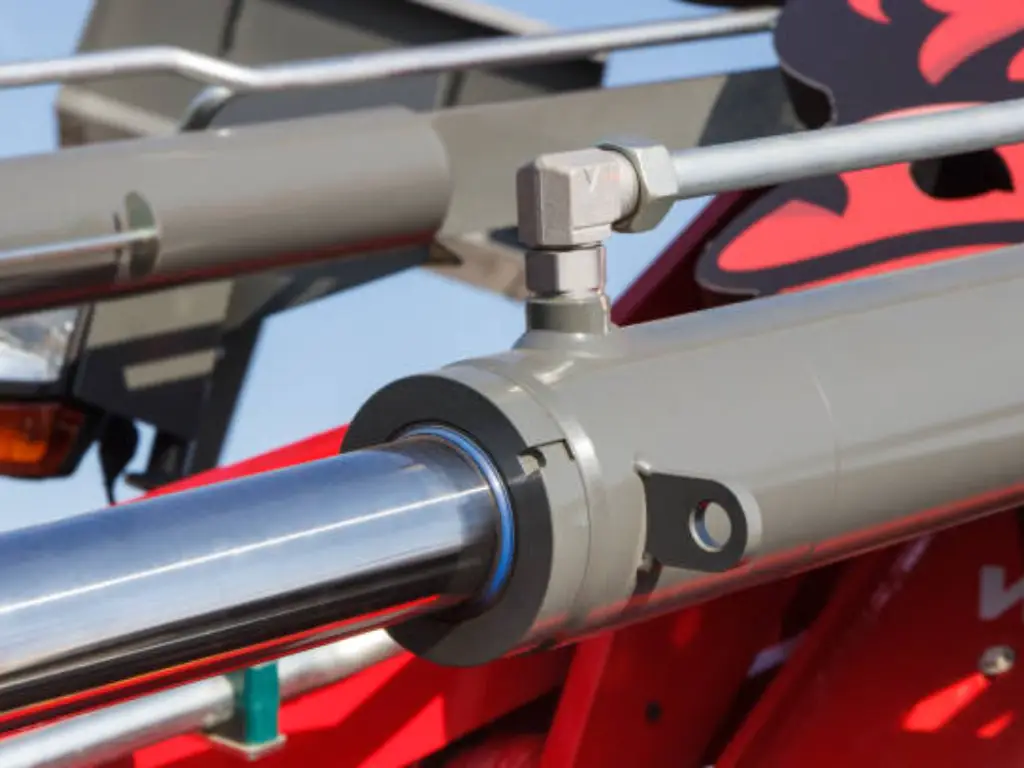
Ensuring Fail-Safe Reliability With VINCER Actuator and Valve
The engineering philosophy at VINCER is based on transforming these technical requirements into a reliable reality. We know that a valve is a safety device in the first place and a flow control device in the second place in fail-safe situations. This is the reason why our actuators have high quality imported seals that are specifically made to be of high wear resistance and high temperatures. We eliminate the dangers of stiction and internal leakage, which frequently afflict lower-grade alternatives, by focusing on high-quality sealing materials.
VINCER uses a strict protocol called Double Check to ensure this durability. We go beyond the normal factory sampling and do destructive tests on actuators to test mechanical life and 100 percent leakage tests on all valve bodies. This guarantees that a Fail Closed command will produce a proven, bubble-tight seal, rather than a halted actuator. This physical rigor is supported by such critical certifications as ISO9001, CE, and SIL (Safety Integrity Level). Moreover, our engineering department has more than 10 years of experience and uses a proprietary 8-Dimension Analysis. We examine variables like medium viscosity, pressure drops, etc., to make sure that your Fail Open or Fail Closed choice is not a mere guess, but an engineered certainty.
Energy and Cost Impact on Fail-Safe Selection
The economics and operational efficiency is a key factor in valve specification. Although the main reason to select either the Fail Open or Fail Closed is the safety, the engineers should also consider the considerable effect that this decision will have on the energy consumption, the area of installation, and the project budget.
Operational Impact (Energy & Size): When you decide to use a Fail-Safe (Spring Return) actuator, you impose a physical tax on your pneumatic system. A Spring Return actuator, unlike a normal unit, has to produce sufficient force to overcome the heavy safety spring as it turns the valve. To do this, the actuator cylinder has to be physically bigger, usually 30% to 50% bigger than a non-fail-safe unit. This causes much more air to be consumed per cycle, more electrical power to be used by plant compressors, and engineers have to design with a larger physical footprint in dense pipe racks.
Financial Reality (Insurance vs. Price): Safety is directly premiumed. The additional size and complicated spring cartridges make Spring Return actuators generally cost 20-40% more than standard units. Nevertheless, this cost is to be considered as an insurance premium, but not as a cost. The cost of the actuator should be compared to the Cost of Failure. A few hundred dollars saved on a less expensive actuator is not a good investment when one power failure costs a $50,000 batch of ruined chemicals or a dangerous spill. Thus, accuracy in dimensioning is essential to reliability without significantly over-dimensioning the unit and wasting budget.
How to Confirm the Fail Position
Checking the actual fail position is a very important safety check. You cannot afford to make assumptions and you have to ensure that the physical hardware is compatible with the safety logic needed by the process. The following is the way to test the system with three progressive checks.
P&ID Diagram Symbols Explained
During the design stage, safety logic is specified on the Piping and Instrumentation Diagram (P&ID). The common indicators on the valve stem line are: although the legends differ depending on the project, the standard ones are:
FC (Fail Closed): An arrow that points to the valve body, or is marked simply as FC.
FO (Fail Open): An arrow that is directed out of the valve body, or marked FO.
FL (Fail Last): Two parallel lines intersecting the stem (symbolizing a lock), or marked FL.
How to Identify FO vs. FC Visually?
When you are in the field and do not have the drawings, you can determine the logic by looking at the accessories and tag of the actuator.
Nameplate: This is the surest sign. Look for the “Action” code. SR-CW (Spring Return Clockwise) normally means that the spring closes the valve (Fail Closed). SR-CCW (Counter-Clockwise) on the other hand tends to imply the spring opens the valve (Fail Open).
Solenoid Check: Check the pilot valve on the actuator. When it is a 3/2-Way Solenoid (there is only one air line to the actuator), it is a Fail-Safe unit. In case it is a 5/2-Way, then it is probably Double Acting (No Fail-Safe).
Examine the Breather: When the nameplate cannot be read, examine the air ports. A Fail-Safe actuator will typically have an air line attached to a single port, the other port being equipped with a Breather Vent or Silencer (a small plastic or bronze filter) to allow the spring chamber to breathe. When you observe air lines attached to both ports, then it is probably a standard Double Acting unit.
The “Air Cut” Test: When Visual Inspection Fails
Physics does not lie, labels can be misprinted. The functional simulation is the only method of ensuring the fail position.
The Procedure: Turn the valve to its normal operating position (e.g., Open). Then, disconnect the air supply tube physically or close the isolation valve. Do not simply cut the electrical signal, which only tests the solenoid.
The Result: When the valve closes instantly, it is Fail Closed. When it opens accidentally, it is Fail Open. When it is not moving and you do not hear any air being expelled, it is either Fail Last or a standard non-fail-safe unit.
Safety Precaution: Do not leave hands and tools in the valve linkage during this test. Spring-return actuators discharge huge torque immediately when air is lost.

Conclusion
The choice of a Fail Open or Fail Closed valve is a silent sentinel in the industrial process. It is a choice that is made in a silent office that can one day decide the fate of a plant emergency that is chaotic. No one option is better than the other, just the one that fits the particular physics and risks of the particular system under consideration. Be it the super-heated reactor with a Fail Open cooling valve or the toxic gas line with a Fail Closed isolation valve, the reasoning should be good and the equipment should be dependable. The end result is to make sure that when the power goes dead and the lights go off, the system fails in the only way that counts, which is safely.
FAQS
Q: What is the distinction between fail open and fail shut?
A: Fail-open valves automatically open to permit flow when power is lost, and fail-shut valves automatically close to prevent the flow.
Q: Is fail open traffic?
A: Yes. A fail-open valve in a failure event is set to the fully open position, where the flow (traffic) of gas or fluid is not restricted.
Q: How to convert fail open valve to fail close?
A: It is usually necessary to take the actuator apart and invert the internal spring and piston orientation. It is important to note that not every actuator model is reversible.
Q: Are the check valves open or closed?
A: Check valves have no specified fail-safe mode. Being passive devices, they fail mechanically by sticking open (because of debris) or sticking closed (because of corrosion).
 English
  French
  Spanish
  Italian
  German
  Dutch
Dutch  Portuguese
  Korean
  Russian
  Chinese
  Finnish