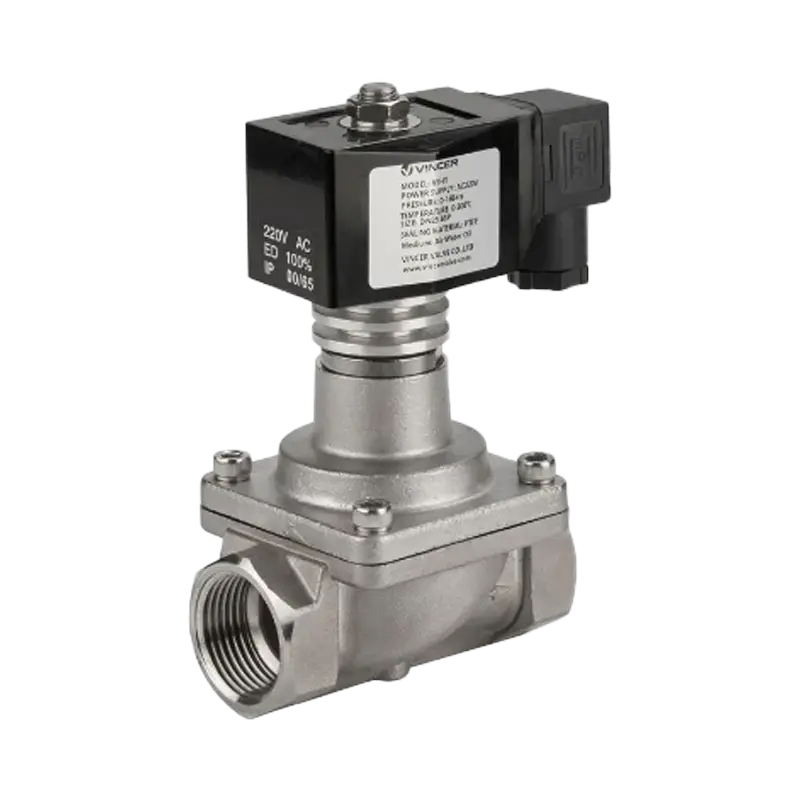
If you’ve searched “solenoid valve price” lately, you already know the problem: one site shows a 2-way valve for $13, another shows the “same” valve for $400, and a third one is actually talking about a car part. Fluid-control solenoid valves range from about $10 to $600+, a 60× spread for products that look nearly identical in photos.
Anchor number: basic industrial 2-way valves land at $30–$90. A price below that range with no spec sheet attached is usually a marketplace-grade valve.
The honest answer up front: a basic 2-way industrial solenoid valve costs roughly $30–$90, while specialty valves (high-temperature, high-pressure, sanitary, explosion-proof) run $200–$600+. The gap isn’t marketing. It comes down to measurable differences in type, size and material, and duty rating. This guide walks each one with real, verifiable market anchors, so you know what to pay and what to ask for.
One quick note before we dive in: this article covers fluid-control solenoid valves (water, air, gas, steam, chemicals). If you’re looking up a car’s VVT or transmission solenoid replacement cost (the $150–$600 quotes you’ll see for those), that’s a different product family entirely, priced with labor and diagnostics. Don’t mix the two up; the rest of this guide applies to fluid-control valves.
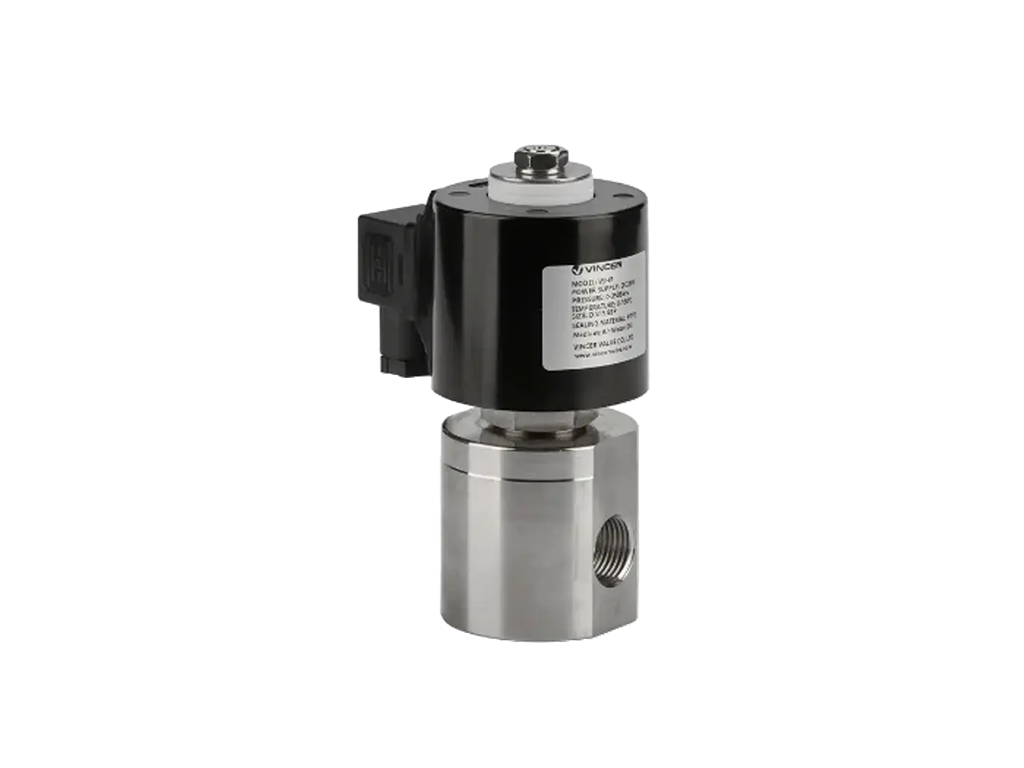
Solenoid Valve Price at a Glance: From $10 to $600+
Here’s the price landscape across four tiers. Treat these as realistic ranges, not fixed prices. Valve pricing moves with material costs, exchange rates, and order volume.
The Four Price Tiers of Solenoid Valves
| Price tier | Typical product | Price range | Who buys it |
|---|---|---|---|
| DIY / general-purpose | 1/2″ brass universal valve (Amazon, Walmart listings) | $10–30 | Homeowners, hobby projects, irrigation |
| Commercial-grade | 1/2″–1″ brass 2-way industrial pattern | $30–70 | Plumbers, equipment repair |
| Industrial-grade ★ Starting point for procurement | 1/2″–2″ brass or stainless steel, threaded or flanged | $40–150 | Equipment OEMs, water treatment |
| Specialty | High-temperature, high-pressure, sanitary, explosion-proof | $200–600+ | Boiler/steam, food & pharma, chemical processing |
Three verified market anchors keep these ranges honest: a Chinese-direct industrial 2-way sells at $42–49 (ATO.com); MSC lists pneumatic solenoid valves from $36 to $381 (MSC Industrial); and a 2″ stainless steel steam solenoid runs $407–635 (electricsolenoidvalves.com).
So where does the 60× spread come from? Three sources: valve type, size and material, and duty rating (pressure, temperature, certifications). The next sections take each one apart.
How Valve Type Moves the Price: 2-Way, 3-Way, and 5/2-Way
Here’s the single most useful pricing rule: the number of ports (ways) equals functional complexity, and complexity sets the price floor. A 2-way valve is a remotely controlled on/off switch. A 3-way valve adds a mixing or diverting function. A 5/2-way valve, the workhorse of pneumatic systems, switches both supply and exhaust for a cylinder. It has the most parts and the widest price band.
Type × Price: How the Way Count Moves the Price
| Type | Structure (one line) | Price range | Typical duty |
|---|---|---|---|
| 2-way ★ Most common — Default starting point for industrial procurement | One inlet, one outlet — a remotely controlled switch | $20–90 (industrial grade) | Water/air/oil branch shutoff, cleaning equipment, water treatment |
| 3-way | Three ports — mixing, diverting, or piloting | $30–150 | Blending, diverting, small cylinder shifting |
| 5/2-way (pneumatic) ★ Most common in pneumatic systems | Dual supply/exhaust switching — solenoid core plus exhaust paths | $36–380 (MSC band) | Cylinder extend/retract, factory automation |
Two notes on reading the table. First, the common-pattern answer to “2 way solenoid valve price”: industrial 2-way valves start around $42–50 direct from a manufacturer, while ASCO-branded equivalents through authorized distributors list from $84 to $433 (FLW Store). Second, when comparing 5/2 pricing, watch Cv flow coefficient (can it feed your cylinder fast enough) and IP rating (IP65+ matters on dusty floors), and ask whether the price is per valve or per station on a manifold.
For industrial buyers: a quote is meaningless without seven parameters. Port size and connection (NPT/G thread, flange, clamp); coil voltage (DC12/24, AC110/220); NC vs. NO (same price, but choosing wrong is the most common installation error); body material; seal material; maximum pressure and temperature; certifications. A quote missing any of these is a “bare price” you cannot compare. In pneumatic systems, 2-way solenoids also appear as air-supply shutoffs (3/8″–2″, up to 10 bar), priced on the same 2-way ladder.
Price by Size and Material: From 1/8″ Brass to 2″ Stainless Steel
Size and material are the second price lever. One rule first: doubling the port size does NOT double the price. Structure dominates cost, not raw material.
Solenoid Valve Price by Size and Material
| Port size | Brass (threaded) | Stainless steel (threaded) | Flanged / large bore | Typical duty |
|---|---|---|---|---|
| 1/8″–1/4″ | $10–25 | $20–40 | n/a | Miniature equipment, analyzers, humidifiers |
| 3/8″–1/2″ | $15–35 | $30–70 | n/a | Cleaning equipment, general industrial |
| 3/4″–1″ ★ Most commonly used | $25–50 | $45–90 | n/a | Water treatment, irrigation, boiler feed — the default spec |
| 1.5″–2″ | $40–90 | $70–140 | $120–300 | Main lines, wastewater |
| 2″–12″ pilot-operated | n/a | n/a | $200–600+ | High-flow water treatment — diaphragm structure, up to 16 bar / 120°C, flanged to 12″ |
| Sanitary (clamp, 304/316L) | n/a | $80–250 | n/a | Food, beverage, pharmaceutical (FDA-gated) |
Three takeaways: stainless steel costs 50–100% more than brass (worth it for corrosive, hygienic, or hot media; wasted on clean cold water); large-bore valves are almost always pilot-operated (a small solenoid pilots a diaphragm that opens a big port; realistic parameters: up to 16 bar and 120°C, opening in about 0.3 seconds, flanged connections up to 12″); and sanitary valves carry a certification premium. Clamp connections, 304/316L finish, and FDA compliance are the entry ticket for food and pharma.
For industrial buyers budgeting a water-treatment or equipment project: plan on $40–90 per 1/2″–1″ brass 2-way valve, $70–140 for stainless, and add 15–20% for quick delivery. Stock items typically ship in 5 working days, custom orders in 20 (delivery figures as published by valve manufacturers; more on this below).
Why Prices Vary So Much: 5 Things That Decide a Solenoid Valve Price
The two tables above explain what things cost. This one explains why. Five drivers sit behind nearly all of the $10-to-$600 spread, each with its own “pay or skip” judgment.
The 5 Price Drivers of a Solenoid Valve
| Driver | Price impact | Pay for it when… | Skip it when… |
|---|---|---|---|
| Body material (brass vs. SS vs. PTFE) | 50–100% premium | Media is corrosive, hygienic, or hot | Clean water at normal temperature and pressure |
| Seal compound (NBR/Viton/EPDM/food-grade) | Small, but decides service life | High temperature, aggressive media, food contact | Standard temperature water — NBR is fine |
| Valve structure (direct-acting vs. pilot diaphragm) | +30–100% for pilot types | Large flow or high pressure differential | Small ports and low pressure — direct-acting is cheaper and more reliable |
| Coil & electricals (voltage, power draw, explosion-proof) | Large premium for EX/low-power coils | Hazardous area (ATEX-class), battery/PLC-solenoid low draw | Standard AC220/DC24 supply — standard coil is fine |
| Duty rating & certifications (300°C+ heat sinks, 500 bar bodies, FDA/CE) | Specialty valves $200–600+ | Your process actually runs hot, high-pressure, or certified | Ordinary 0–80°C duty — don’t pay for heat structure you don’t need |
One boundary keeps this table from overlapping the type table above: way count decides which valve you need; structure decides the price within that type. Two 2-way valves with a $40 difference usually differ in body material, seal compound, or pressure rating. The spec sheet is the price tag in code. When two quotes for “the same valve” differ by 40%, go line by line through the specs, not the total.
One more cost most buyers miss: the cheap valve that kills something expensive. There are documented cases in automation forums of low-quality solenoids shorting and destroying PLC output cards. A $13 valve replacing a $200 module, plus downtime. On continuous industrial duty, a $13 marketplace valve is rarely a bargain; the arithmetic that matters is total cost over life.
Cheap $13 Valve or $600 Industrial Valve? Where the Line Is
Neither the $13 valve nor the $600 valve is “wrong.” Each is correct inside its application envelope. This boundary matrix is the decision tool:
Which Valve Grade Does Your Application Need?
| Application | What works | Where it fails |
|---|---|---|
| Home / garden / aquarium (intermittent, low pressure, ambient) | $10–20 universal valve | Continuous 24/7 duty, pressure with debris, aggressive media |
| Commercial equipment / cleaning (frequent cycling, mid pressure) | Industrial 2-way, $30–70 | Corrosive media, water hammer — needs thicker body or inlet filter |
| Water treatment / steam / boiler (continuous, hot, pressurized) | Pilot-operated or high-temp valves, $100–400 | Above 120°C — standard coils burn out; needs heat-sink/piston structure |
| Food & pharma / chemical (hygienic, corrosive) | Sanitary clamp or PTFE-bodied valves, $150–500+ | Missing FDA or material compatibility — rejected at goods-in inspection |
Then run the total-cost algorithm instead of comparing unit prices:
Total cost = unit price × expected life + failure cost (downtime, repair, rejection)
A $13 valve cycled continuously in an industrial line typically fails in weeks; a $100 industrial valve may run for years. Above a few hundred cycles a day, the industrial valve is usually the cheaper one. High-temperature duty is where this bites hardest: a standard coil on a steam line above 120°C burns out. That’s why 300–350°C service requires piston-type structures with heat sinks, and 500-bar service (e.g., car-wash systems) requires thickened valve bodies. You’re not paying for a logo on those; you’re paying for metal that doesn’t yield.
The $13 valve is the expensive one.
$13 × weeks of life + downtime vs. $100 × years of service. Above a few hundred cycles a day, the industrial valve is the cheaper buy.
How to Get a Solenoid Valve Price List and Compare Supplier Quotes
Now that you know what you’re buying, here’s how to buy it, especially if you’re a distributor, OEM, or project contractor who needs actual solenoid valve price lists and comparable quotes.
The golden rule of supplier comparison: only comparable quotes can be compared. A low price from a one-line quote is usually a “bare price,” with specs missing that surface later as change orders, wrong valves, or failures. Treat every quote like this:
The 8-Point Quote Checklist
Port size and connection type (NPT/G thread, flange, clamp)
Coil voltage (DC12/24, AC110/220)
Normally closed or normally open
Body material (brass, SS304/316, PTFE)
Seal material (NBR, Viton, EPDM, food-grade)
Max working pressure and temperature
Certifications (CE, RoHS, FDA, explosion-proof)
Lead time and MOQ
Each missing parameter has a predictable failure: no seal material means media incompatibility, then leaks or early failure; no certification means goods-in rejection on food or hazardous lines; no lead time means project slippage. If a supplier can’t answer all eight in writing, that’s data too.
Bulk and OEM Pricing: What Changes at Volume
Pricing structure at volume follows a familiar ladder: unit price → volume step price → framework/annual pricing, with 10–30% movement from single-unit to container volume (industry-typical range; always confirm it in writing). MOQ behaves differently per product type: standard-pattern valves carry low MOQs; custom or specialty-material valves carry real minimums. If you’re a distributor building an SKU list, stock standard patterns with fast delivery and run project-specific items through custom orders. And ask about sample policy. Low-value samples are often negotiable, which de-risks your first supplier test.
China Direct vs. Western Brands: The Real Price Gap
The “ASCO Solenoid Valve Price” searches (and the FLW listing above, $84–433 for ASCO 2-way valves) set the Western-brand benchmark. Chinese direct-from-manufacturer pricing for the same specification starts at roughly half of that. Verified industry figures: for standard, off-the-shelf patterns, Chinese-made valves typically run about 30% below Western equivalents without quality trade-offs, and for specific requirement solenoids (custom duty points), the same performance can cost half or less. These are figures VINCER, a Dongguan-based solenoid valve manufacturer, publishes for its solenoid valve product line and its pilot-operated series, together with lead times of 5 working days for stocked items and 20 working days for custom orders.
To be fair to the Western brands, the premium buys real things: local stock and support, long-standing documentation, and brand-specified compliance. The rational buying pattern: pay the premium when your project requires owner-specified brands or local support; go direct when your spec is clear and you can run your own acceptance process. That’s exactly where the 30–50% gap lives.
A quote you can’t compare is a quote you can’t trust.
Send your duty point — media, temperature, pressure — and get the eight-point spec-complete quote.
Get a Spec-Complete QuoteWhat the Price Confusion Really Costs Buyers — and What It Means for Your Valve Budget
We’ve established the facts: prices for the “same” valve vary 60×, quotes are rarely comparable until you chase all eight parameters, and the retail price you see online has almost nothing to do with the price an industrial buyer should pay. Now let’s talk about what that information gap does to real purchase decisions, because the confusion itself has a price.
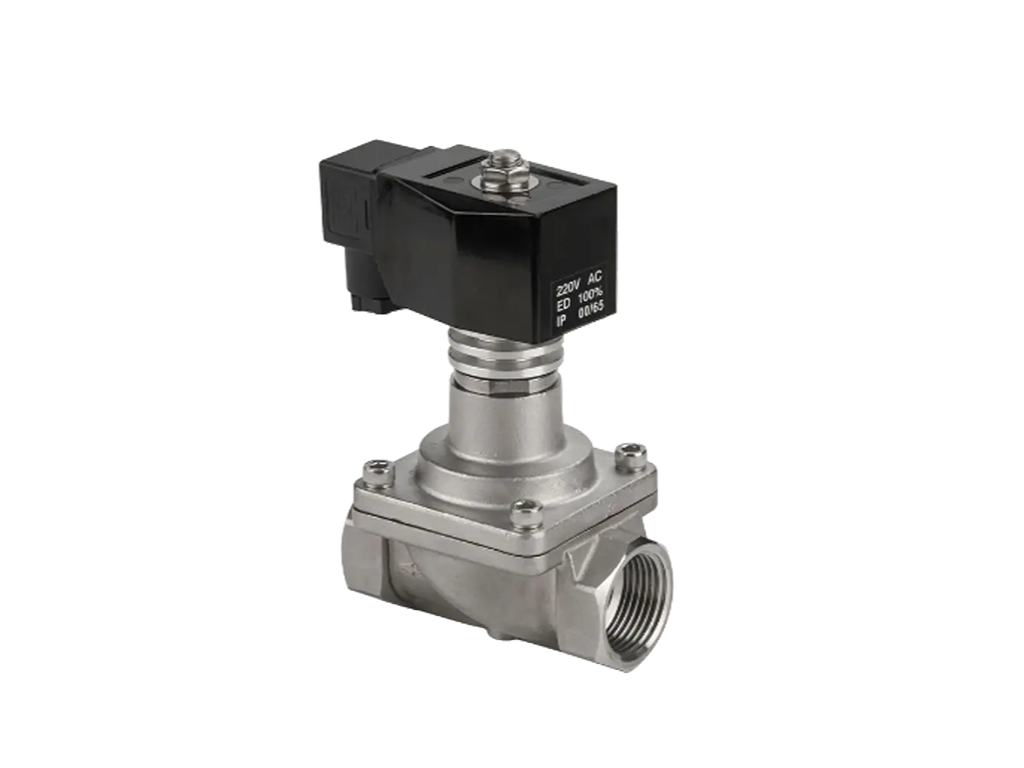
On the consumer side, the pattern is consistent: service quotes for a simple solenoid replacement run 10× the part price. Homeowners have posted HVAC humidifier solenoid quotes around $290 where the part costs $30; heat-pump bills show $489 of labor for a one-hour solenoid swap. The market truth underneath: for repair buyers, “cost” means total cost including labor and diagnostics, and the fear of being overcharged is the dominant emotion. For anyone selling into that market (parts suppliers, distributors, service companies), the winning move is transparency: publish the spec-to-price mapping and quote the complete job honestly. Buyers don’t need cheap; they need predictable.
On the industrial side, the confusion shows up differently: buyers can’t tell whether a $42 Chinese-direct valve and a $360 ASCO valve are the same product, and nobody publishes the spec-level comparison that would let them decide rationally. The business consequence is that procurement defaults to either (a) overpaying for brand when the spec didn’t require it, or (b) buying on price alone and discovering the hidden spec gap at commissioning: the $13 valve that takes out a $200 PLC card. For OEMs and project contractors, the fix is simpler than it looks: specify first, then source. When you know your media, temperature, pressure, and duty cycle, the supplier’s job becomes mechanical, and the price comparison becomes honest. That’s the whole argument for the eight-point checklist: it moves the market from “who’s cheapest” to “who matches the spec.”
Now, the business shape behind this: the valve trade splits into two distinct purchasing forms. Stock-and-trade buyers (distributors, equipment OEMs) need price lists, fast delivery on standard patterns, and volume pricing. For them, lead time is a first-class parameter, and stocked-item delivery measured in working days, not weeks is a genuine competitive lever. Project buyers (EPC contractors, plant operators) need budget ranges, certification sets, and written delivery commitments. For them, a 24-hour simple quote and a 48-hour preliminary solution on multi-product projects are the difference between making a tender deadline and missing it. The suppliers who win in either lane are the ones who treat response speed and spec completeness as part of the product. In a market this opaque, clarity is the differentiator.
In a market this opaque, clarity is the differentiator.
— the operating principle for valve buyers in either lane
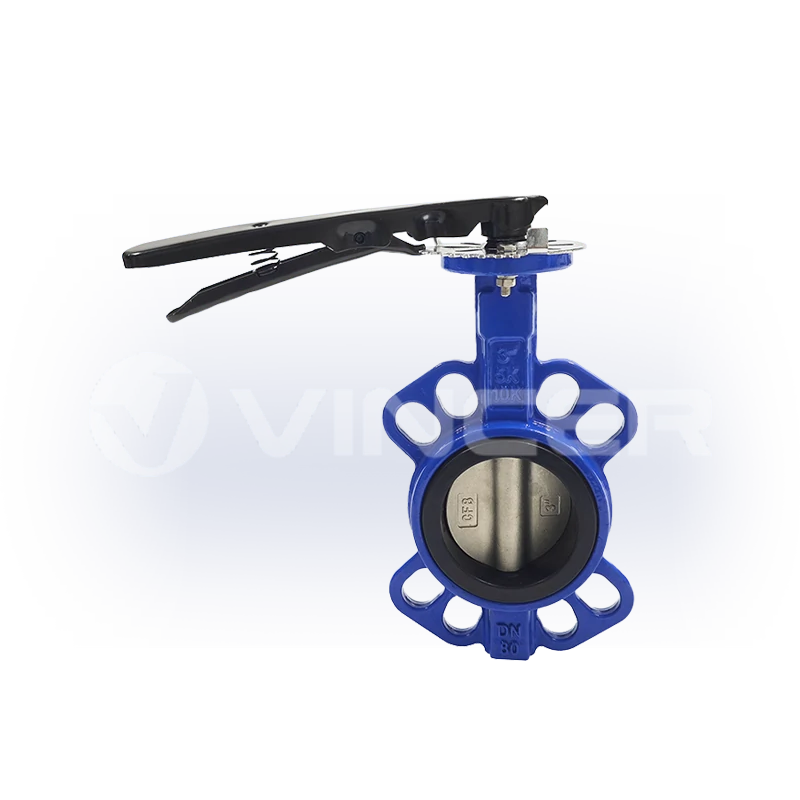
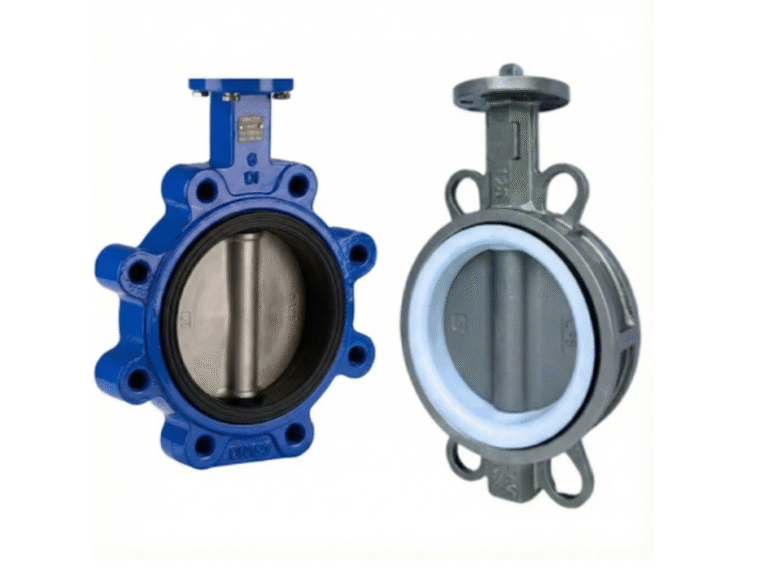
One more layer matters in both lanes: solenoid valves almost never get bought alone. In a water-treatment skid, a cleaning line, or a steam system, solenoid valves share the pipeline with actuated valves. Electric and pneumatic actuator valves handle main-line opening, closing, and regulation, while solenoids do branch and pilot duty. That’s why the same purchase cycle that prices a solenoid valve also prices electric and pneumatic actuator valve packages. It’s also why the eight-point checklist isn’t the only filter a supplier has to pass. Product-line breadth is: how many of the valves in your system can one factory answer for, with the same spec discipline? Cross-category sourcing from a single supplier is the default shape of this business, and it is exactly where the “one-stop” positioning of manufacturers like VINCER (electric and pneumatic actuated valves at its core, solenoid valves as the branch-line companion) saves a buyer the work of juggling five factories.
If that’s the kind of supplier you’re looking for (one that publishes full specs, answers the checklist in one pass, and carries the certifications, ISO 9001, CE, FDA, RoHS, plus the response times: simple quotes within 24 hours, preliminary multi-product solutions within 48), then VINCER’s solenoid valve range, its electric actuated valve range, and its pneumatic actuated valve range — together with its certification documentation — are a good place to request a quote and test the comparison for yourself.
Get a Solenoid Valve Price List You Can Actually Compare
Send your application details and get a spec-complete quote — simple requests within 24 hours, preliminary multi-product solutions within 48.
Request a Spec-Complete QuoteReferences
- MSC Industrial Supply. “Pneumatic Solenoid Valves.” 2026. https://www.mscdirect.com/browse/tn/Motion-Control-Fluid-Power/Pneumatics/Air-Valves/Pneumatic-Solenoid-Valves
- FLW, Inc. “ASCO Solenoid Valves.” 2026. https://store.flw.com/categories/solenoid-valves.html
- VINCER Valve. “What Is Solenoid Valves?” 2026. https://www.vincervalve.com/solenoid-valve/
- VINCER Valve. “VS07 Series Solenoid Valve.” 2026. https://www.vincervalve.com/vs07-series-pilot-operated-diaphragm-solenoid-valve/
- VINCER Valve. “Electric Actuated Valves.” 2026. https://www.vincervalve.com/electric-actuated-valve/
- VINCER Valve. “Pneumatic Actuated Valves.” 2026. https://www.vincervalve.com/pneumatic-actuated-valve/
- VINCER Valve. “VINCER Automatic Valve Actuators.” 2026. https://www.vincervalve.com/vincer-automatic-valve-actutors/
- VINCER Valve. “Certifications.” 2026. https://www.vincervalve.com/certifications/
- VINCER Valve. “Contact for a Quote.” 2026. https://www.vincervalve.com/contact-for-a-quote/
- VINCER Valve. Homepage. 2026. https://www.vincervalve.com/