
You typed “pneumatic ball valve manufacturers” into Google because your project needs valves, you need them from a real factory not a trading company with a convincing Alibaba storefront and you need them before the project’s critical path burns through your schedule contingency. What comes back is a SERP that mixes factory-direct manufacturers, industrial distributors posing as manufacturers, B2B marketplace aggregators, and a handful of global automation brands. On a 10-second landing-page scan, they all look roughly the same. On a 12-month project timeline with liquidated damages clauses, they are not.
If you are responsible for procurement in water treatment, chemical processing, oil and gas, or food and beverage manufacturing, you have probably learned this the hard way: the cost of picking the wrong supplier is not just wasted invoice dollars. It is delayed commissioning dates. It is valves that pass a visual inspection and fail a hydro test six weeks later. It is explaining to your project director why the “cost-saving” alternative supplier cannot produce a traceable material test certificate. The industry does not make this easy, and the search results for “pneumatic ball valve manufacturers” are not organized around your procurement reality they are organized around whoever invested most in SEO.
As a Dongguan-based manufacturer with 12 product series spanning electric, pneumatic, and manual actuated valves, Vincer occupies a specific segment of this landscape. But the broader question facing any sourcing team whether you are evaluating Emerson for a nuclear-qualified LNG project or comparing three German ball valve specialists for a wholesale tender is the same: how do you map the global supply base to your specific buyer profile, and how do you verify what a manufacturer claims on their website?
This guide structures the answer around three distinct buyer types project contractors, distributors, and wholesalers and anchors the comparison with real manufacturers whose on-site and off-site credentials have been cross-checked. By the end, you will have a repeatable decision framework, not just a list of names.
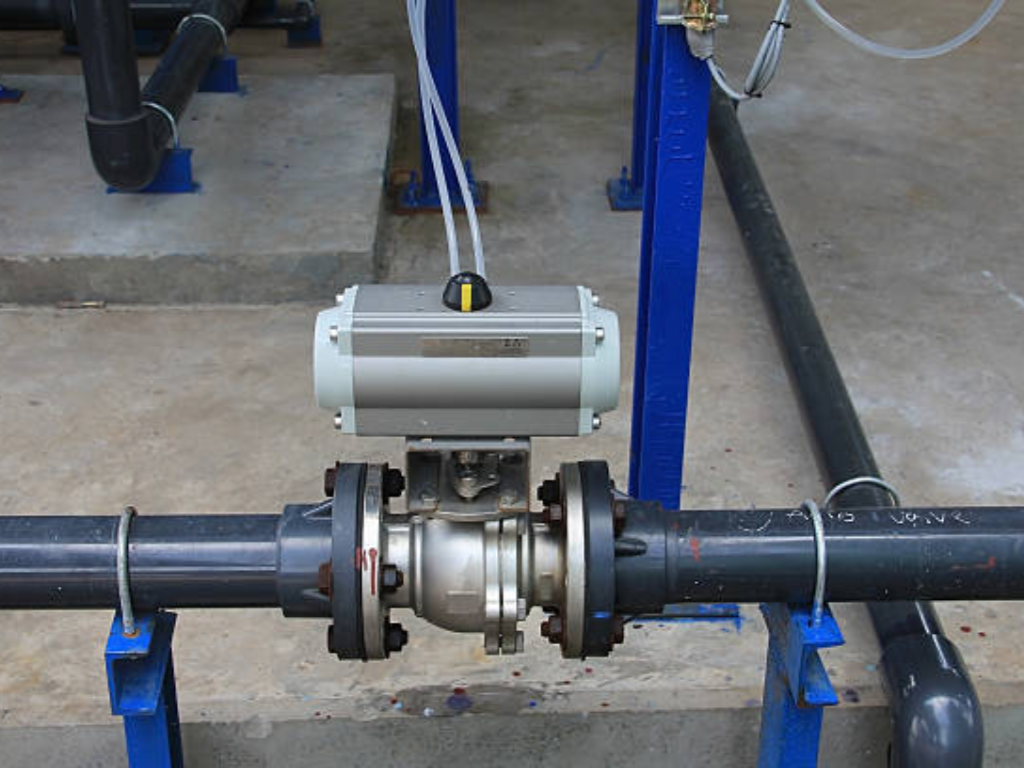
What Defines a Reliable Pneumatic Ball Valve Manufacturer
A professional-looking website and a well-optimized Alibaba storefront are not the same thing as a manufacturing operation. Before comparing specific companies, it is worth establishing the four dimensions that separate a verifiable manufacturer from a trading company with a factory address.
Manufacturing capability verification is the first gate. A manufacturer should be able to show you its casting, machining, assembly, and testing areas whether through an in-person audit or a live video walkthrough. If the company deflects or offers only finished-product photos, the gap between claimed and actual production capacity is probably large. For pneumatic ball valves specifically, the ability to machine the valve body, mount an actuator per ISO 5211, and test the full assembly (not just the valve body or the actuator separately) distinguishes integrated manufacturers from assemblers who buy components from separate sources.
Certification coverage is the second dimension, and it is more nuanced than counting logos on a footer. A meaningful distinction exists between company-level certifications (ISO 9001:2015 for quality management systems) and product-level certifications (CE marking for EU market access, ATEX 2014/34/EU for explosive atmospheres, API 6D for pipeline valves, SIL ratings for safety instrumented systems). ISO 5211 compliance for actuator mounting interfaces is a practical detail that signals the manufacturer understands how pneumatic actuators integrate with valve bodies not just that they sell both items (ISO, 2016).
Industry-specific experience matters because a pneumatic ball valve that works perfectly in a 6-bar compressed air line may fail within months in a chlorinated seawater application at a desalination plant. The material selection logic for the valve body (316 stainless vs. duplex vs. PVC vs. PTFE-lined), the seat material (PTFE vs. RTFE vs. metal-seated for abrasive slurries), and the actuator seal compatibility with the process medium are all application-dependent. A manufacturer who asks you about your medium, temperature range, pressure class, connection standard, control signal type, body material preference, industry regulation, and applicable standard before quoting is demonstrating process rigor.
Communication and documentation responsiveness is the fourth dimension. A manufacturer’s ability to produce a 2D/3D drawing with a quotation, respond to technical questions within 24 hours, and provide material test certificates with traceable serial numbers tells you more about their operational maturity than any “About Us” page.
-
Manufacturing Capability Verification: Casting, machining, assembly, and testing areas verifiable via in-person audit or live video walkthrough.
-
Certification Coverage: Company-level (ISO 9001) and product-level (CE, ATEX, API, SIL) each verifiable through public registries and technical documentation.
-
Industry-Specific Experience: Application-dependent material selection a manufacturer who asks about process conditions before quoting demonstrates rigor.
-
Communication and Documentation Responsiveness: 2D/3D drawings with quotations, 24-hour technical response, and traceable material test certificates signal operational maturity.
Once a candidate passes these four filters, the next question is: which buyer profile does this manufacturer actually serve?
Pneumatic Ball Valve Manufacturers by Buyer Profile Who Serves Whom
The phrase “pneumatic ball valve manufacturer” covers companies that serve fundamentally different customers. A project contractor procuring valves for a 200,000 m³/day desalination EPC bid has almost nothing in common with a wholesale importer filling a 40-foot container for a Middle Eastern distribution hub. Mapping manufacturers to buyer types prevents the most common sourcing error in this category: judging a wholesaler-oriented manufacturer by project-contractor criteria, or vice versa.
Before diving into each buyer category, a foundational distinction: project contractors prioritize certification breadth and engineering support because a single valve failure in an LNG plant or offshore platform can cascade into a multi-million-dollar shutdown. Distributors prioritize supply stability, channel protection, and margin structure because their business model depends on repeat orders and regional exclusivity. Wholesalers prioritize unit cost and production capacity because their competitive advantage is price-based and volume-driven.
For Project Contractors Large-Scale, Certified Manufacturers
Project contractors EPC firms, utilities, and industrial plant operators need pneumatic ball valves that can survive extreme conditions and pass third-party inspection without exception. The procurement process typically follows a structured vendor qualification: pre-qualification questionnaire, factory audit, sample testing (FAT/SAT), and only then a purchase order.
Four manufacturers dominate this segment for different reasons.
| Manufacturer | Core Certifications | Typical Lead Time | Price Tier | Service Model |
| Emerson (ASCO/Bettis) | API 6D, SIL 3, ATEX, NACE MR-01-75, Nuclear (IEEE 382) | 10-16 weeks | Premium | Direct sales + certified integration partners |
| Rotork | API 6D (via partners), SIL 2/3, ATEX, NACE | 8-14 weeks | Premium | Direct + channel, IQ3 smart actuator platform |
| Bray International | API 6D, SIL 2, CE, ATEX (select lines) | 6-10 weeks | Mid-Premium | Direct + extensive distributor network |
| Flowserve | API 6D, API 608, SIL 3, Nuclear, NACE | 12-20 weeks | Premium | Direct project sales, MRO aftermarket |
(Emerson – Bettis pneumatic + ASCO solenoid integration across full pressure classes, company website, 2026; Rotork – CP/GP pneumatic actuator series with SIL 2/3 certification options, company website, 2026; Bray International – Series 92/93 rack-and-pinion pneumatic actuators paired with trunnion/floating ball valves, company website, 2026; Flowserve – Valtek/Automax pneumatic actuation product lines for API 6D pipeline service, company website, 2026)
-
10-16 WEEKS: Premium tier typical lead time (Emerson)
-
7-10 DAYS: Mid-tier manufacturer standard delivery (Vincer)
Emerson is the safe choice when certification demands are absolute nuclear power plants, offshore platforms requiring NACE MR-01-75 sulfide stress cracking resistance, and safety integrity levels up to SIL 3 fall squarely in their domain. The price reflects this positioning. Rotork brings particular strength on the actuator side (their IQ3 intelligent electric and CP/GP pneumatic series are industry benchmarks), but typically sources valve bodies externally which means for a fully integrated pneumatic ball valve, an Emerson or Bray may be more seamless. Bray occupies a practical middle ground in HVAC, water treatment, and general industrial projects where ATEX or SIL requirements exist but the full Emerson premium is not justified. Flowserve’s scale makes them relevant for mega-projects where procurement consolidates thousands of valve SKUs under a single vendor.
For project contractors working on water treatment or desalination tenders in Southeast Asia or the Middle East where nuclear-grade certification is unnecessary but competitive pricing and short delivery timelines matter, a Chinese manufacturer like Vincer presents a pragmatic alternative. Holding ISO 9001 (company-level quality management), CE (EU market access), RoHS, SIL, and FDA certifications, Vincer serves the mid-tier contractor segment where the certification threshold is met without the overhead of Emerson/Rotork/Bray-style pricing. Lead times of 7-10 days for standard SKUs (vs. 6-16 weeks from the premium tier) and a documented project track record that includes Festo, Tameson, and Veolia provide a data point, not an endorsement the right choice depends on your specific certification checklist and risk tolerance (Vincer – company certifications and project deployment references, company website, 2026).
For Distributors Channel-Focused Manufacturer Partners
Distributors do not simply buy and resell valves they build regional customer relationships, provide local technical support, maintain inventory, and often require OEM/private-label flexibility. Their ideal manufacturer partner is one that can supply consistently, protect their regional margin, and provide marketing and technical documentation that helps them sell downstream.
Two manufacturers in particular have built their business models around distributor enablement, though with different approaches.
| Manufacturer | Channel Policy | Margin Structure | Product Width | Brand Recognition |
| Habonim (ITT subsidiary) | Regional distribution partners, OEM programs | Mid-to-upper tier; ITT ownership provides pricing stability | Ball valves + pneumatic actuators only | Strong in Europe/Middle East, moderate in North America |
| Gemini Valve | Direct + distributor, MAP pricing, private label available | Mid-tier; made-in-USA carries premium | Ball valves only (2-way, 3-way, manual, automated) | Niche known among US industrial buyers |
(Habonim – floating, trunnion, cryogenic, high-pressure, and metal-seated ball valves with in-house pneumatic actuators, acquired by ITT Inc. in 2022 for $140M, company website, 2026; Gemini Valve – family-owned automated and manual ball valves, 100% US manufacturing in Raymond, NH, company website and LinkedIn, 2026)
Habonim, now part of ITT Inc. (2022 acquisition, $140M), brings 70+ years of ball valve specialization and in-house pneumatic actuator manufacturing under one roof. The ITT acquisition adds supply chain stability and pricing predictability that independent manufacturers cannot always match. Gemini Valve’s differentiation is simpler: family-owned, located in Raymond, New Hampshire, with every component designed, machined, assembled, and tested in the same facility a rare claim in a market where even some “US brands” import castings.
For distributors, the trade-off between Habonim and Gemini comes down to product breadth vs. geographic focus. Habonim’s trunnion, cryogenic, and metal-seated variants cover applications Gemini’s floating-ball-valve-only portfolio cannot, but Gemini’s US-based agility means faster turnaround on custom orders.
A distributor looking to minimize supplier count across a broad portfolio faces a different kind of decision. Habonim and Gemini Valve each produce only ball valves within their pneumatic-actuated lineup. A manufacturer that covers ball valves plus butterfly valves, gate valves, globe valves, check valves, solenoid valves, and both electric and pneumatic actuators under a single supplier relationship reduces procurement overhead fewer contracts to manage, fewer logistics chains to coordinate, and fewer quality audit cycles to maintain. Vincer’s 12 product series are structured explicitly for this use case, and the company’s multi-language social media presence across LinkedIn, Facebook, Instagram, YouTube, and WhatsApp provides marketing material that distributors can repurpose for their regional channels without developing content from scratch (Vincer – product catalog spanning electric, pneumatic, manual, solenoid, and control valve categories, company website, 2026). The cost equation 30-50% below Western benchmark pricing becomes relevant when a distributor’s competitive positioning in markets like Southeast Asia, the Middle East, or Africa depends on delivering value-tier options alongside premium Western brands.
-
Specialist Deep Catalog: Choose Habonim or Gemini Valve when ball-valve-only depth matters more than breadth. Ideal for distributors with an existing multi-brand portfolio filling a specific category gap. (Best for mature distributors)
-
Consolidator One Partner, 12 Lines: Choose a multi-category manufacturer when reducing supplier count is the priority. Fewer contracts, fewer audits, one logistics chain. (Best for growing distributors)
For Wholesalers Volume-Oriented Manufacturing Sources
Wholesalers operate on a different logic entirely. Brand is secondary to unit economics; the key variables are per-unit cost at container-scale volumes, production capacity for large batch orders, and the manufacturer’s ability to mix multiple valve types in a single shipment to optimize container utilization.
Three German manufacturers exemplify the wholesale-oriented end of the Western supply base.
| Manufacturer | Production Scale | Core Wholesale Category | Minimum Order Profile | Approximate Price Tier |
| GEMÜ | Multi-plant, global distribution | Metal + plastic ball valves, hygienic/sanitary applications | Moderate-to-large batches | Mid-to-Upper |
| Schubert & Salzer | Ingolstadt facility, 100-199 employees | Ball sector valves (abrasive/pasty/fibrous media) | Moderate batches; specialized application focus | Mid-tier (specialist premium) |
| Böhmer GmbH | 30,000 m² across Sprockhövel + Hattingen plants, 300+ employees | Fully-welded, underground, subsea ball valves DN3-DN1400 | Large batches; project + wholesale | Mid-tier (volume discount structure) |
(GEMÜ – ball valves with pneumatic actuation in metal and plastic, strong in life sciences and hygienic process applications, DirectIndustry and company website, 2026; Schubert & Salzer – ball sector valve Types 4030/4040/4080 with pneumatic actuator options, DirectIndustry and Europages, 2026; Böhmer GmbH – 60+ year ball valve specialist, DN3-DN1400 range, fully-welded and underground/subsea applications, 300+ employees, company website and LinkedIn, 2026)
GEMÜ’s strength in plastic-bodied pneumatically actuated ball valves makes them relevant for wholesalers serving chemical processing and water treatment markets, where corrosion resistance is the primary material selection driver. Schubert & Salzer’s ball sector design a segmented ball that rotates rather than a full sphere handles media (abrasive slurries, fibrous pulp, pasty fluids) that would destroy a standard full-bore ball valve within weeks. For wholesalers serving the pulp and paper or mining industries, this specialization is worth the premium. Böhmer, at 30,000 m² of production space and 300+ employees, offers the broadest diameter range in this group, from miniature DN3 to massive DN1400 fully-welded underground valves for district heating and gas transmission.
The wholesale sourcing decision between European and Chinese manufacturers is a function of two variables: the importer’s regulatory environment and the destination market’s certification requirements. European-made valves carry the automatic presumption of CE/PED compliance within the EU a real logistical advantage for wholesalers distributing within Europe. Chinese-made valves, offered at a discount to European wholesale pricing, become the arithmetic choice for importers serving markets where local certification acceptance procedures are well-established and where wide product portfolio coverage from a single supplier simplifies container consolidation.
Source European:
-
Automatic CE/PED presumption within EU no recertification.
-
Premium pricing justified by brand recognition in regulated markets.
-
Best for EU-internal distribution where compliance friction is the bottleneck.
Source Chinese:
-
30-50% below European wholesale pricing at container scale.
-
Multi-category consolidation from single supplier reduces logistics cost.
-
Best for Middle East, SE Asia, Africa markets with established local cert acceptance.
Total Cost of Ownership What the Unit Price Does Not Tell You
The per-unit price on a pneumatic ball valve quotation is a starting point, not a cost summary. The total cost of ownership (TCO) for a valve in continuous industrial service runs across five categories: acquisition cost (the quoted price), installation and commissioning (labor, gaskets, fittings, actuator calibration), planned maintenance (seal replacements, actuator rebuilds), unplanned downtime (lost production during a valve failure), and end-of-life replacement (the cost and lead time of sourcing an identical replacement).
Consider the arithmetic. A desalination plant that loses one production train for 72 hours because of a failed pneumatic ball valve a failure traced to an actuator seal that was underspecified for the chlorine content in the process stream loses not just the valve’s replacement cost. It loses three days of output at full capacity, an emergency maintenance callout, and, if the replacement valve is not on the shelf, a rush-order premium and express freight. That number is measured in tens or hundreds of thousands of dollars, not in the $150 difference between a PTFE seat and an RTFE seat that would have survived the application. The industry data point: pneumatic actuator seal life typically ranges from 500,000 to 1,000,000 cycles under rated conditions, but this assumes the actuator is correctly sized for the valve’s breakaway torque, the compressed air is filtered and lubricated to the manufacturer’s specification, and the ambient temperature stays within design limits. A poorly matched actuator under-torqued or fed by wet, unfiltered plant air will fail at a fraction of rated life regardless of whether the nameplate says “Emerson” or a generic brand (Industrial Valve Summit technical paper on actuator sizing methodology, 2024).
-
Acquisition Cost: 45%
-
Installation & Commissioning: 15%
-
Planned Maintenance: 20%
-
Unplanned Downtime: 12%
-
End-of-Life Replacement: 8%
Lead time carries a hidden cost that is rarely modeled in procurement spreadsheets. A project that requires 200 pneumatic ball valves and budgets 8 weeks for delivery has absorbed the cost of that wait. If one manufacturer quotes 7-10 days (a tier that includes Vincer’s standard SKU delivery window) and another quotes 12 weeks, the project’s critical path shifts by roughly 10 weeks during which the contractor may be paying liquidated damages, holding interim financing, or losing revenue from delayed commissioning. This lead time gap is not universally decisive an LNG terminal will wait 16 weeks for Emerson-certified valves because the alternative is not permissible but for the large middle of industrial and municipal projects, delivery speed is a real financial line item rather than a convenience metric.
Inventory carrying cost for spare parts adds another layer. A manufacturer with an extensive global distributor network (Bray, Emerson) provides faster spare parts access in most regions but at a higher unit price. A manufacturer with a more centralized support model may offer lower initial prices but require the buyer to hold more safety stock shifting cost from the purchase order to the warehouse.
Quality Verification Certifications, Testing, and the Factory Audit Checklist
A certification is not a guarantee of quality, but it is the minimum verifiable threshold. Understanding which certifications apply to which parts of the pneumatic ball valve system and how to verify them turns a passive logo count into an active quality screen.
Company-level certifications audit the manufacturer’s quality management system. ISO 9001:2015, the universal baseline, confirms that the manufacturer has documented processes for design control, purchasing, production, inspection, and corrective action but it does not verify the technical performance of any specific product. To verify a company’s ISO 9001 status, visit the IAF CertSearch database (IAF, 2026) and search by company name a freely available check that takes under a minute.
Product-level certifications are specific to a valve model or series. CE marking permits sale within the European Economic Area and requires the manufacturer to maintain a technical file demonstrating conformity with applicable EU directives (for valves, typically the Pressure Equipment Directive 2014/68/EU and, for ATEX applications, Directive 2014/34/EU). SIL certification (IEC 61508) assigns a safety integrity level to the complete valve-actuator assembly, not just the actuator alone a distinction that is frequently misunderstood in procurement specifications. API 6D covers pipeline valves (trunnion-mounted ball valves for long-distance oil and gas transmission) and includes the PR2 testing procedure; API 608 covers general-service floating ball valves.
-
Company-Level Certifications: ISO 9001:2015, IAF CertSearch Verifiable.
-
Product-Level Certifications: CE Marking (PED 2014/68/EU), ATEX 2014/34/EU, SIL (IEC 61508), API 6D (Pipeline), API 608 (General Service).
A factory audit whether in-person or remote should verify five physical capabilities. First, the casting and machining area: is the manufacturer machining valve bodies from raw castings or forgings, or is it buying finished components and only assembling? Second, the testing stations: a pressure test bench capable of shell and seat testing per API 598 or EN 12266-1, a torque test bench for actuator breakaway and running torque verification, and ideally an endurance test rig for cycle-life validation. Third, incoming material inspection: does the manufacturer verify heat numbers against mill test certificates before machining? Fourth, process documentation: can the manufacturer show batch travelers, inspection reports, and non-conformance records for a recent production run? Fifth, packaging and logistics: valves that leave a factory in loose cardboard boxes arrive at the project site with scratches, contamination, or worse packaging quality reflects operational maturity.
Red flags during remote audits include: refusal to conduct a live video walkthrough (offering only pre-recorded footage), a factory address that does not match the registered business address or shows a different company name on Google Maps satellite view, test certificates without serial numbers that can be traced to specific valve units, and any claim of “100% quality” without a documented non-conformance rate every real factory produces some scrap and can explain how it handles it.
Building Your Sourcing Strategy From Information to Action
Everything above gives you the raw material. This section gives you the repeatable process. Here is a four-step decision framework you can apply not just to the manufacturers listed in this guide, but to any pneumatic ball valve manufacturer that enters your shortlist in the future.
-
Classify your buyer profile. If you are procuring valves for a specific project with defined certification requirements (a desalination plant, a chemical processing line, a power station), you are operating as a project contractor start with the manufacturers in the project-contractor comparison table whose certification portfolios match your spec. If you are building a regional distribution catalog and need ongoing supply with channel support, you are a distributor prioritize manufacturers who offer channel protection and multi-product-line leverage. If you are filling containers for price-sensitive markets, you are a wholesaler unit economics and production capacity lead your decision.
-
Filter by certification requirements. Write down the exact certifications your application demands not the ones that are “nice to have,” the ones without which the valve will be rejected at incoming inspection. Cross-check each shortlisted manufacturer’s certification list, and verify the critical ones through public databases (IAF CertSearch for ISO 9001, the manufacturer’s EU Declaration of Conformity for CE marking).
-
Calculate TCO, not just unit price. Model the five cost categories from the TCO framework above for each shortlisted manufacturer. If you are comparing a Western benchmark at 16 weeks lead time with a Chinese manufacturer at 10 days, quantify the lead time gap in your project’s cost terms not abstractly, but as a specific number in your project currency.
-
Audit or sample before committing. For a new manufacturer relationship, a factory audit (in-person or live video) and a sample order of the exact valve configuration you need not a “similar” model from their catalog, but the one with your medium, your pressure class, your connection standard, and your actuator specification are the final gate. A manufacturer who performs well on a 1-inch water-service ball valve may struggle on a 6-inch PTFE-lined valve for hot sulfuric acid, and the only way to find out before committing to a production batch is to test.
Three mistakes that cost more than they save:
-
Price Without Certification = Non-Conformance Waiting to Happen: A lower price that omits mandatory SIL or ATEX certs will surface at the worst moment: your client’s factory acceptance test.
-
Manufacturers Are Not Interchangeable: A wholesale-volume factory cannot provide the engineering support a mining project requires. A project-grade manufacturer cannot match container-scale pricing.
-
B2B Badges ≠ Verification: Gold Supplier status confirms a platform subscription, not manufacturing capability. An unverified factory with a polished storefront passes desktop review and fails a factory audit.
Where you go from here. The framework above is designed to be applied, not just read. Pick your buyer type. Shortlist the manufacturers from the corresponding table. Cross-check certifications on IAF CertSearch. Run the TCO numbers for your specific project timeline. Book one factory audit in person if the budget supports it, live video if not and evaluate the result against the five-point checklist from the quality verification section.
If your project profile aligns with the mid-tier contractor-distributor segment described above, and your certification requirements fall within the ISO 9001 + CE + RoHS + SIL + FDA scope, Vincer offers an eight-dimension valve selection methodology (medium, temperature, pressure, connection type, control signal, body material, industry standard, and applicable regulation) that structures the technical conversation before a quotation is issued so you are comparing against your actual requirements, not browsing a catalog. The company’s 12 product series spanning electric actuated, pneumatic actuated, manual, solenoid, and control valves makes it relevant for buyers consolidating supplier relationships across valve categories. A technical inquiry to sales@vincervalve.com typically receives a response within 12 hours, with standard product quotations delivered in 2 hours, and 2D/3D drawings available on request (Vincer – company contact and quotation policy, company website, 2026).
The goal is not to find the cheapest pneumatic ball valve on the market. It is to find the manufacturer whose capabilities, certifications, and commercial terms match your project’s actual requirements and to verify that match before money changes hands. The framework above gives you the process; the companies listed in this guide give you a qualified starting shortlist. The rest is execution.
References
-
[ISO]. “ISO 5211:2017 Industrial valves Part-turn actuator attachments.” 2017. https://www.iso.org/standard/42768.html
-
[IAF]. “IAF CertSearch Global Database for Accredited Certifications.” 2026. https://www.iafcertsearch.org
-
[European Commission]. “Directive 2014/34/EU Equipment and protective systems intended for use in potentially explosive atmospheres (ATEX).” 2014. https://eur-lex.europa.eu/eli/dir/2014/34/oj
-
[API]. “API Specification 6D Specification for Pipeline Valves.” 24th Edition. https://www.api.org
-
[API]. “API Standard 608 Metal Ball Valves Flanged, Threaded, and Welding Ends.” https://www.api.org
-
[IEC]. “IEC 61508 Functional Safety of Electrical/Electronic/Programmable Electronic Safety-Related Systems.” https://www.iec.ch
-
[Vincer Valve]. “Actuated Valves and Actuators Product Catalog, Certifications, and Company Information.” 2026. https://www.vincervalve.com
 English
  French
  Spanish
  Italian
  German
  Dutch
Dutch  Portuguese
  Korean
  Russian
  Chinese
  Finnish