
A professional technical guide for engineers to master sealing mechanics, thermal limits, material degradation, and ROI-driven selection between zero-offset and high-performance valve designs.
The Core Dilemma: Concentric vs Eccentric Butterfly Valve in Industrial Piping
In high-stakes industrial fluid control, selecting the wrong valve is never just a minor budget error – it is a strategic and operational risk that can compromise the integrity of an entire facility. A common, yet critical, engineering oversight is treating butterfly valves as simple, interchangeable commodities. Procurement teams often lean toward the lowest initial cost, only to face the brutal reality of unplanned downtime and catastrophic system failures months later.
When a standard valve fails in a critical piping line, the true financial impact vastly exceeds the $500 cost of a replacement part. The actual damages encompass catastrophic capacity loss, emergency scaffolding and labor costs to drain the line, environmental cleanup, and the rigorous regulatory scrutiny that follows a hazardous fugitive emission event. Furthermore, as environmental agencies tighten regulations around volatile organic compounds (VOCs) and hazardous leaks, valve integrity has become synonymous with site safety and legal compliance.
For procurement managers and engineering decision-makers, navigating the precise debate between a concentric vs eccentric butterfly valve is fundamentally an exercise in risk management and long-term TCO (Total Cost of Ownership) optimization. To make a scientifically sound decision, we must move beyond generic product brochures and meticulously dissect the underlying physics of how these specific valves seal, how their internal materials degrade under extreme mechanical stress, and how geometric evolution directly dictates pipeline reliability.
The Geometry of Sealing: Shaft Position and Friction Mechanics
The core performance difference between these two primary valve categories lies entirely in their spatial geometry. The physical positioning of the internal stem (shaft) relative to the centerline of the pipeline directly dictates the friction mechanics generated during the opening and closing cycles. This geometry is the single most important factor that determines the required actuator torque, the wear rate of the sealing components, and ultimately, the valve’s operational service life.
The Symmetrical Squeeze of Concentric Valves
A concentric butterfly valve, frequently referred to in the industry as a zero-offset valve, features a highly symmetrical design. In this configuration, the stem passes directly through the exact centerline of both the metallic disc and the surrounding elastomer seat. Sealing is achieved strictly through a diametrical interference fit. To visualize this, the outer diameter of the metallic disc is deliberately machined to be marginally larger than the inner diameter of the rubber seat.
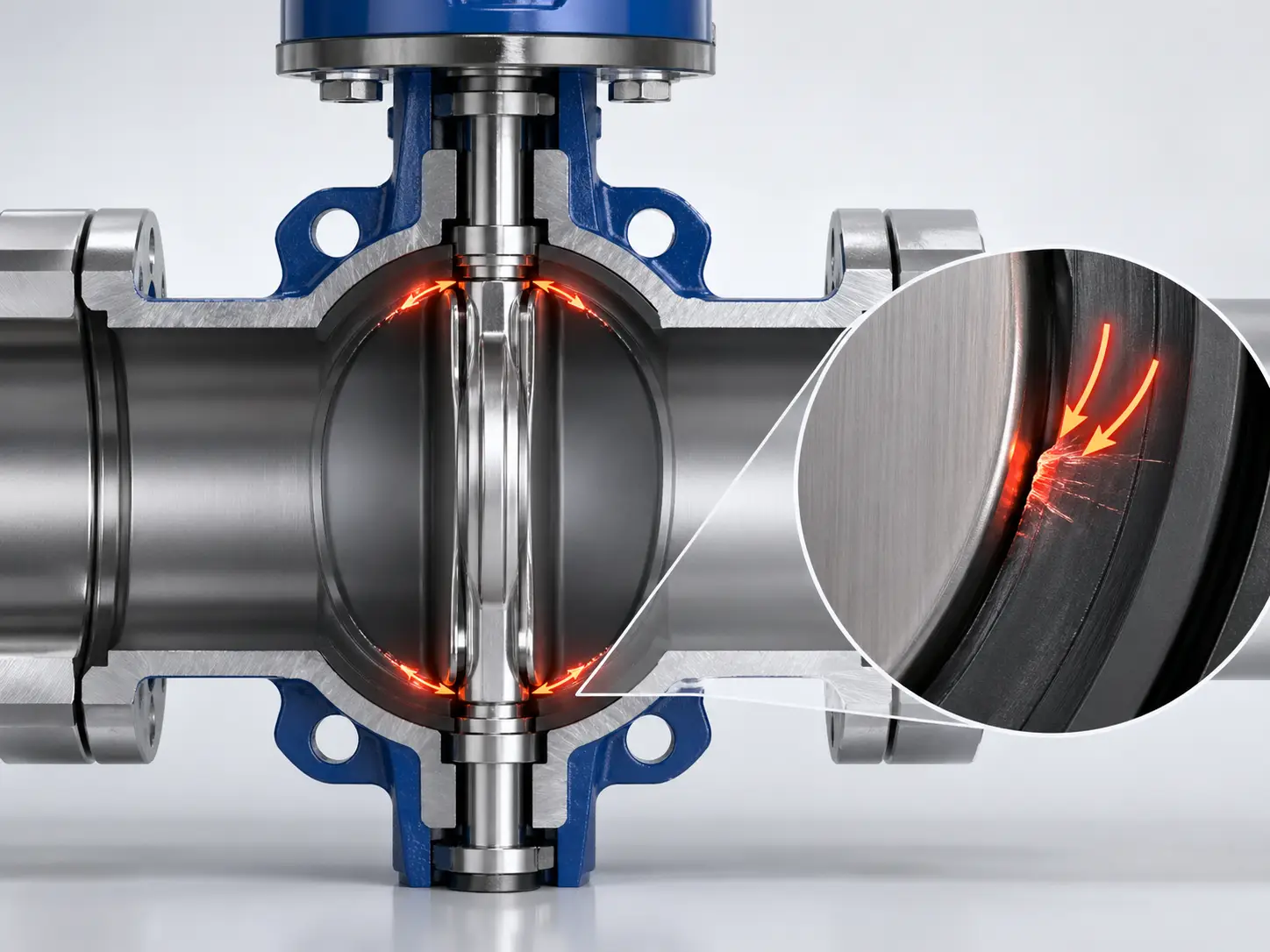
Consequently, from the moment the valve begins to open at 0° until it reaches its fully open position at 90°, the outer edge of the disc is aggressively squeezing, scrubbing, and grinding against the elastomer seat. This continuous full-stroke friction guarantees a secure, drop-tight seal in low-pressure applications, but it introduces severe mechanical consequences. In high-cycle automated loops, this constant rubbing causes rapid elastomer fatigue and abrasion. Furthermore, if the valve remains closed for extended periods, the rubber “takes a set” around the disc. Upon the next actuation, the breakaway torque spikes dramatically, which can overload and burn out electric actuators or even shear the valve stem.
The Cam-Action Offset in Eccentric Valves
To eliminate the destructive friction inherent in concentric designs, fluid control engineers fundamentally altered the internal geometry. (Note: It is important to recognize that Single offset designs, which merely shifted the stem backward to slightly reduce seating contact, have been largely obsoleted by modern manufacturing. They served as a stepping stone and paved the way directly to the double offset architecture.)
The eccentric geometry introduces a revolutionary physical mechanism known as the Cam-Action breakaway. By shifting the shaft backward (behind the disc centerline) and slightly to the side (away from the pipe centerline), the valve disc acts precisely like a mechanical cam.
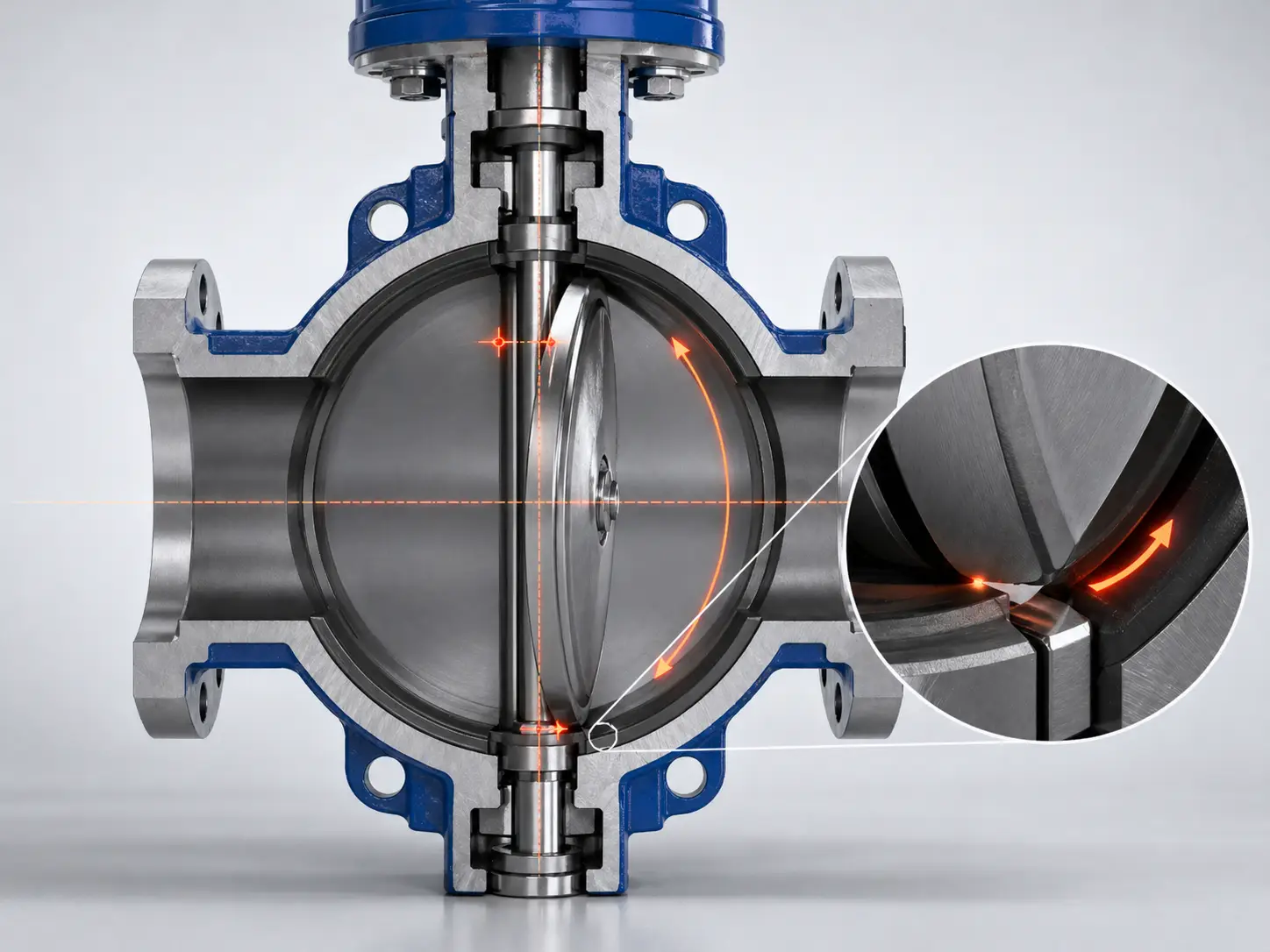
As the pneumatic or electric actuator applies torque, the disc instantly “lifts” and breaks physical contact with the seat within the very first 1° to 3° of rotation. For the remaining 97% of its travel stroke, the valve operates in a completely frictionless state, suspended in the fluid stream. This geometric brilliance is the definitive reason why eccentric valves drastically reduce mechanical wear, prevent seat abrasion, and require significantly smaller, more cost-effective actuators due to the massive reduction in operating torque.
Concentric Butterfly Valves: Strengths and Engineering Limits
Despite their friction-prone internal design, concentric valves remain the undisputed champions of value for specific, non-critical utility sectors. They feature an exceptionally streamlined flow path and crevice-free internal linings, making them highly desirable where cleanliness and simplicity are paramount. However, recognizing their absolute engineering boundaries is critical to preventing sudden pipeline disasters.
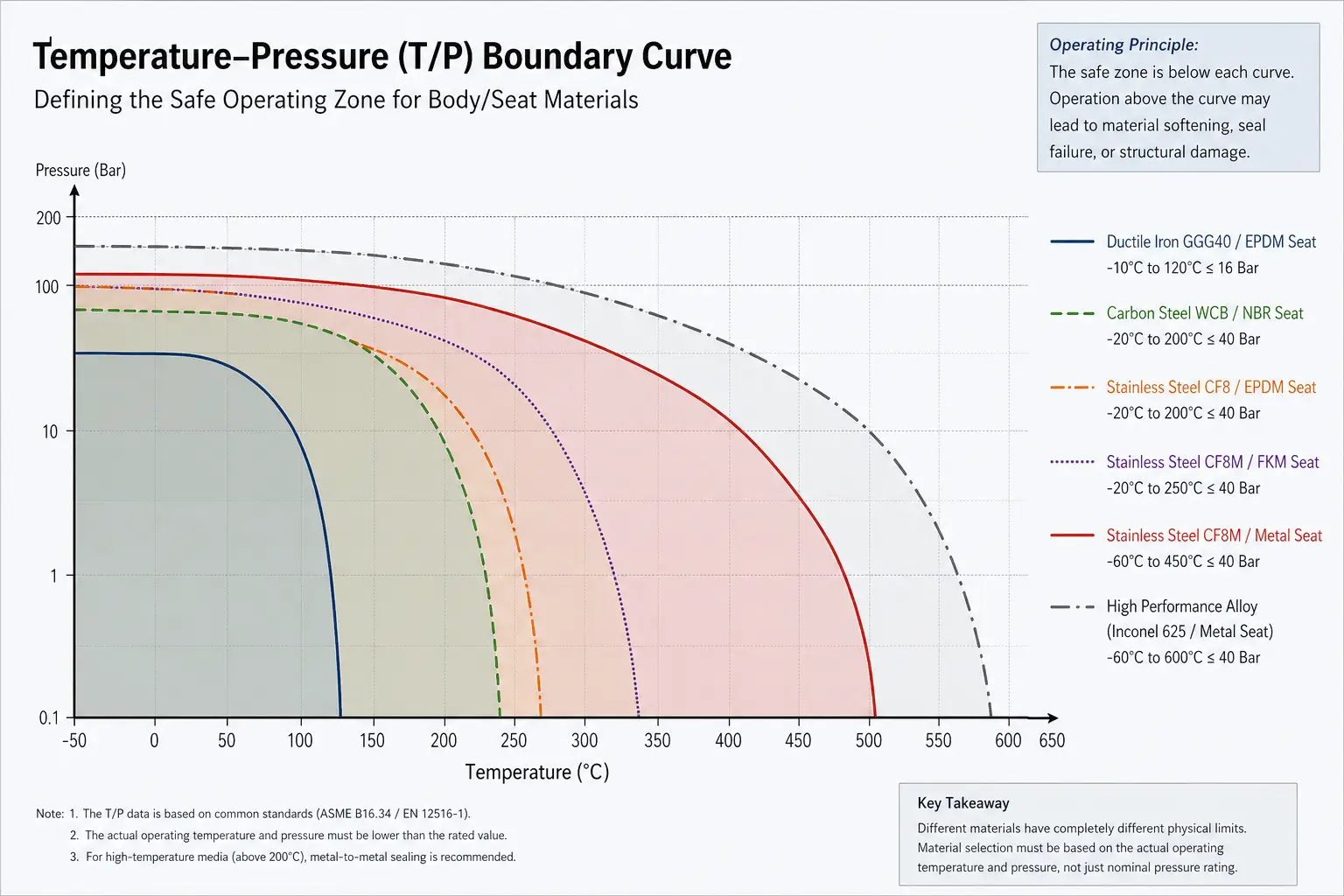
Their sealing capability is strictly and uncompromisingly limited by the physical properties of their elastomer seats. Under continuous thermal stress, standard EPDM typically reaches its structural limit at 120°C (248°F). If a facility attempts to push high-grade polymers like PTFE or Viton, they will face a critical failure threshold at approximately 200°C (392°F). Beyond these specific temperatures, the molecular structure of the material degrades. It loses its “memory” and elasticity, resulting in permanent deformation, swelling, and catastrophic bypass leakage.
Therefore, concentric valves should be strictly confined to ANSI Class 150 utility applications. They excel in municipal wastewater treatment plants, HVAC cooling water loops, desalination systems, and low-pressure air lines where extreme thermal shock, highly abrasive slurries, or high-pressure steam conditions are completely absent.
The Eccentric Family: Decoding Double and Triple Offset
When operational working conditions inevitably exceed the capabilities of soft-seated concentric valves, engineers must transition to the eccentric family, which provides the necessary mechanical resilience through sophisticated geometric offsets and advanced material sciences.
High-Performance Double Offset (The Workhorse)
The double offset butterfly valve (widely known as the High-Performance Butterfly Valve or HPBV) is the reliable workhorse for the chemical processing, petrochemical refining, and heavy industrial water treatment industries. Typically adhering to strict API 609 Category B specifications, these valves easily handle elevated pressures up to ANSI Class 600.
While the cam-action significantly extends the lifecycle of their reinforced PTFE (R-PTFE) seats, they are not invincible. They still face a thermal ceiling dictated by polymer science. In applications involving high-pressure steam or aggressive thermal cycling, the primary engineering concern is the thermal degradation of these soft seats. Prolonged exposure leads to a phenomenon known as “cold flow” or “creep”, where the polymer slowly extrudes out of its retaining groove under continuous pressure, subsequently causing the valve to seize or leak. Additionally, for pipelines handling flammable liquids, these valves must often be specified with a “Fire-Safe” design (API 607 certified), which incorporates a secondary metal backup ring to catch the disc if the primary PTFE seat burns away.
Triple Offset (The Zero-Leakage Beast)
To conquer the most extreme, unforgiving environments engineered by humanity, the triple offset valve (TOV) adds a third geometric refinement: a conical sealing profile. By machining the sealing components into the shape of an angled cone, engineers completely eliminated all rubbing across the entire 90° stroke. More importantly, TOVs are torque-seated rather than position-seated. They do not rely on elastomer squeezing; instead, they utilize precision-machined metal-to-metal contact driven by actuator torque.
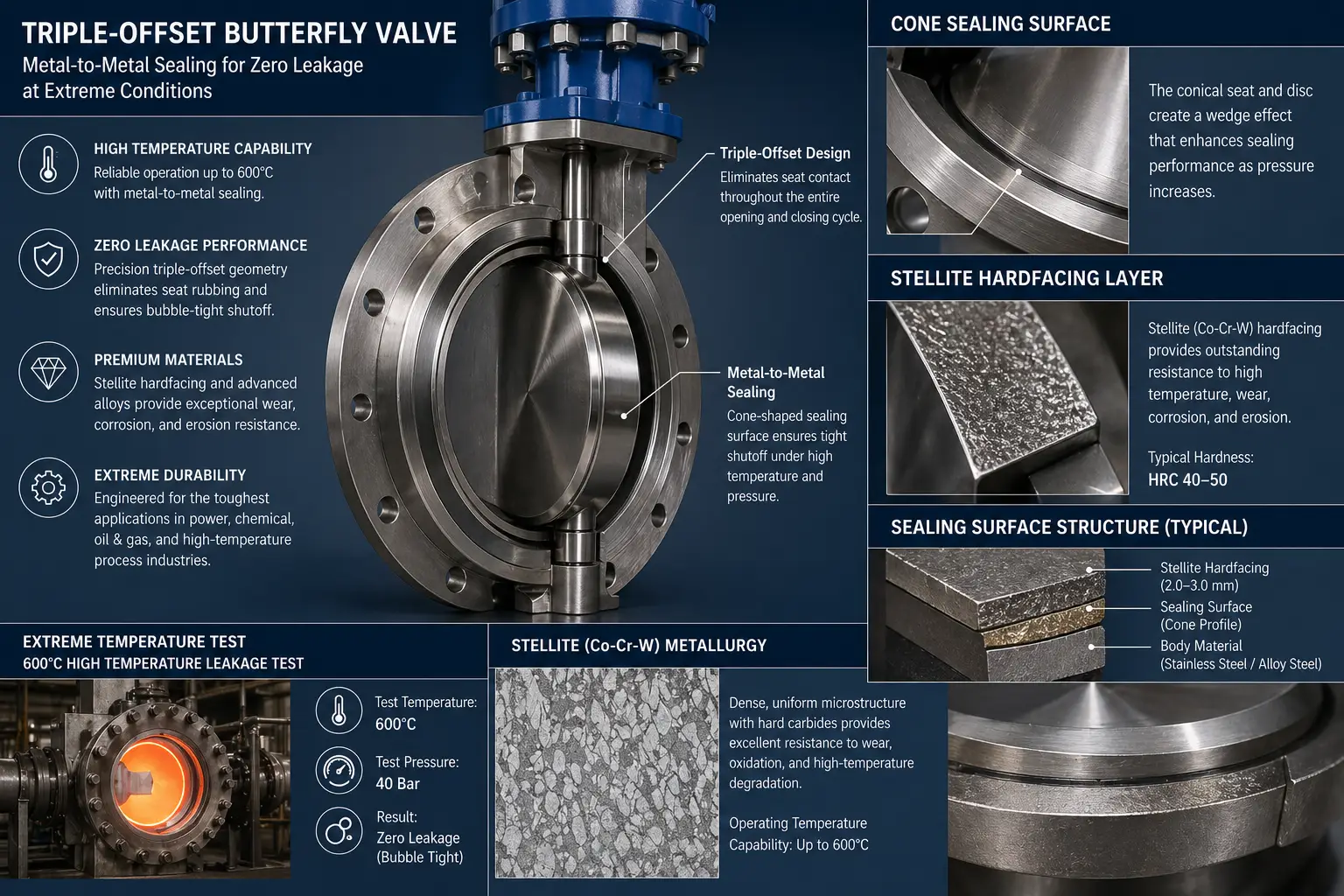
For extreme fluid services approaching or exceeding 600°C (1112°F) – such as superheated high-pressure steam in power generation plants, hot abrasive slurries in mining, or molten salts – standard laminated graphite seats are entirely insufficient because graphite will physically oxidize and burn away in air at these extreme temperatures. For such hostile environments, the valve must be explicitly specified with a Solid Metal with Stellite hardfacing seat. Stellite (a cobalt-chromium alloy) provides extreme hardness and wear resistance, ensuring bi-directional zero-leakage and unbreakable structural integrity under severe thermal shock and high-velocity erosion.
Temperature, Pressure, and Media: The Performance Matrix
Successful and safe valve selection requires balancing the medium’s chemical aggressiveness with the mechanical and thermal limits of the valve’s internal geometry. Understanding the exact point where a material fails is the key to preventing plant shutdowns. Review the detailed engineering matrix below to clearly establish your operational limits before finalizing your procurement specifications and P&ID documentation.
| Valve Geometry | Thermal Limit (Safe Operating Zone) | Max Pressure Rating (ASME B16.34) | Core Sealing Strategy |
|---|---|---|---|
| Concentric (Zero Offset) | 120°C (EPDM) / 200°C (PTFE limit) | ANSI Class 150 (PN16 / PN25) | Diametrical Interference (Friction) |
| Double Offset (High-Performance) | 200°C to 260°C (R-PTFE / Fire-Safe) | ANSI Class 600 (PN100) | Position-Seated / Cam-Action Breakaway |
| Triple Offset (TOV) | Up to 600°C+ (Solid Metal + Stellite) | ANSI Class 900+ (PN150+) | Torque-Seated / Frictionless Conical |
Total Cost of Ownership (TCO): Initial Price vs. Lifecycle ROI
From a rigid procurement perspective, buying the cheapest valve on the market often results in the highest Total Cost of Ownership (TCO) due to frequent, labor-intensive maintenance and exorbitant downtime penalties. However, upgrading a facility to high-performance eccentric valves no longer means accepting massive budget overruns, premium Western brand markups, and frustrating months-long delivery lead times.
As a leading force in automated industrial fluid control, VINCER VALVE successfully bridges the gap between premium technical performance and lean project budgeting. Operating from a state-of-the-art 7,200㎛ facility equipped with 12 advanced CNC machining centers and ISO9001 certification, VINCER ensures absolute compliance with international safety standards including CE, SIL, RoHS, and FDA.
The Ultimate Selection Checklist for Engineers
When drafting your final Bill of Materials (BOM) or replacing aging infrastructure, systematically run through these non-negotiable engineering variables to ensure long-term pipeline reliability:
- Temperature Verification: Is the fluid medium operating above 120°C? If yes, avoid EPDM-seated concentric valves immediately to prevent seat liquefaction, rubber swelling, and catastrophic bypass leakage.
- Actuation and Cycle Frequency: Does the process loop require high-cycle automated control? High-cycle automation strictly requires a Double Offset design to mitigate continuous interference wear via Cam-Action breakaway, which also significantly reduces actuator sizing and energy consumption.
- Extreme Service Conditions: Are you handling high-pressure steam, molten salts, or thermal oil above 250°C? Specify a Triple Offset valve exclusively with Solid Metal with Stellite hardfacing to entirely prevent the thermal degradation and cold flow extrusion associated with soft polymer seats.
- Safety & Hazardous Media: For pipelines carrying flammable, volatile, or highly toxic chemicals, Fire-Safe certified (API 607) eccentric valves are mandatory. This ensures the valve maintains a reliable metal-to-metal secondary seal to isolate the line during and after an intense fire event.
Navigate Complex Flow Control Challenges with Expert Engineering:
Fluid dynamics are rarely simple. You may be dealing with intersecting challenges such as highly corrosive media, severe space restrictions for actuator mounting, and strict leak-rate tolerances. Don’t let a generic valve selection lead to a major facility shutdown. VINCER’s technical engineering team (boasting 10+ years of average industry experience) utilizes a professional 8-Dimension Analysis Framework (evaluating Media, Temp, Pressure, Connection, Control, Material, Industry, and Space constraints) to calculate the exact automated valve requirements for your specific operating conditions.
Contact our technical experts to submit your Extreme Operating Parameters. We will perform a precise torque calculation, a comprehensive material compatibility check, and provide a detailed technical scheme within 24-48 hours to secure your pipeline’s integrity.
 English
  French
  Spanish
  Italian
  German
  Dutch
Dutch  Portuguese
  Korean
  Russian
  Chinese
  Finnish