Todas las plantas, las tuberías principales de agua y los talleres repletos de tuberías funcionan gracias a las válvulas de bola, esas pequeñas válvulas de un cuarto de vuelta que detienen y permiten el flujo en todo tipo de sistemas, desde una llave de paso doméstica hasta una línea de proceso de alta presión. Y cuando una empieza a gotear, la mayoría de la gente se queda mirándola. ¿Qué pieza de la válvula de bola está fallando? ¿Se puede reparar o hay que cambiar toda la válvula? Esta guía nombra todas las piezas de una válvula de bola, clasifica toda la familia de válvulas de bola en tres niveles estructurales y te indica qué componentes se desgastan primero y qué hacer exactamente al respecto.
¿Qué es una válvula de bola? Una explicación en 60 segundos
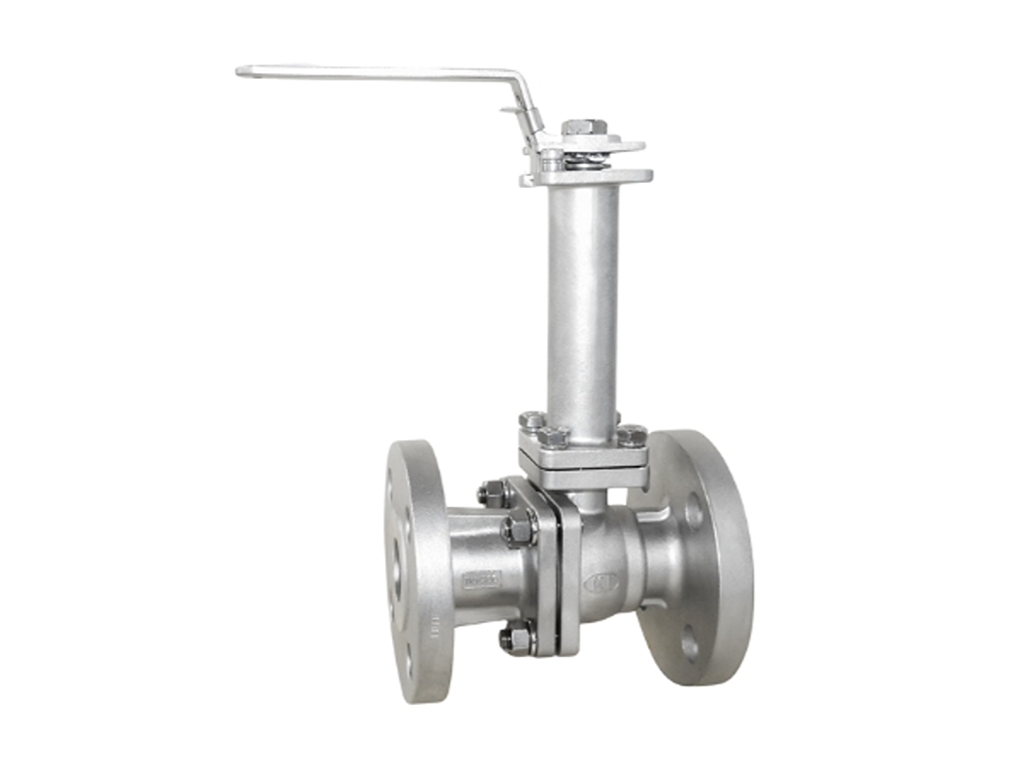
Una válvula de bola es un dispositivo de cierre de un cuarto de vuelta. En el interior del cuerpo hay una bola con un orificio en el centro. Al girar la manivela 90°, el orificio queda alineado con la tubería (abierta); al girarla en sentido contrario, la superficie maciza de la bola bloquea el flujo (cerrada). Ese es todo el mecanismo.
Hay un detalle que es fundamental para todo lo que viene a continuación: una válvula de bola se sella mediante rotación, y no presionando hacia abajo como en una válvula de compuerta o una válvula de bola. Esa única diferencia determina qué piezas hay, cuáles se desgastan y por qué la frase “no hay arandela” confunde a tanta gente. Hablaremos de ello más adelante.
Esquema de las piezas de una válvula de bola: todos los componentes, con su nombre y explicación
Una vez que clasifiques los componentes en esas tres categorías, podrás entender cualquier válvula de bola del mundo.
Las piezas sometidas a presión: cuerpo, conexiones en los extremos, tapa
El cuerpo de la válvula Es el recipiente a presión: contiene todo el contenido y soporta toda la presión de la línea. Los materiales del cuerpo van desde el latón (fontanería doméstica) hasta el acero inoxidable 304/316, el acero al carbono y el hierro dúctil (uso industrial). La distinción que realmente importa a los compradores: el acero inoxidable 316 contiene molibdeno y resiste la corrosión por picaduras de cloruro mucho mejor que el 304. En entornos costeros o químicos, esa es la diferencia entre una válvula que dura veinte años y otra que se corroe en un año.
Conexiones en los extremos son los distintos tipos de unión entre la válvula y la tubería: roscada (tamaños pequeños, fácil instalación), con bridas (tuberías grandes o de alta presión, atornilladas), soldada (permanente, a prueba de fugas) y con abrazaderas (sector sanitario/alimentario, desmontaje rápido). Las capó (o entrada superior) es la parte del cuerpo que alberga el conjunto del vástago y su junta.
Hay un detalle estructural que conviene destacar ahora: los cuerpos de las válvulas de bola pueden ser de una, dos o tres piezas, y esa elección determina si la válvula es reparable o no. En la sección dedicada a la estructura que aparece a continuación se explica esto con más detalle.
Las piezas de estanqueidad y rotativas: bola, asientos, vástago
El pelota es el corazón giratorio: una esfera con un orificio central. Puede ser a toda máquina (el orificio se ajusta al diámetro del tubo, lo que supone una restricción mínima del caudal) o diámetro interior reducido (paso más estrecho, menor coste, habitual en válvulas más pequeñas).
El asientos son las juntas de estanqueidad que rodean la bola por ambos lados. Esta es la parte que más confunde a la gente: una válvula de bola tiene sin arandela. El sellado se produce gracias a la presión que ejerce la bola contra las sedes. En un diseño de bola flotante (el tipo más habitual), la presión de la línea empuja la bola contra la sede aguas abajo, por lo que cuanto mayor sea la presión, más hermético será el sellado. Las sedes suelen estar fabricadas casi siempre con materiales de la familia del PTFE, lo que conlleva sus propios límites de temperatura (que se tratan en la sección de tipos).
El tallo conecta la bola al mango o al actuador y transmite el movimiento giratorio a lo largo del cuerpo. Alrededor del vástago se encuentra el embalaje (también llamado «junta del vástago»), el componente que verás en la vida real cuando observes un goteo debajo del mango.
Las piezas funcionales: maneta, empaquetadura y actuadores
El actuar (palanca) gira el vástago, con una posición de bloqueo a 90° abierto y a 90° cerrado. Debajo de la manija, el embalaje sella el vástago por donde atraviesa el cuerpo, y “gotea justo debajo del mango” suele ser casi siempre un problema de la empaquetadura, no de la bola. A veces, con solo apretar la tuerca de la empaquetadura ya queda solucionado el problema.
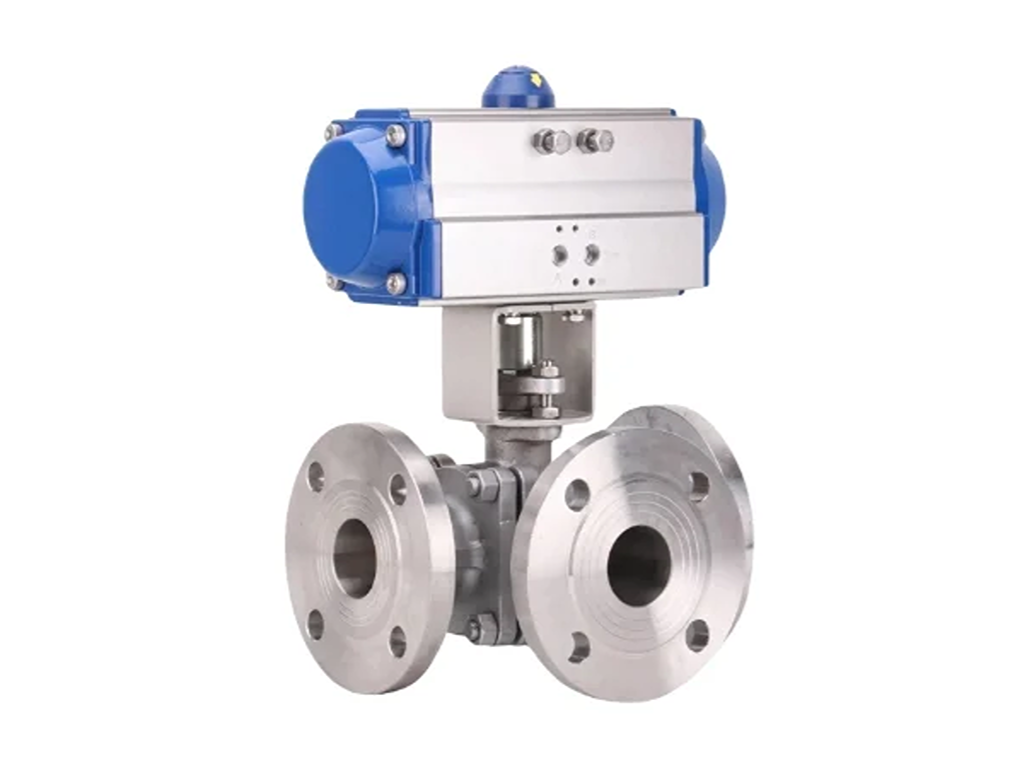
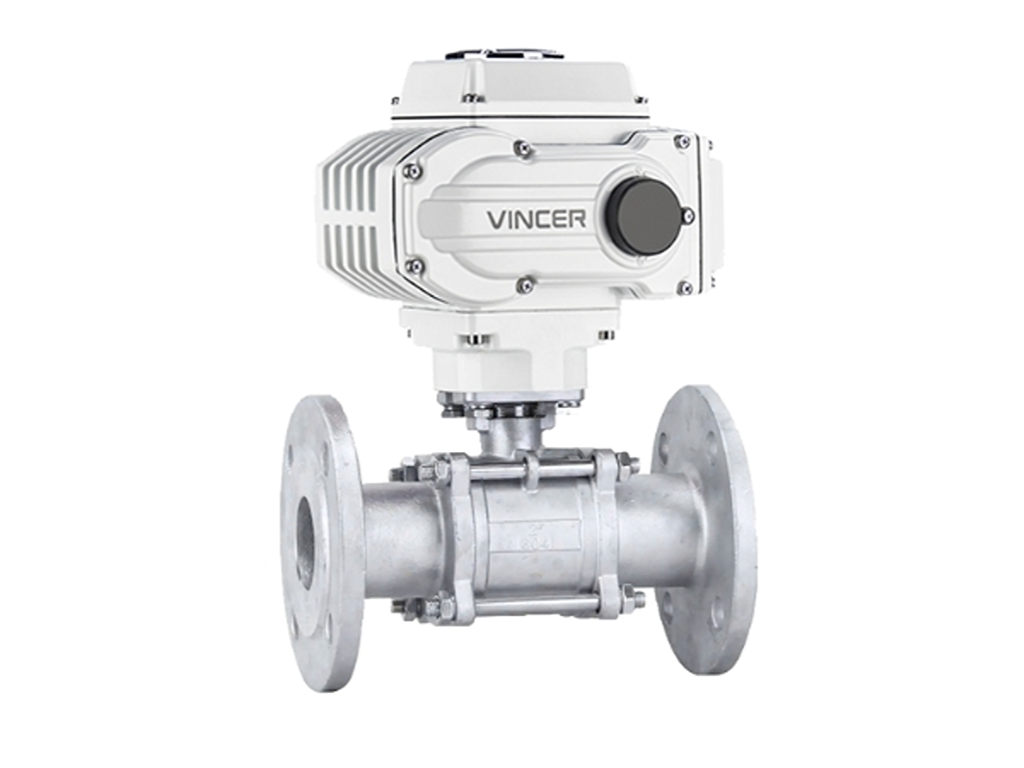
Además de la maneta, las válvulas de bola pueden automatizarse: una actuador neumático (rápido, funciona siempre que haya aire comprimido) o un actuador eléctrico (para instalaciones sin suministro de aire) se atornilla a la brida estándar del actuador. Dado que el montaje del actuador sigue la norma ISO 5211 para bridas, el mismo cuerpo de válvula puede pasar de ser manual a automática sin necesidad de cambiar la válvula en sí. Quién gira el vástago —una mano o una máquina— es la principal diferencia dentro de la familia de las válvulas de bola, y se trata en una sección específica más adelante.
Piezas y funciones de la válvula de bola
| Componente | Para qué sirve | Materiales habituales | Fallos más habituales |
|---|---|---|---|
| Cuerpo | Mantiene la presión y admite conexiones en los extremos | Latón, acero inoxidable SS304/316, acero al carbono, hierro dúctil | Grietas (por congelación, golpe de ariete) |
| Balón | Gira 90° para abrir o cerrar el flujo | Latón cromado, acero inoxidable, cerámica | Marcas superficiales provocadas por partículas presentes en los medios de comunicación |
| Asientos | Sellado entre la bola y el cuerpo | PTFE, RPTFE, Viton, EPDM, metal | Desgaste, deformación, sobrecalentamiento |
| Tallo | Transmite el giro desde la empuñadura/el actuador | Latón, acero inoxidable | Es poco habitual; lo normal es que el envase se rompa primero |
| Junta de estanqueidad / junta del vástago | Sella el vástago a través del cuerpo | PTFE, grafito, juntas tóricas | Desgaste: la fuente de fuga #1 situada debajo del mango |
| Conexiones en los extremos | Conecta la válvula a la tubería | Carrocería + juntas | Fallo de la junta en las uniones de la carrocería |
Piezas de las válvulas de bola frente a las de otros tipos de válvulas: en qué se diferencian y por qué es importante
Si alguna vez has reparado una válvula de compuerta o una válvula de cierre, tu lista mental de piezas no es válida para las válvulas de bola. Por eso, el término “piezas de válvula de bola” confunde a quienes están acostumbrados a otros tipos de válvulas. Las válvulas de compuerta y las de globo sellan mediante un disco que ejerce presión hacia abajo sobre un asiento, y utilizan arandelas reemplazables. Las válvulas de bola sellan mediante una esfera que gira contra las válvulas, por lo que no hay arandela, y los puntos de fuga son totalmente distintos.
| Tipo de válvula | Mecanismo de sellado | Puntos habituales de fugas | Lógica de reparación |
|---|---|---|---|
| Válvula de bola | Bola giratoria frente a asientos | Relleno (debajo del asa), asientos, costuras de la carrocería | Aprieta la junta o sustituye las válvulas; en los cuerpos de tres piezas, cambia el núcleo en línea. |
| Válvula de compuerta | Cuña ascendente presionada hacia abajo | Junta del capó, asiento/cuña | Sustituir la cuña o la junta |
| Válvula de bola | Disco presionado contra el asiento | Desgaste de los discos y los asientos | Vuelve a colocar el disco o cámbialo |
Una observación que se aplica también a la sección de tipos: las válvulas de bola de tres vías y con puerto en V incorporan vías de flujo adicionales respecto a las piezas estándar; la válvula de bola de tres vías cuenta con puertos internos en forma de L o de T, y las de puerto en V configuran el flujo para la regulación. La misma lista de piezas, pero con una geometría de bola diferente.
Tipos de válvulas de bola: tres capas estructurales, un principio de funcionamiento
Todas las válvulas de bola funcionan igual: una esfera con un orificio que gira 90°. Lo que varía es cómo se sostiene esa esfera, el aspecto de su orificio, cómo está montado el cuerpo y quién acciona el vástago. Hay cuatro capas estructurales, y todas las válvulas de bola del mercado son una combinación de ellas. Lee esta sección una vez y sabrás identificar cualquier válvula de bola que te encuentres.
Capa 1 — Soporte de bolas: flotante y con muñón (los dos más habituales)
Los diseños de bola flotante y de muñón son los dos tipos de válvulas de bola más habituales en el ámbito industrial. A flotante La bola se mueve libremente y aprovecha la presión de la línea para empujarse contra el asiento situado aguas abajo. Cuanto mayor es la presión, más hermético es el sellado, lo que también significa que el funcionamiento a baja presión es el verdadero reto en materia de estanqueidad. A trunnion ball is held by fixed supports top and bottom, so it doesn’t depend on pressure for sealing; trunnion designs handle high pressure (Class 150 up through Class 2500), large diameters, and frequent cycling, at a higher cost.
The seat material that hugs that ball is chosen against the media, and it’s where most premature failures come from:
Seat Material and Ball Design: Service Boundary Matrix
| Service / Media | Right Choice | Where It Breaks Down |
|---|---|---|
| Cold water, general service | PTFE seats + floating ball | Above ~180°C PTFE softens and cold-flows; abrasive media scores it |
| Hot-oil service (165–170°C) | RPTFE (reinforced PTFE) seats | Plain PTFE deforms at these temperatures — reinforced material resists cold flow |
| Aggressive chemicals | Viton (FKM) seats, alloy bodies | Elastomer must match the media — wrong elastomer swells and fails |
| Steam / high pressure | Trunnion ball, reinforced or metal seats | Floating balls leak in low-pressure steam; seat material over temperature fails fast |
| Deionized / sanitary water | SS304/316 + Viton or food-grade seals | Chlorides attack 304; use 316 for chloride environments |
The pattern: seat material and ball design are selected against the media and temperature, not against the catalog price. A seat that’s fine in cold water can fail in months on a hot-oil line.
Layer 2 — Ports and Bores: 2-Way, 3-Way (L/T), V-Port, Full vs. Reduced Bore
The bore through the ball decides what the valve can do with the flow. Full bore matches the pipe diameter — minimal pressure drop, easy cleaning, and the right choice wherever flow matters. Reduced bore is cheaper and common in smaller sizes. Three-way balls carry L-shaped or T-shaped internal ports: an L port switches flow between two lines, a T port mixes or diverts. V-port balls (or seats) carry a V-shaped notch that shapes the flow curve, so the valve can throttle instead of just open and close. Skip these unless your service needs them — 90% of applications run on plain two-way valves.
Layer 3 — Body Assembly: 1-Piece, 2-Piece, 3-Piece
How the body is put together decides whether you can repair the valve at all. 1-piece: one solid casting, cheapest, internals inaccessible — effectively throwaway. 2-piece: main body plus one end connection, repairable, but reopening the threaded joint can gall (seize). 3-piece: two end connections bolt around a removable center section — you can pull the core out and swap seats, ball, and stem without removing the valve from the pipe. (Rarer body layouts exist: top-entry for in-line access, welded-end for permanent lines.) The repair consequences of this layer get their own section below.
Layer 4 — Operation: Manual vs. Actuated
The last layer asks who turns the stem. Manual ball valves are turned by a handle: cheap, no energy dependency, fine for occasional use. Accionado ball valves bolt a pneumatic or electric actuator onto the standard ISO 5211 flange — the same valve body can switch between manual, pneumatic, and electric without changing the valve itself. This is the fork where most buyers make their first real decision, and it’s worth a section of its own.
Manual or Actuated? The Fork That Changes Your Ball Valve Parts List
Ask yourself three questions. Does the valve get cycled frequently, or sit in a position nobody visits? Does it live somewhere remote, elevated, or otherwise hard to reach? Does the plant control system need to see its position? If you answered yes to any of them, you’re describing an actuated valve — and that changes the parts list completely.
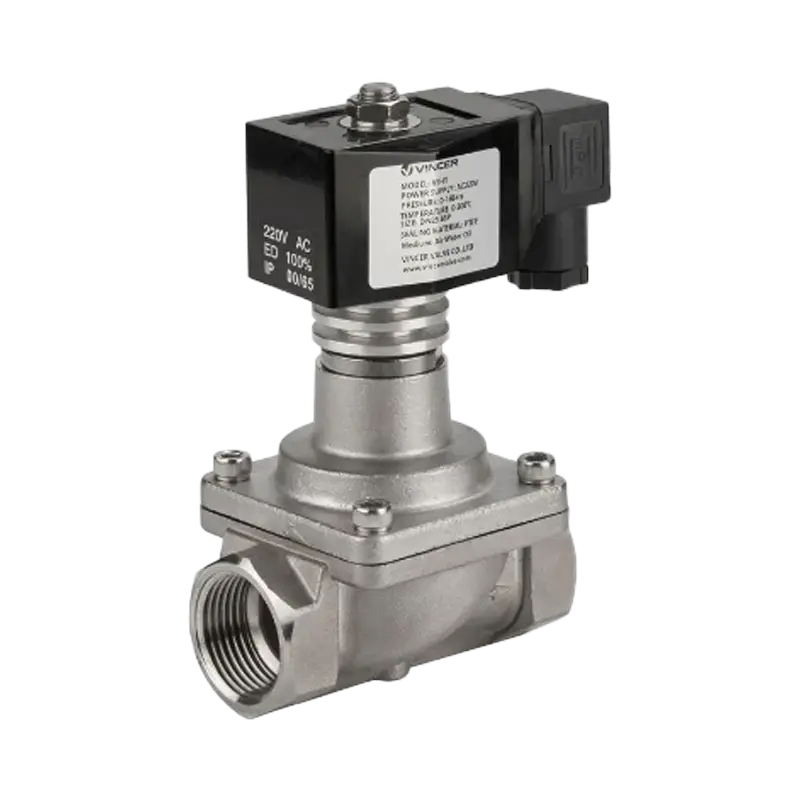
Above the manual parts, a second parts set appears. The actuator itself: pneumatic rack-and-pinion units typically run from roughly 8 N·m up to 4,678 N·m, electric quarter-turn units up to 4,000 N·m, with switching times under a second for pneumatic. Then the accessories: limit switches report valve position back to the control system, a válvula solenoide pilots the air for pneumatic units, and modulating duty adds a positioner. Two specs matter more than any other on an actuated valve: the actuator-to-valve torque match (actuator torque must exceed valve breakaway torque with margin), and the ISO 5211 interface — both should appear in writing on the quote.
And automation is becoming the default, for three structural reasons rather than fashion. First, the interface is standardized: because ISO 5211 flanges are a published standard, a manual valve bought today can be upgraded to actuated next year without replacing the valve — the industry is laying the rails for automation. Second, staffing: plants run with fewer maintenance hands per valve, and a remotely switched valve removes a trip to the line. Third, data: predictive maintenance depends on position feedback, and that signal comes from the very accessories an actuated valve carries. None of this says manual valves are obsolete — a low-cycle, low-risk point is fine with a handle. But the direction of the industry is unambiguous, and the parts list follows it.
Which Ball Valve Part Fails First? A Leak Diagnosis Guide
Plain language first: in household plumbing, the leak tells you which part failed by where it leaks. In industrial service, parts fail from being pushed past their limits. Both start from the same diagnosis table.
Ball Valve Leak Diagnosis: Which Part Failed
| Where It Leaks | Suspect Part | Why It Happens | Repair or Replace? |
|---|---|---|---|
| Under the handle / stem area | Packing or stem O-ring | Normal wear; the #1 leak source on ball valves | Repair — first try tightening the packing nut; replace the packing/O-ring if needed |
| At the body seam or end connection | Body seal / gasket | Gasket aging, over-torqued joints | Repair — reseal; but 2-piece bodies can suffer thread galling when reopened, and 1-piece bodies can’t be opened at all |
| Valve won’t seal when closed | Seats (or scored ball) | Media particles scoring the surface, seat wear, seat deformation | Repair seats (3-piece: swap the core without removing the valve) or replace the whole valve |
| Cracks in the body itself | Cuerpo | Freeze damage, water hammer | Replace the whole valve — body cracks are not repairable |
The repair rule of thumb
This is exactly where the body-assembly layer pays off: a 1-piece valve with a failed seat is a throwaway; a 3-piece valve with a failed seat is a 20-minute core swap with the pipe still connected.
In plant service, the same parts fail by a different logic. Seats fail not from age but from mismatch: media temperature above the seat material’s limit (PTFE softens), or particles and abrasive flow cutting the sealing surface. When engineers diagnose a leaking steam ball valve, the real cause is usually upstream: a blocked condensate trap, water hammer, or steam flashing that deforms the seat. Once deformed, an upstream seat can be pushed out of its groove when pressure gets behind it. Two facts worth keeping. Floating balls seal better at high pressure, so low-pressure service is the real challenge; around 80 psi, the factory air-seat test is famously one of the hardest to pass. And every new industrial valve should arrive with documented pressure and leak testing. API 598 is the industry benchmark procedure for valve inspection and testing (Inspectioneering, API 598), and pressure–temperature ratings come from ASME B16.34.
How to Choose Ball Valve Parts: A Buyer’s Checklist
Ball Valve Parts Buyer’s Checklist
Whether you’re replacing one valve or standardizing across a plant, run this checklist. Each line is both a spec and a question to put to your supplier:
- Size & pressure class — confirm the pipe size, and pin down the pressure rating system (PN, Class, or JIS; they don’t convert cleanly).
- End connection — threaded, flanged, welded, or clamped, matched to your piping.
- Body style — 1/2/3-piece, chosen by how repairable you need the valve to be.
- Seat material — matched to media and temperature, using the boundary matrix above.
- Ball design — floating or trunnion, the two most common types, picked by pressure and cycling duty.
- Accionamiento — manual, pneumatic, or electric; on automated valves the actuator, limit switches, and solenoid are part of the parts list, so confirm air supply, torque, and the ISO 5211 interface.
- Testing & documentation — ask for pressure/leak test records and material certificates (MTC) before accepting a batch.
- Spares & lead time — confirm spare seats and packing are stocked, and ask how long stock vs. custom-built valves take.
Don’t compare valve quotes on body price alone. Fold in spare parts availability, test documentation, and lead time. That’s what turns a purchase into a five-year operating cost.
Turn the checklist into a quote request
Send your service conditions — media, temperature, pressure — and get the parts list back with a price.
Request a quote for your valve specWhat to Ask a Valve Supplier Before You Buy
The checklist above becomes sharper when you point it at a real supplier. Four questions separate paper quotes from working valves:
- Show me the test records. Pressure and leak test results per API 598 practice, plus material certificates (MTC) for the batch — a supplier who can’t produce them for the last shipment probably can’t produce them for the next one either.
- What’s your spare-parts policy? Are seats and packing stocked for the sizes you sell? Is anything covered under warranty? A seat that fails on a Friday afternoon should be a phone call, not a procurement project.
- Walk me through my own selection. Your media, temperature, and pressure, not a catalog page. If the supplier’s engineer can’t map your service to a specific seat material and ball design, the quote is guesswork.
- Can you document the torque match? If the valve is actuated — and after the last section, consider whether it should be — the actuator-to-valve torque match and the ISO 5211 interface belong in writing on the quote. This is where cheap automation deals come apart in the field.
For a manufacturer whose core business is actuated valves, electric and pneumatic actuators mated to ball, butterfly, and globe bodies, the answer to all four is usually one conversation: bring them your media, temperature, and pressure, and the parts list follows, actuator included (the ball valve product range is a practical example: VINCER builds its electric and pneumatic actuated valves in-house, with actuator torque ranges from 8 N·m to 4,000 N·m on standard ISO 5211 interfaces, so the torque spec is documented rather than assumed; selection support covers eight dimensions from media to connection standard, spare parts are free within warranty, and standard quotes come within 24 hours). If your checklist has open questions, that conversation is how you close them: solicitar un presupuesto and test the supplier the way you’d test the valve.
What Ball Valve Failures Teach Distributors About Valve Economics
Step back from the bench and the parts make a bigger point. The three experiences that dominate ball valve maintenance — a drip under the handle, the “repair or replace” decision, and the leak that comes back after a fix — are each teaching something about how the valve was built, and each one is a line item in a distributor’s economics. A leak under the handle tells you the packing was fitted and torqued properly. A “repair or replace” decision exists only because someone chose a 1-piece, 2-piece, or 3-piece body; the repairability was decided at purchase time, not at failure time. And a leak that returns means the replacement part didn’t match the service: seat material chosen for price instead of temperature, or a floating ball asked to seal a service it wasn’t built for.
For distributors and wholesalers, that chain of lessons is a product strategy in itself. When a maintenance team replaces seats every few months, the seat material was specified wrong — that’s a return and a warranty claim waiting to happen. When a valve fails at low pressure, the design was wrong for the duty. When the plant has no spares and no test records on file, the purchasing process skipped the questions that matter. Valves aren’t bought on pressure rating alone. They’re bought on materials matched to service, documented testing, and a spare-parts policy that keeps downtime short.
And that points at where the money is. A bare valve is close to a commodity: catalog prices, thin margins, and buyers comparing three quotes side by side. The engineering value sits one layer up — in the assembled unit, where torque matching, interface alignment, fail-safe behavior, and control integration can’t be priced from a catalog. That’s why profit follows automation demand: every valve that becomes actuated moves from the commodity column to the engineering column.
The practical read for a distributor: make the manual-to-actuated upgrade a standard conversation, not a request. Stock matched actuator-and-valve pairs rather than bare valves alone, so the upgrade is a same-week delivery instead of a procurement project. And hold suppliers to the four questions from the previous section — test records, spare-parts policy, real selection support, documented torque — because every one of them is a cost you’ll otherwise carry as warranty claims and lost customers. The supplier that answers all four isn’t just selling valves; they’re selling the margin structure your business runs on.
Get your valve spec reviewed by engineers
One conversation turns your checklist into a parts-matched quote — standard or custom, with spare parts policy included.
Request a quoteReferencias
- Inspectioneering. “API 598 — Valve Inspection and Testing.” https://inspectioneering.com/tag/api+598
- VINCER Valve. “VINCER Ball Valve Series.” https://www.vincervalve.com/vincer-ball-valve-series/
- VINCER Valve. “Contact for a Quote.” https://www.vincervalve.com/contact-for-a-quote/
- VINCER Valve. https://www.vincervalve.com/