
The choice of a valve connection is not a peripheral issue in the strict sphere of fluid mechanics and industrial infrastructure, but a structural choice that determines the structural integrity and operational balance of the whole system. In the complicated structure of a modern industrial plant, which we can imagine as the circulatory system of a high pressure organism, the connection methods in which the parts are interlocked define the border between the efficient throughput and the disastrous collapse. The engineers are always faced with the optimization problem of balancing the mechanical reliability with the economic constraints in selecting a pipe fitting for diverse industrial applications. The article offers an analytical framework of the evaluation of flanged and threaded valve connections, the various types of mechanical properties, performance envelopes, and the systemic implications of their use in automated environments.
What Are Flanged Connections
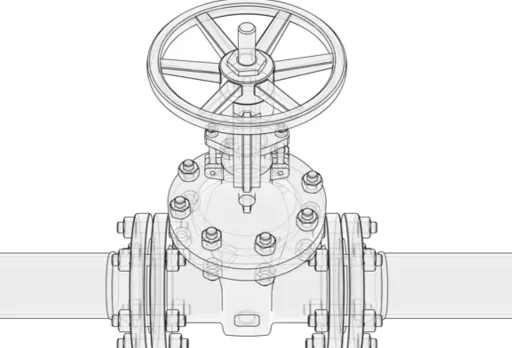
A flanged connection is a strong, standardized way of connecting valves to piping systems by means of external rims, or flanges, which are held together by a circumferential system of bolts and nuts. The mechanical principle is based on compressing a gasket between two similar flange faces to form a static seal. This assembly is regulated by strict international standards, the most famous of which are ASME B16.5 in the United States and EN 1092 in Europe, which determine the dimensions, tolerances, and material requirements of different types of industrial service.
A flanged connection is anatomically made up of three different components: the flange (which can be cast into the valve body or welded to the pipe), the gasket (the sacrificial sealing component), and the bolting hardware. Flange faces may be designed with particular finishes, like concentric or spiral serrations, to make the most of the bite into the gasket material, and thus increase the resistance of the seal to internal pressure. Since the sealing force is spread over a large area of surface, flanged connections are naturally able to sustain large mechanical loads, such as bending moments and thermal expansion, without damaging the fluid boundary.
What Are Threaded Connections
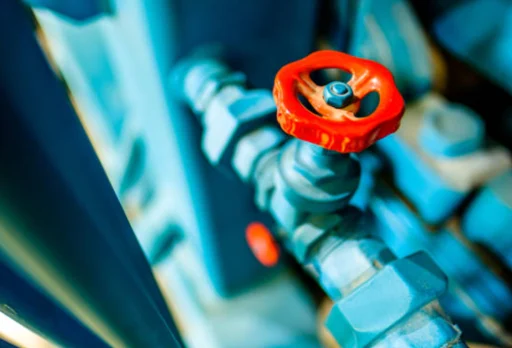
The oldest and simplest mechanical principle of interlocking, the engagement of male and female helical ribs, is used in threaded connections, also known as screwed connections. These are normally tapered threads, e.g. National Pipe Thread (NPT) or British Standard Pipe Taper (BSPT), in the case of industrial valves. The tight seal is obtained by a mixture of metal-to-metal interference and by the use of a secondary sealing material, e.g. polytetrafluoroethylene (PTFE) tape or a special pipe dope, which seals the microscopic spaces between the thread crests and roots.
The friction and compression produced during the torque of the valve on the pipe give the mechanical strength of a threaded joint. The threaded joint, unlike the flanged assembly, uses external fasteners, but the connection is built into the wall of the pipe and the valve body. It is a very space-efficient design that does not need any extra hardware and is therefore a favorite in small systems and low-bore piping. The integrity of the seal is however very reliant on the quality of thread cutting and the expertise of the installer since over-torquing may cause stress cracking whereas under-torquing will always cause helical leakage paths.
Technical Breakdown: Flanged vs Threaded Connections
Size and Pressure Rating Constraints
The difference between flanged and threaded connections is most evident when considering the variables of nominal pipe size (NPS) and the internal system pressure in this type of pipe. The 2-inch (DN50) threshold is a clear cut in engineering practice. In piping systems larger than 2 inches in diameter, the mechanical forces necessary to hold a seal by threads are prohibitively large. The torque required to engage large-bore threads can be well beyond the structural capability of the material or the capability of standard installation tools. Therefore, large-scale industrial use is flanged, as they provide superior strength that can be extended smoothly to more than 60 inches.
Moreover, the pressure ratings, which are determined by the ASME classes of 150 to 2500, are biased heavily towards the flanged design in high stress conditions. Although there are specialized high-pressure threaded fittings, standard NPT connections are typically restricted to low pressure classes, with the thinning of the pipe wall to cut threads forming a localized weakness. Flanges, in contrast, take advantage of the skeletal structure of the bolting array to strengthen the joint, enabling them to resist the extreme hydrostatic loads that would otherwise cause a threaded joint to jump or strip.
Sealing Reliability and Long-term Leakage Risk
Reliability is a characteristic of a connection to hold a seal in dynamic conditions, such as vibration, thermal cycling, and pressure surges. Threaded connections are infamously vulnerable to thermal expansion; the pipe and valve heat at varying rates, and the interference fit of the threads may become loose, resulting in so-called weeping leaks. In addition, threaded joints may creep out of position in systems that are subjected to mechanical vibration, e.g. around pumps or compressors, and they need to be checked and tightened regularly. In addition to mechanical loosening, threaded joints are also distinctly susceptible to crevice corrosion. The stagnant zones formed by the microscopic gaps between the male and female threads result in the depletion of oxygen. This forms a differential aeration cell, which causes localized acidification and fast metal loss in the threads themselves. This corrosion is internal and unlike a flange face, which can be examined, it may result in a sudden seizure or a structural leak that cannot be repaired without cutting the pipe.
Flanged connections provide a better choice of long-term reliability because of the elasticity of the gasket and the tension of the bolts. A properly torqued flanged joint with proper installation makes the bolts spring-like to ensure that the gasket is constantly loaded to achieve optimal results, even when the temperature varies. Also, flanged joints are not prone to crevice corrosion as much as the tight and stagnant areas in thread channels. The redundancy and stability of a flanged connection are critical risk-mitigation measures in critical service applications that involve hazardous or expensive fluids. The life of a flanged seal is not, however, indefinite. It is also prone to stress relaxation, which is a process in which the gasket material becomes less elastic and less sealing forceful with time, particularly at high temperatures. To overcome this, engineers should choose high quality gaskets having low relaxation characteristics and make sure that bolting torque is accurate because a slight decrease in compressive stress can violate the fluid boundary.
Installation Speed vs. Maintenance Accessibility
The installation and maintenance trade-off is a traditional tug-of-war between short-term labor costs and long-term operational costs. The threaded connections are admittedly easier to install in a greenfield environment; a technician can easily apply sealant and screw a valve in without having to use complicated alignment and numerous fasteners. This renders threaded valves very appealing to small-scale commercial plumbing and HVAC systems where initial capital expenditure is the main force.
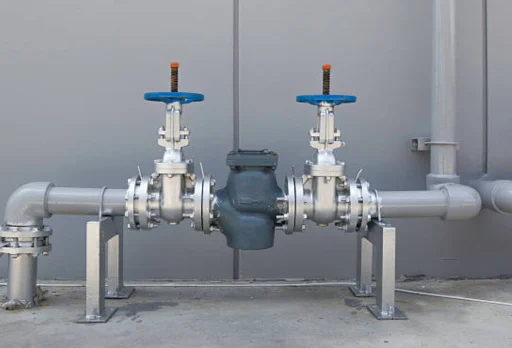
The calculus however changes drastically when maintenance is taken into consideration. A threaded valve is screwed into the piping run. A single threaded valve in the middle of a line requires one to frequently disassemble a large section of the piping or use a union fitting, which creates another possible leak point. Flanged valves, in turn, provide unrivaled drop-in accessibility. A technician can also lift the valve vertically out of the line to repair or replace it without disturbing the adjacent piping by removing the bolts. The efficiency of flanged connections in terms of maintenance in a high-throughput industrial plant where downtime costs thousands of dollars per hour is far more than the increased cost of the material.
At a Glance: Pros and Cons Comparison Table
特点 | 法兰连接 | 螺纹连接 |
尺寸范围 | Broad (2″ to 60″+) | Limited (Typically < 2″) |
Pressure Capacity | Very High (Up to ASME 2500) | Moderate (Generally < 2000 PSI) |
Installation Speed | Slower (Multiple bolts/alignment) | Fast (Single wrench operation) |
维护 | Excellent (Easy removal/replacement) | Difficult (Requires line disassembly) |
密封装置 | Gasket Compression | Thread Interference/Sealant |
Vibration Resistance | High (Bolted stability) | Low (Risk of loosening) |
初始成本 | Higher (Flanges, bolts, gaskets) | Lower (Integral threads) |
Space Requirement | Significant (Flange diameter) | Minimal (Compact profile) |
Strategic Selection: Which Connection Suits Your Application
The tactical choice of a valve connection should be a rigorous analysis of environmental limitations and fluidic characteristics. Various industries in the industrial environment value divergent mechanical virtues depending on the nature of their operations:
- 水处理和海水淡化: Flanged connections are common in the treatment and desalination of large amounts of ambient-temperature fluid at moderate pressures because of the huge pipe diameters.
- Laboratory & Chemical Dosing: Threaded connections are the rational, small-space option in skids with piping that is often 1/2-inch stainless steel tubing, and where routing is often complex.
- Petrochemical and Oil and Gas: Due to the volatility and toxicity of media, the philosophy of zero-leak is required. In this case, safety codes require the use of flanges (Raised Face (RF) or Ring Type Joint (RTJ) types) in any service that requires the use of flammable hydrocarbons.
- HVAC and Commercial Building Services: Threaded joints are economical in small-bore branch lines, but flanged connections are necessary in centralized plant rooms, chillers, and high-rise headers to control large amounts of static head and pump-induced vibration.
- 发电: The thermal cycling strength of flanged joints in high-pressure feedwater cycles and steam lines cannot be compromised. The bolting array offers a high mechanical integrity that threaded joints cannot support under severe thermodynamic stress.
- Industrial Steam and 维护: Flanges used in high temperature applications require stability to avoid weeping when they expand in temperature. Also, in systems that need to be pigged or internally cleaned on a regular basis, flanged connections provide the required modular access that threaded systems cannot provide.
Beyond the Connection: Optimize Valve Performance with Vincer
While the selection of a connection type establishes the mechanical baseline of a piping system, the increasing demand for operational efficiency and safety frequently necessitates an upgrade from manual oversight to automated flow control. Integrating an actuator—whether pneumatic or electric—transforms a static valve into a dynamic component of a larger intelligent network. However, this transition compounds the physical stresses on the joint; the consistent torque, rapid cycling, and vibration inherent in automation demand a connection that can sustain these forces without compromise. This intersection of mechanical integrity and digital precision is where the choice of a manufacturer becomes as vital as the choice of the connection itself.
As a premier manufacturer of 电 和 气动阀, Vincer recognizes that the interface between the valve body and the piping is the structural bedrock of automation. For global process industries—ranging from desalination and wastewater to renewable energy and pharmaceuticals—Vincer delivers more than hardware; we provide intelligent, integrated fluid control ecosystems.
Our engineering philosophy is anchored in a rigorous 8-dimensional analysis framework. Unlike generic suppliers, we evaluate every project through the granular lenses of medium, temperature, pressure, connection standards, control mode, material requirements, and industry-specific nuances. This holistic methodology ensures that our CE, RoHS, SIL, and FDA-certified valves offer the precision and longevity required for high-stakes environments. By synchronizing sophisticated actuation with the mechanical stability of optimized connections, Vincer eliminates the risks of vibration and torque-induced misalignment. Partnering with our dedicated technical team ensures your system’s intelligence is matched by an unwavering mechanical foundation.
Pro-Tips: A Checklist Before You Place Your Order
In order to make your procurement process successful, we suggest that you check the following technical specifications before finalizing your choice of valve:
- Confirm Thread Standard: Do you work on NPT (tapered) or BSPP (parallel) standards? Combining them will lead to instant failure.
- Check Flange Rating: Make sure that the flange class (e.g., Class 150 vs. Class 300) is correct with your pump discharge pressure and current pipe schedule.
- Gasket & Material Compatibility: In addition to the chemical resistance of the gasket, there is the possibility of galvanic corrosion in case the valve and piping materials are different. Flanges offer the only option of using insulation kits to protect.
- Consider Stress Relaxation & Galling: Low-relaxation gaskets should be specified on flanges in high-temperature service. In the case of stainless steel threads, it is always necessary to mention anti-seize measures to avoid irreversible mechanical seizing (galling).
- Space & Tooling Clearances: Provide adequate “swing room” to pipe wrenches or “bolt clearance” to hydraulic torque wrenches, particularly in modular skid designs.
- Automation & Structural Support: Have you considered the static and dynamic weight, in case the valve will be actuated? Flanges provide a strong skeletal base that is required to carry heavy electric or pneumatic actuators without straining the pipeline.
- Compliance & Traceability: Make sure that the connection requirements are in compliance with the certifications needed by your project (e.g., CE, SIL, or FDA) and that Material Test Reports (MTRs) are provided on all pressurized parts.
结论
The analytical comparison of the flanged and threaded valve connections shows that neither of them is universally better, but each is an optimized solution to a given set of boundary conditions. Threaded connections provide a cost-effective, elegant and space-saving utility in small-bore, low-pressure applications where quick assembly is the most important factor. But with the complexity and size of the system, the mechanical and operational benefits of flanged connections, namely, in terms of pressure containment, seal life, and ease of maintenance, become overwhelming in chemical processing environments. To the stakeholders who want to develop high-performance automated systems, the structural stability of the flanged connections offers the required basis for precision engineering. Finally, the most efficient protection of the safety and efficiency of industrial fluid control is a disciplined approach to connection selection.
 English
  French
  Spanish
  Italian
  German
  Dutch
Dutch  Portuguese
  Korean
  Russian
  Chinese
  Finnish