
The choice of a flow control mechanism in an industrial fluid system is not just a mechanical whim, but a serious engineering optimization exercise concerning different valve types. The decision between a needle valve and a ball valve is a fundamental decision in the complex balance between pressure, temperature, and volumetric flow in terms of the goals of the system operation. Be it the infinitesimal resolution of a metering process or the high-volume pipeline rapid and low-friction isolation, the structural and functional divergence of these two components is critical to the integrity and economic efficiency of the system.
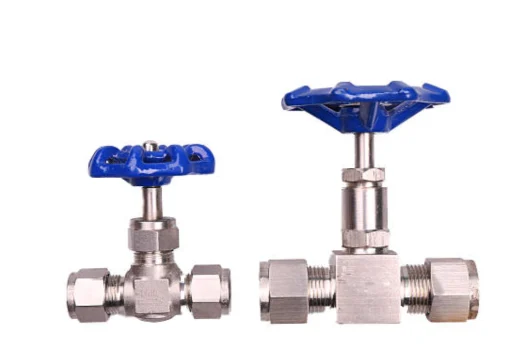
What is a Needle Valve
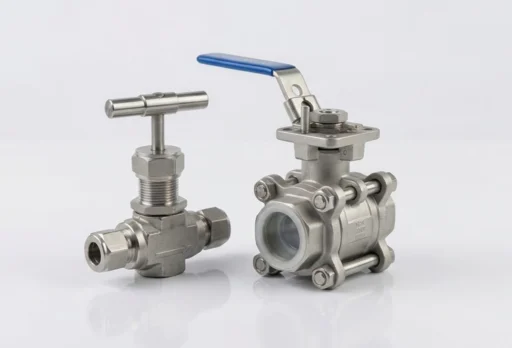
A needle valve is a highly engineered tool that is mainly used to control the flow of a fluid with high precision. It is characterized by a narrow, tapered, needle-shaped plunge that fits into a corresponding conical seat. This plunger is usually operated by a fine-threaded stem, and it can be adjusted in the axial direction in minute steps. The operator can move the needle in a small step either towards or away from the seat by turning the handle, changing the size of the annular space through which the flow of a fluid has to occur. This design is more focused on resolution than throughput and is the standard design where the application needs to make micro-adjustments in the rate of flow of gas or liquid in high-pressure applications.
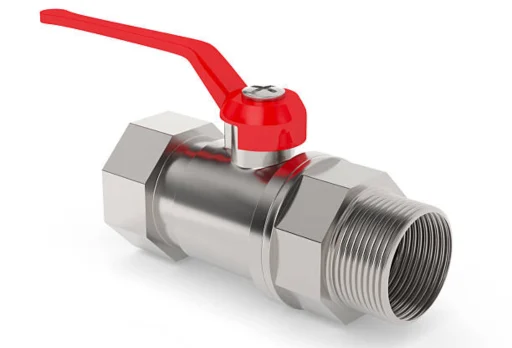
What is a Ball Valve
Conversely, a stainless steel kogelklep is a rotary-motion device that is used to isolate fluid flow rapidly and reliably. It employs a hollowed-out center or bore of a spherical disc that turns 90 degrees (a quarter-turn) to allow or block passage. When the bore is parallel to the axis of the pipe, the valve is open; when it is turned at right angles, the valve is closed. The workhorse of industrial piping is the ball valve, which is valued because of its durability, high flow capacity, and ability to shut off without bubbles. They are typically divided by bore size, with full-bore options offering a path that is virtually the same as the pipe itself, reducing turbulence and energy loss.
Mechanical Design: How Flow Path and Movement Differ
The mechanical divergence of the needle and ball valves starts with their basic kinematics. Each engineering element is a solution to a certain constraint, and these two valves are solutions to different variables in the fluid equation: one is the solution to precision, the other to velocity.
Precision Linear Motion vs. Rapid Quarter-Turn Rotation
The needle valve is a type of valve based on the principle of linear movement that is translated by high-ratio threading. The operator has to rotate the handle a number of times to shift the needle between a fully closed and a fully open position. This multi-turn design is an intentional design choice that offers high mechanical advantage and extreme resolution. Similar to the fine-tuning knob of a microscope, the needle valve can be adjusted in such a subtle way that it cannot be seen by the naked eye, but it can have a major impact on the pressure balance of the system. This gradual motion is also a safety measure; it eliminates the possibility of water hammer or sudden pressure bursts in delicate instrumentation lines by making sure that the flow rises or falls gradually.
On the other hand, the ball valve is characterized by its quarter-turn rotation. This enables immediate On/Off capability. The ball valve has a clear advantage in terms of safety and operational efficiency: visual indication. Since the handle is normally in line with the flow direction when open and perpendicular when closed, an operator can determine the condition of the valve remotely. The multi-turn handle of the needle valve does not provide this intuitive visual feedback, and it may need an additional indicator or manual testing to determine its position. Moreover, the rapid actuation of the ball valve is the reason why it is the choice of emergency shut-off valves (ESV) where time-sensitive isolation is paramount to avoiding disastrous failure.
Performance Analysis: Flow Control and Pressure Management
In performance analysis, we have to examine more than the handle and into the internal geometry of the best valve. The tortuous route of a needle valve is the opposite of the straight-through route of a ball valve, with enormous fluid-dynamic consequences, making needle valves a better option for certain applications.
Throttling Precision vs. High Flow Capacity (Cv Value)
The Flow Coefficient Cv is the most commonly used measure of valve capacity in the lexicon of fluid engineering. It is described as the amount of water at 60°F that will pass through a valve in one minute with a pressure drop of 1psi.
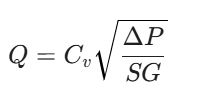
Where Q is the flow rate, Delta P is the pressure drop, and SG is the specific gravity of the fluid.
The needle valve is made with a very low Cv. Since the fluid has to pass through a small, sharp-angled opening and the blockage of the needle itself, the pressure drop across a needle valve is large. This is the cost of accuracy. The needle valve is a throttling expert; it is good at keeping the flow rate constant regardless of changes in the pressure upstream. Nevertheless, it is essentially unable to process large volumes. When a system needs to move large masses of fluid, a needle valve would be a bottleneck and would consume vast quantities of pumping energy in the form of heat and turbulence.
The ball valve, especially the full-bore or full-port type, is made to give maximum Cv. The internal diameter of the ball is equal to the internal diameter of the pipe when open. This forms a flow path that has a near-zero resistance and this leads to a negligible pressure drop. In this regard, the ball valve is an extension of the pipeline that is smooth and enables the fluid to retain its kinetic energy with minimal disturbance. Although technically ball valves can be throttled, it is not encouraged. Trying to throttle with a ball valve, that is, leaving it half-open, exposes the soft seats to the direct, high-velocity flow of the fluid, which may cause rapid erosion and “wire-drawing” and eventually render the valve incapable of providing a tight seal when closed.
Sealing and Pressure Endurance: Metal vs. Soft Seals
These components are further distinguished by the material science of the seals. Needle valves normally use metal-to-metal seals. The metal needle is hardened and inserted into a metal seat to form a seal that can withstand the highest pressure (usually over 10,000psi) and extreme temperatures. This strong construction is required since the needle is frequently exposed to high-velocity jetting when the valve is broken open.
Ball valves, however, typically use soft seals made from different materials, typically of polymers such as PTFE (Teflon), RPTFE, or PEEK. The benefit of these materials is that they can be sealed with lower torques with a bubble-tight seal. The soft seat is shaped like a sphere, so that not a single molecule of gas can escape. These soft seats, however, have a small wear budget; they will wear out in abrasive media far more rapidly than a metal-seated needle valve.
Where to Use Each? Key Industrial Applications
The use of these valves is based on the reasoning of their design. We do not cut wood with a scalpel, nor do we cut surgery with an axe.
Needle Valve Applications:
Instrumentation and Chromatography: Where micro-litre flow control is needed to perform accurate chemical analysis.
Pressure Gauge Isolation: To shield delicate gauges against unexpected pressure surges by enabling a gradual engagement.
Hydraulic Systems: These are applied as snubbers to reduce the impact of pressure pulsations in high-pressure fluid power circuits.
Vacuum Systems: In which it is required to be able to control the bleeding of gases to a certain level of vacuum.
Ball Valve Applications:
Oil and Gas Pipelines: Here, large-volume transportation and quick, dependable isolation are the most important factors for various industries.
Water Treatment Plants: In the control of bulk water flow and chemical dosing, where zero leakage is required.
Chemische verwerking: The use of corrosion-resistant alloys and polymers to deal with aggressive media.
Automated Process Lines: The main candidates of pneumatic and electric actuation are ball valves because they move in a simple 90-degree motion. Vincer focuses on the combination of these valves and sophisticated actuators to develop automated flow solutions.
A Quick Comparison Table: Needle Valve vs. Ball Valve
To facilitate rapid decision-making, the following table synthesises the critical technical differences:
Functie | Naaldventiel | Kogelkraan |
Primaire functie | Precision Throttling / Metering | Reliable Shut-off / Isolation |
Bewegingstype | Linear (Multi-turn) | Rotary (Quarter-turn) |
Flow Path | Tortuous / Restricted | Straight-through (Full Bore) |
Drukval | Hoog | Low to Negligible |
Flow Coefficient ($C_v$) | Very Low | Hoog |
Type afdichting | Usually Metal-to-Metal | Usually Soft-Seated (PTFE/PEEK) |
Visual Indicator | No (Requires observation of stem) | Yes (Handle position) |
Speed of Operation | Langzaam | Snel |
Media Suitability | Clean Gases / Liquids | Clean or Slurry (with self-cleaning) |
Common Selection Hazards: Why Do Valves Fail Prematurely
A fluid system failure is hardly ever due to bad luck; it is nearly always due to a lack of fit between the capability of the valve and the environment of the system.
The most frequent hazard is the so-called Throttling Misalignment. In a high-pressure system throttled by a ball valve, the fluid passes through a crescent-shaped aperture. This focuses the kinetic energy of the fluid on a small part of the seat. This narrow stream, with time, becomes like a jeweler’s saw, and cuts through the seat, making the valve useless as an isolator. The needle valve, or a special V-port ball valve, is the best choice in case your system needs to be regulated by the flow frequently.
The other risk is the Particulate Contamination. Needle valves are very sensitive to dirty media. Since the flow line is thin and the tip of the needle is fragile, even tiny grains of sand or scale may get stuck in the valve seat or wear off the tip of the needle. When the geometry of the needle is lost, its accuracy is lost. Ball valves are more forgiving in nature. The wiping motion of the ball on the valve seat, or so-called self-cleaning, is likely to remove small debris with each cycle. Nonetheless, even a ball valve will not work when abrasive slurries are left to rest in the dead space of the valve body, where they can harden and lock the mechanism.
Lastly, the absence of knowledge about the lifecycle of the valve is the root cause of the so-called Onderhoud Neglect. The fine threads of needle valves must be lubricated and the stems checked periodically. Although ball valves are typically considered low maintenance, they should be cycled to ensure that the seals do not become hardened or attached to the ball, a condition referred to as stiction.
Other than physical wear, another hazard that is often ignored is operational inconsistency due to manual torque variation. Manual valves are likely to be left half open or over-tightened causing seat fatigue. This risk can be reduced by upgrading to electric or pneumatic drive valves which offer constant torque, precise flow control, and uniform travel limits. This automation not only enhances safety, but also increases the life of the valve, as all the movements are performed within the strict mechanical limits.
Why Vincer is Your Reliable Partner for Flow Control
At Vincer, we recognize that a valve is not a commodity but a critical node in your operational success. In the high-stakes environments of Water Treatment, Wastewater, and Oil & Gas, “adequate” is a luxury no operator can afford. We distinguish ourselves through manufacturing precision, maintaining a yield rate exceeding 95% by enforcing rigorous control over every production phase to achieve fine flow control. Our commitment to systemic integrity is validated by a comprehensive compliance framework, including ISO 9001:2015, CE, FDA, and RoHS certifications, alongside SIL ratings for high-safety applications.
Beyond the right valve, Vincer leads in “Control” solutions. We specialize in integrating advanced pneumatic and electric actuators with our ball valve assemblies, engineered specifically for high-cycle reliability and autonomous operation with minimal downtime. To safeguard your investment, we provide a comprehensive one-year warranty backed by a rapid-response technical support team dedicated to immediate problem resolution. We don’t just supply components; we deliver long-term reliability. Contact us and explore our full range of certified flow control solutions.
Conclusie
The debate of the Needle Valve vs. Ball Valve is not a battle of excellence, but a functional specialization study. The needle valve is the master of the “micro,” which provides the accuracy and high-pressure strength needed in scientific and analytical rigor. In such cases, the master of the “macro” is the ball valve, which offers the throughput, speed, and absolute isolation needed in transport on an industrial scale. The needle valve is the delicate instrument of the soloist in the great orchestra of industrial production, and the ball valve is the great chord of the whole orchestra. When you choose the right tool to fit the particular constraint of your system, you are not only guaranteeing the safety of your personnel, but also the profitability of your enterprise in the long run. Select accuracy where it is needed, and strength where it is required.
 English
  French
  Spanish
  Italian
  German
  Dutch
Dutch  Portuguese
  Korean
  Russian
  Chinese
  Finnish