
Einführung
The global demand for potable water has intensified as traditional aquifers and surface water sources face unprecedented pressure from demographic growth and shifting climatic patterns. Desalination, the industrial process of removing salts and minerals from saline water, has transitioned from a niche luxury to a cornerstone of modern water security. By leveraging advanced thermodynamics and material science, desalination plants convert the vast reserves of the oceans into a reliable, drought-proof supply of high-quality water. Understanding how do desalination plants work requires a rigorous examination of the interplay between mechanical engineering, chemical processing, and precise flow control systems. This guide explores the foundational technologies, the intricate operational stages, and the critical role of automation in optimizing the performance of these vital industrial assets, particularly in an era where energy efficiency and structural longevity are the primary metrics of success.
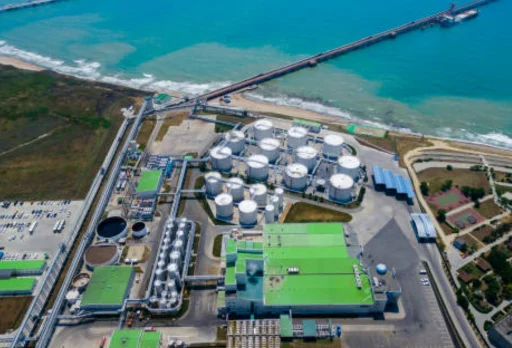
Core Technologies Behind Modern Desalination
Historically, the desalination landscape was dominated by thermal processes that mimicked the natural water cycle through evaporation and condensation. These methods, primarily Multi-Stage Flash (MSF) and Multi-Effect Distillation (MED), utilize thermal energy to boil seawater, leaving behind salt and impurities. MSF, in particular, operates by flashing a portion of the water into steam in multiple stages, each at a lower pressure. While robust and capable of utilizing waste heat from power plants, thermal systems are inherently energy-intensive due to the high latent heat of vaporization required to transform water into steam. Consequently, their application is increasingly restricted to regions with abundant, low-cost energy resources, such as the Middle East, where cogeneration with power plants remains economically viable.
In contrast, the 21st century has seen a decisive shift toward membrane-based technologies, specifically seawater reverse osmosis (SWRO). Unlike thermal methods, SWRO utilizes mechanical pressure rather than heat. By forcing seawater through a semi-permeable membrane at pressures exceeding the natural osmotic pressure of the solution, the system separates pure water molecules from dissolved ions. The efficiency of SWRO has improved significantly over the last two decades, with energy consumption dropping from approximately 10 kWh/m³ in the early 1980s to below 3kWh/m³ in state-of-the-art facilities today. This reduction is largely attributed to innovations in membrane chemistry—specifically the development of thin-film composite membranes—and the integration of sophisticated Energy Recovery Devices (ERDs) that capture the hydraulic energy of the concentrated brine stream.
The Step-by-Step Desalination Process
To appreciate the complexity of a desalination facility and understand how does the desalination process work, one must view it as an industrial kidney, filtering vast volumes of saline fluid to maintain a precise chemical balance in the final output. The process is a sequential chain of high-stakes engineering interventions, where the failure of a single stage can compromise the integrity of the entire system.
From Seawater Intake to Pre-treatment Filtration
The process begins at the intake structure, where seawater is drawn from the ocean. Engineers must choose between open intakes, which utilize large-diameter pipes extending into the sea, or subsurface intakes, such as beach wells, which provide a degree of natural filtration through the seabed. To minimize the impact on marine life, open intakes are equipped with velocity caps and fine screens that reduce the speed of the incoming water, preventing the entrainment of fish and larvae.
Once inside the plant, the raw seawater undergoes rigorous pre-treatment. This stage is critical because the polyamide membranes used in the reverse osmosis stage are highly sensitive to “fouling”—the accumulation of organic matter, silt, and microorganisms on the membrane surface. Pre-treatment typically involves several sub-phases:
- Coagulation and Flocculation: Chemicals like ferric chloride are added to the water to cause small particles to clump together into larger “flocs.”
- Dissolved Air Flotation (DAF): These flocks are floated to the surface using micro-bubbles and mechanically removed. This is particularly effective during “red tide” events or algal blooms.
- Media Filtration: The water passes through dual-media layers (sand and anthracite) to remove remaining suspended solids.
- Ultrafiltration (UF): Many modern plants now use UF membranes as a final pre-treatment step to ensure a Silt Density Index (SDI) of less than 3, which is the industry standard for protecting RO membranes from colloidal fouling.
The Reverse Osmosis (RO) Heart and Post-treatment
At the center of the facility lies the RO building, housing thousands of membrane elements encased in high-pressure vessels. Here, the pre-treated water is pressurized by high-pressure pumps to levels between 55 bar und 80 bar, depending on the salinity and temperature of the feed water. As the water is forced against the membrane, it acts as a molecular gatekeeper, allowing $H_2O$ molecules to pass through while rejecting over 99.8% of dissolved salts, including Na⁺, Cl⁻, and Mg²⁺.
The resulting water, known as “permeate,” is exceptionally pure—often too pure for immediate consumption. In the post-treatment stage, the water must be “re-mineralized” to prevent it from being aggressive towards distribution infrastructure. This involves adjusting the Langelier Saturation Index (LSI) by adding carbon dioxide and lime (calcium hydroxide) or passing the water through limestone beds. This process adds essential minerals like calcium and magnesium back into the water, ensuring it is both palatable and chemically stable. Finally, a disinfectant, usually chlorine, is added to ensure biological safety throughout the distribution network.
The Physics of Energy Recovery Systems
Given that energy accounts for a significant portion of a plant’s operating expenditure, the integration of Energy Recovery Devices (ERDs) is mandatory. The physics of these devices is centered on the principle of hydraulic pressure transfer. When the high-pressure brine leaves the RO membrane, it still contains approximately 95% of the energy provided by the high-pressure pump.
Modern facilities primarily utilize isobaric pressure exchangers. These devices allow the high-pressure brine to come into direct contact with the low-pressure feed seawater within small cylindrical chambers. Through a process of positive displacement, the pressure is transferred directly from the brine to the seawater with an efficiency often exceeding 98%. This technological leap has effectively decoupled water production from high energy costs, allowing SWRO plants to operate with a total energy intensity that is now approaching the theoretical minimum required by the laws of thermodynamics.
Brine Management and Environmental Discharge
For every liter of fresh water produced, approximately 1.1 to 1.5 liters of concentrated brine are generated as a byproduct. This brine has roughly double the salinity of natural seawater and may contain trace amounts of pre-treatment chemicals. Managing this stream is a delicate balancing act between industrial production and ecological preservation.
Modern plants employ sophisticated discharge systems to mitigate environmental impact. High-velocity diffusers are installed at the end of the outfall pipes to promote rapid mixing of the brine with the surrounding seawater. By ensuring that the salinity levels return to ambient conditions within a very short distance from the discharge point, plants can protect local benthic communities and maintain the biodiversity of the coastal ecosystem. Some forward-thinking facilities are also exploring “Zero Liquid Discharge” (ZLD) technologies, utilizing crystallizers to recover solid salts, though these remain cost-prohibitive for large-scale municipal projects.
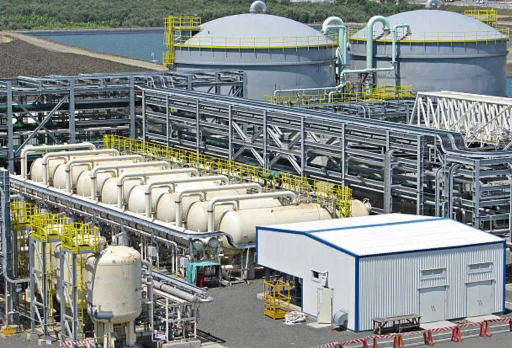
The Chemical Complexity of Permeate Quality: Boron and Bromide Removal
While the rejection of Sodium Chloride (NaCl) is the primary objective, modern desalination must also address trace elements like Boron (B), which can be toxic to certain agricultural crops even at low concentrations. Because Boric acid is a small, uncharged molecule, it often passes through standard RO membranes at neutral PH levels.
To achieve the stringent water quality standards of 2026, many facilities utilize a “Two-Pass” RO configuration. In the second pass, the PH of the first-pass permeate is artificially elevated using sodium hydroxide (NaOH). This shift in chemical equilibrium converts Boric acid into Borate ions, which carry a negative charge and are thus effectively rejected by the second-pass membranes. This process requires an extremely high degree of precision in chemical dosing. Automated valves must adjust the flow of caustic chemicals based on real-time PH sensor feedback, ensuring that the water chemistry remains within a narrow operational window to maximize removal efficiency while minimizing chemical waste.
Material Science: Combating Corrosion in Saline Environments
In the engineering of a desalination plant, material selection is not merely a budgetary consideration but a fundamental requirement for survival. The high concentration of chloride ions (Cl⁻) in seawater creates an environment that is aggressively corrosive to traditional engineering metals. Chloride ions are particularly adept at penetrating the passive oxide layer on the surface of stainless steel, leading to pitting and crevice corrosion.
To quantify a material’s resistance to this phenomenon, engineers utilize the Pitting Resistance Equivalent Number (PREN), calculated as PREN = %Cr + 3.3 × (%Mo + 0.5%W) + 16 × %N. For the high-pressure sections of an SWRO plant, materials must typically possess a PREN value greater than 40. This necessitates the use of Super Duplex Stainless Steels (such as Grade 2507). These alloys offer a balanced austenitic-ferritic microstructure, providing both high mechanical strength and exceptional resistance to stress corrosion cracking. In the low-pressure sections, materials like Glass-Reinforced Plastic (GRP) or High-Density Polyethylene (HDPE) are preferred due to their total immunity to electrochemical corrosion, though they lack the pressure-bearing capacity required for the core RO process.
Alloy Grade | Common Name | Typical PREN | Corrosion Resistance Level | Ideal Desalination Application |
SS 316L | Marine Grade | ≈ 24 | Low (Pitting Risk) | Potable Water / Low Salinity |
SS 904L | High Alloy | ≈ 35 | Mäßig | Pre-treatment Brine Handling |
2205 Duplex | Duplex-Stahl | ≈ 35 | Hoch | Standard Salinity Pipes |
2507 Super Duplex | Super Duplex | > 40 | Exceptional | High-Pressure RO Racks |
Titanium Gr. 2 | Pure Titanium | N/A (Total) | Maximum | Heat Exchangers / High Heat |
Key Infrastructure and Components of a Desalination Plant
The mechanical integrity of a desalination plant is defined by its components, which must withstand some of the most corrosive environments in the industrial world. Beyond the membranes themselves, the infrastructure consists of:
- High-Pressure Pumps: Often the largest energy consumers in the plant, these pumps must be capable of continuous, high-output operation.
- Energy Recovery Devices (ERD): These units, such as isobaric chambers or Pelton turbines, transfer the pressure from the brine stream back to the incoming feed water, recovering up to 98% of the hydraulic energy that would otherwise be wasted.
- Piping Systems: Due to the high chloride content of seawater, standard carbon steel is insufficient. Engineers utilize Glass-Reinforced Plastic (GRP), High-Density Polyethylene (HDPE), or high-grade alloys like Super Duplex Stainless Steel to prevent catastrophic corrosion.
- Automated Valve Systems: These components serve as the nervous system of the plant, regulating flow rates, controlling pressure gradients, and isolating sections of the facility for maintenance. The reliability of the actuators driving these valves is paramount to preventing water hammer and ensuring the safety of the membrane vessels.
Operating Challenges: Energy, Corrosion, and Maintenance
Operating a desalination plant is an exercise in managing three persistent threats: energy costs, material degradation, and biological fouling. Energy remains the dominant Opex (Operating Expenditure) variable, typically accounting for 35% to 50% of the total cost of produced water. Even minor fluctuations in pump efficiency or pressure loss across a valve can lead to significant financial implications over the plant’s 25-year lifespan.
Corrosion is the second major challenge. The high concentration of Cl⁻ ions in seawater facilitates pitting and crevice corrosion, especially in stagnant areas or at the joints of valves and pumps. If the execution of the material selection is flawed, the structural integrity of the high-pressure system can be compromised within months. Furthermore, bio-fouling requires a constant regimen of chemical dosing and “Clean-In-Place” (CIP) cycles, where the RO membranes are washed with specialized acidic or alkaline solutions to restore flux. These maintenance activities require precise automation to ensure that aggressive cleaning chemicals do not leak into the potable water stream.
Optimizing Performance Through Advanced Flow Control
In the pursuit of operational excellence, the industry has shifted its focus from the membranes themselves to the systems that control them. Optimization is no longer just about the chemistry of the water; it is about the precision of the mechanics.
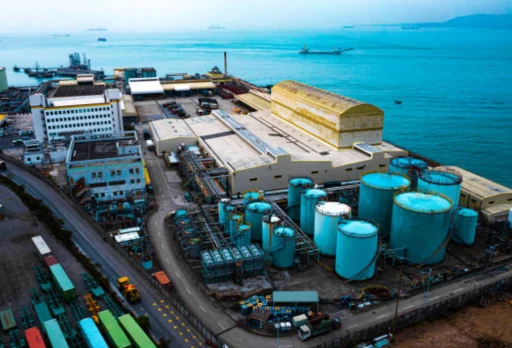
The Importance of Precision in Pressure Regulation
The performance of an RO membrane is governed by the Net Driving Pressure (NDP). If the pressure is too low, the water production rate drops; if it is too high, the energy cost spikes and the risk of membrane compaction increases. Precise flow control, achieved through the synchronization of Variable Frequency Drives (VFDs) and high-performance automated valves, allows the plant to adapt to changes in feed water temperature and salinity in real-time. For instance, as seawater temperatures rise in the summer, its viscosity decreases, requiring a recalibration of the pressure set-points to maintain a constant flux without over-stressing the system.
Reducing Downtime with Reliable Automated Valving
Downtime is the enemy of the levelized cost of water. In a facility with thousands of automated valves, the failure of a single actuator can lead to an unscheduled shutdown of an entire RO train. High-reliability actuators—both pneumatic and electric—are essential for managing the frequent cycling required by pre-treatment backwashing and CIP procedures. By utilizing actuators with high duty-cycle ratings and integrated diagnostics, plant operators can move from reactive maintenance to a predictive model, identifying a slow-closing valve before it causes a pressure surge that could rupture a membrane.
Decentralized Solutions: The Rise of Modular SWRO Systems
A significant shift in global water strategy is the transition from centralized megascale plants to decentralized, modular seawater reverse osmosis (SWRO) systems. These containerized units are increasingly deployed in remote coastal resorts, offshore oil platforms, and disaster relief zones where traditional infrastructure is nonexistent. While the modular approach offers rapid deployment and lower initial capital expenditure, it presents a unique engineering paradox: spatial density versus component serviceability.
In a containerized plant, every cubic centimeter is a premium asset. This compression necessitates the use of “low-profile” automated valves and compact actuators that do not sacrifice torque for their reduced footprint. Furthermore, because these units are often operated in isolated geographies with limited technical staff, the diagnostic intelligence of the hardware is paramount. The integration of industrial protocols like Modbus or Profibus allows for remote monitoring and predictive troubleshooting from halfway across the globe. By digitizing the physical movement of the valve, we effectively reduce the necessity for on-site intervention, ensuring water security in regions where a single component failure could otherwise lead to a localized humanitarian crisis.
Vincer: Precision-Engineered Valve for Harsh Saline Environments
In the punishing environment of a modern seawater reverse osmosis (SWRO) facility, standard valves often fail due to salt-spray corrosion and mechanical fatigue. Vincer bridges this gap with specialized elektrisch und pneumatisch betätigte Ventile engineered specifically for the rigors of saline water treatment.
Our actuated valve solutions go beyond simple automation; they serve as a process safeguard. Vincer’s electric actuated valves provide high-precision modulating control, allowing for the exact regulation of flow, pressure, and temperature required to maintain membrane integrity. While generic equipment struggles with high-frequency operation, Vincer automated valves are tested to exceed industry cycle standards, ensuring thousands of backwash sequences without any loss in torque or speed.
Why Partner with Vincer?
- Extreme Durability: IP68-rated enclosures and advanced corrosion-resistant coatings protect the entire actuated valve assembly from high-salinity air and localized leaks.
- Operative Effizienz: Achieve 2026 performance benchmarks through precise positioning and reduced energy loss.
- Economic Value: Significantly lower Total Cost of Ownership (TCO) by extending maintenance intervals and reducing unscheduled downtime.
- Global Compliance: Our ISO 9001:2015 certified processes deliver actuated valves backed by SIL, ATEX, and FDA certifications.
At Vincer, we don’t just supply valves; we optimize systems. Elevate your plant’s reliability with actuated valve solutions designed for the world’s harshest maritime conditions.
Conclusion: The Future of Efficient Desalination
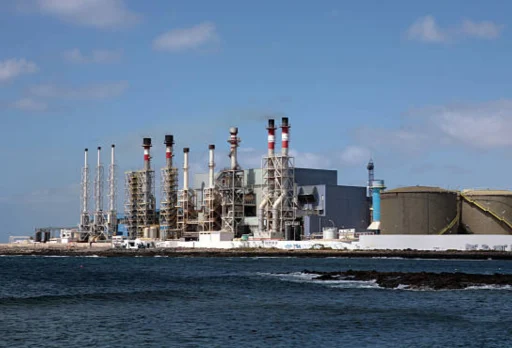
The trajectory of desalination technology is clearly aimed toward greater autonomy and theoretical energy efficiency. As we look toward the 2030s, the integration of Artificial Intelligence (AI) and Digital Twin technology will allow plants to self-optimize, adjusting every valve and pump in real-time based on predictive oceanographic data and fluctuating power grids. However, these digital advancements will always remain subservient to the physical reliability of the hardware. No algorithm can compensate for a seized valve or a corroded actuator; the “intelligence” of a plant is only as effective as its ability to execute mechanical movement.
The narrative of a desalination plant is ultimately a story of human ingenuity reclaiming the vast, saline reserves of our planet. From the initial intake of raw seawater to the final delivery of mineralized drinking water, every milliliter produced is a testament to the rigor of modern engineering. For manufacturers like Vincer, our role is to provide the resilient “muscles” that act upon the plant’s analytical “brain.” By prioritizing material science, precision actuation, and energy-conscious design, we ensure that the promise of unlimited fresh water is not merely a technical possibility, but a sustainable reality. As the industry evolves, the synergy between process logic and component durability will remain the most critical factor in quenching the world’s thirst responsibly.
FAQS
Q: Can you drink ocean water if you desalinate it?
Yes. Desalination removes over 99% of salts, minerals, and biological contaminants. After the process, the water is typically “re-mineralized” with calcium and magnesium to ensure it is healthy, non-corrosive to pipes, and tastes like high-quality spring water.
Q: Where is the largest desalination plant in the US?
The Claude “Bud” Lewis Carlsbad Desalination Plant in Carlsbad, California, is currently the largest. It produces approximately 50 million gallons of fresh water per day, providing about 10% of the water supply for the San Diego region.
Q: What is the main disadvantage of desalination?
The primary drawback is its high energy consumption. Pumping seawater through membranes at extreme pressures requires significant electricity, making desalinated water more expensive than traditional surface water. Additionally, the disposal of concentrated brine (salty byproduct) requires careful management to avoid harming marine ecosystems.
Q: How much does it cost to desalinate water per gallon?
On average, it costs between $0.003 and $0.006 per gallon. While this sounds low, it is roughly double the cost of treating water from a lake or river. However, as automation and valve technology improve, these costs continue to decline.
Q: How quickly can water be desalinated?
It is a continuous, 24/7 process. Modern Reverse Osmosis (RO) trains process water in real-time. From the moment seawater enters the intake to the moment it is ready to drink, the transit time through the plant is typically measured in minutes to hours, depending on the complexity of the pre-treatment stages.
 English
  French
  Spanish
  Italian
  German
  Dutch
Dutch  Portuguese
  Korean
  Russian
  Chinese
  Finnish