
Введение
In the contemporary industrial landscape, the management of water resources has transitioned from a basic utility function to a complex exercise in systems engineering and stochastic optimization. Water treatment is no longer merely about the passage of fluid through a series of filters; it is a highly calibrated process defined by the intersection of chemical kinetics, fluid dynamics, and digital logic. At the heart of this evolution lies Process Control—the indispensable framework that ensures a treatment plant operates within the narrow margins of safety, efficiency, and regulatory compliance.
The fundamental challenge of water treatment is its inherent variability. Raw water quality, whether sourced from a municipal intake or an industrial effluent stream, is rarely static. It fluctuates based on seasonal shifts, upstream events, and production cycles. To maintain a consistent output quality, a system must be capable of sensing these variations and executing precise adjustments in real-time. This article provides a comprehensive examination of process control architecture, the specific techniques employed to optimize treatment outcomes, and the strategic integration of hardware—specifically actuated valves—that serves as the bridge between digital decision-making and physical execution.
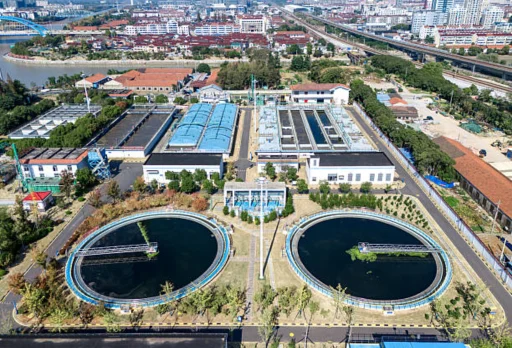
What is Treatment Process Control and Why Does It Matter?
At its most fundamental level, water treatment process control is the application of control theory to manage the physical and chemical variables of a water purification system. It is a systematic approach to maintaining a desired state—the “setpoint”—despite the continuous presence of internal and external disturbances. In the context of a treatment plant, these variables include flow rates, pressure gradients, chemical concentrations, and dissolved gas levels.
The significance of process control is rooted in three primary drivers: Operational Equilibrium, Resource Conservation, and Risk Mitigation.
- Operational Equilibrium: A treatment system is a series of interconnected unit operations. A failure in the primary clarifier cascades into the filtration stage, which in turn compromises the disinfection process. Process control provides the “connective tissue” that synchronizes these stages, ensuring that the system remains in a state of steady-state equilibrium even when input parameters fluctuate.
- Resource Conservation: In an era of escalating energy costs and tightening chemical budgets, “over-treatment” is a significant economic drain. Without precise control, operators often over-dose chemicals or over-aerate tanks to ensure a safety margin. Process control replaces this “guesswork” with algorithmic precision, reducing chemical waste and energy consumption.
- Risk Mitigation: Regulatory bodies such as the EPA and various international environmental agencies have established stringent discharge limits. Non-compliance is not merely an environmental hazard but a catastrophic legal and financial risk. Automated control provides the audit trails and the fail-safe mechanisms necessary to ensure that output quality never deviates from the legal standard.
Core Components of a Robust Process Control Architecture
To understand how a system achieves stability, we must deconstruct its architecture into its constituent layers. This hierarchy is often described as the “Sense-Think-Act” model.
- The Sensing Layer (Instrumentation): The process begins with data acquisition. High-precision sensors—the sensory organs of the system—continuously measure the state of the water. Parameters such as pH, turbidity, dissolved oxygen (DO), conductivity, and Oxidation-Reduction Potential (ORP) are converted into electrical signals (typically 4-20mA or digital protocols like Modbus). The accuracy of the entire control loop is bounded by the precision of these instruments.
- The Logic Layer (The Controller): The signals from the sensors are transmitted to a central “brain,” usually a Программируемый логический контроллер (ПЛК) or a Распределенная система управления (DCS). Here, the raw data is compared against the desired setpoints. Using algorithms—most commonly the Proportional-Integral-Derivative (PID) loop—the controller calculates the necessary adjustment. For example, if the pH level is too high, the controller determines exactly how much acid must be added to return the system to neutral.
- The Execution Layer (Actuators and Final Control Elements): This is where logic is translated back into physical action. The controller sends a command to the final control elements, which are typically pumps and actuated valves. If the sensors are the eyes and the PLC is the brain, then the actuated valves are the muscles of the system. Their ability to respond with speed, repeatability, and precision determines whether the theoretical optimization calculated by the PLC is actually realized in the physical fluid.
Key Techniques for Precision in Modern Water Treatment
The application of process control varies significantly across different treatment modalities. To achieve high-level system efficiency, engineers must deploy specific control strategies tailored to the unique physics of the process.
Advanced Chemical Dosing and pH Neutralization Loops
Chemical dosing is perhaps the most sensitive unit operation in water treatment. Whether the goal is coagulation, flocculation, or pH adjustment, the relationship between the chemical added and the resulting water quality is often non-linear.
In a traditional feedback loop, the system measures the output (the pH) and adjusts the dosing pump. However, this often leads to “hunting” or oscillation, where the system over-corrects and swings between acidic and basic states. Advanced strategies employ Feedforward Control, where a sensor measures the incoming water quality before it reaches the dosing point. The system pre-calculates the required dosage based on the influent flow and quality, using the feedback loop only for minor fine-tuning. This dual-layer approach minimizes chemical “overshoot” and ensures a stable chemical environment, which is critical for downstream biological or membrane processes.
Flow and Pressure Regulation in Membrane Filtration (RO/UF)
Membrane systems, such as Reverse Osmosis (RO) and Ultrafiltration (UF), are the workhorses of desalination and high-purity water production. These systems operate on the principle of trans-membrane pressure (TMP). If the pressure is too low, the flux (water production) drops; if it is too high, the membranes risk irreversible structural damage or accelerated fouling.
Precision control in RO systems involves the management of high-pressure pumps and concentrate control valves. Variable Frequency Drives (VFDs) allow pumps to adjust their speed based on demand, while actuated control valves modulate the reject flow to maintain a constant recovery rate. A critical pain point here is the “water hammer” effect—sudden pressure spikes caused by rapid valve closure. Robust process control utilizes slow-closing actuated valves and ramp-up logic to protect these multi-million dollar membrane assets.
Dissolved Oxygen (DO) and Aeration Control for Energy Optimization
In biological wastewater treatment, aeration is the single largest energy consumer, often accounting for 50-70% of a plant’s total electricity bill. Microorganisms require oxygen to break down organic matter, but pumping excess air into the tanks is a literal waste of energy.
Process control optimizes this by linking DO sensors to blower speeds and airflow control valves. By maintaining DO levels at a precise “sweet spot” (typically 1.5 to 2.0 mg/L), the system ensures microbial health while preventing the blowers from running at unnecessary speeds. The challenge here is the dynamic nature of the “oxygen uptake rate” (OUR), which changes as the organic load fluctuates. An optimized control strategy uses predictive modeling to adjust aeration levels before DO levels drop, ensuring that the biological reactor remains aerobic without excessive power consumption.
Strategic Approaches to Maximize System Efficiency and Compliance
Efficiency is not merely the result of buying the best hardware; it is the result of a cohesive operational strategy. To maximize the ROI of process control, organizations must adopt three strategic pillars:
- Data Integration и SCADA Visibility: Isolated control loops are inefficient. Modern plants utilize Диспетчерское управление и сбор данных (SCADA) systems to provide a centralized view of the entire facility. This allows for “Global Optimization,” where the operation of the intake pumps is coordinated with the capacity of the filtration stage and the demand of the distribution network.
- Predictive Техническое обслуживание through Analytics: A control system that only reacts to failures is a liability. By analyzing data trends (e.g., a gradual increase in the torque required to turn an actuated valve), the system can predict a component failure before it occurs. This shifts the maintenance model from “reactive” to “proactive,” significantly reducing unplanned downtime.
- Standardization of Control Logic: Consistency in programming and hardware interfaces ensures that the system is easy to troubleshoot and scale. Using standardized protocols (like EtherNet/IP or HART) allows for seamless communication between sensors from one manufacturer and valves from another, preventing “vendor lock-in” and ensuring long-term system flexibility.
Addressing Operational Pain Points: Reliability, Maintenance, and Environment
Despite the sophistication of modern algorithms, the “physical layer” of water treatment remains a brutal environment. Process control systems often fail not because of a coding error, but because the hardware could not withstand the reality of the field.
- Окружающая среда Stressors: Water treatment facilities are often characterized by high humidity, corrosive chemical vapors (such as chlorine or ozone), and extreme temperature fluctuations. Electronic components in actuators and sensors must be rated for IP67 or IP68 protection to prevent moisture ingress.
- Техническое обслуживание Intensity: In many municipal settings, labor is the most significant constraint. A process control system that requires constant manual calibration or frequent hardware replacement is counter-productive. The “Holy Grail” of process control is the Low-Maintenance Loop, where instruments are self-cleaning and actuators are lubricated for life.
- Reliability and Redundancy: In critical applications, such as drinking water disinfection, a control failure is not an option. Strategic process control incorporates “Redundancy Logic,” where two sensors monitor the same variable. If their readings diverge beyond a certain threshold, the system triggers an alarm or switches to a “fail-safe” manual mode.
Elevating Process Stability with Vincer Actuated Valve Solutions
While the PLC provides the computational logic, the physical stabilization of the process relies entirely on the final control element. This is where Vincer Actuated Valve Solutions bridge the gap between digital command and fluid reality. Leveraging 15 years of engineering expertise and 800+ successful global projects, Vincer addresses the industry’s most persistent bottleneck: Control Lag.
Process instability often arises from hysteresis—the mechanical friction and power deficits that cause valves to “stutter” rather than glide. Vincer eliminates this through high-torque actuators and 30+ patented technologies. Our пневматические решения offer sub-second response times (<1s) for high-frequency regulation, while our электрические клапаны provide seamless system integration and superior energy efficiency.
Quality is verified through rigorous causal logic. Operating under ISO 9001:2015 standards with a product pass rate of ≥95%, Vincer utilizes high-grade, corrosion-resistant alloys to ensure the “mechanical muscle” of your plant does not degrade in harsh chemical environments. By minimizing the control “dead-band,” our solutions allow your automation logic to reach its peak ROI, translating directly into reduced chemical waste and unwavering effluent compliance. It is not merely a component; it is the structural guarantee of your process equilibrium.
Future Trends of Water Treatment Process Control
As we look toward the horizon, process control is moving from “Automation” to “Autonomous Operation.” Several key trends are reshaping the field:
- The Digital Twin: Engineers are now creating virtual replicas of water treatment plants. By running “what-if” scenarios in the digital twin, they can test new control strategies without risking the physical facility. This allows for aggressive optimization of energy and chemical usage.
- Edge Computing in Actuators: The intelligence is moving closer to the pipe. Modern “Smart Actuators” can now process sensor data locally, making millisecond-level adjustments without waiting for a command from the central PLC. This reduces the load on the network and improves response times.
- AI and Machine Learning (ML): While PID loops are excellent for linear processes, AI excels at managing the complex, non-linear biological processes of wastewater treatment. ML algorithms can analyze years of historical data to predict how a storm event will affect influent quality, allowing the plant to “pre-adjust” its settings 24 hours in advance.
Заключение
Water treatment process control is the silent guarantor of modern civilization’s most precious resource. It is a discipline where the abstract world of mathematics and algorithms meets the visceral reality of chemistry and high-pressure fluid. From the precision dosing of pH-adjusting chemicals to the energy-intensive management of aeration blowers, every facet of a treatment plant depends on the integrity of the control loop.
Maximizing system efficiency requires more than just sophisticated software; it requires a deep respect for the physical components that execute that software’s commands. By integrating high-precision instrumentation, robust logic, and superior execution hardware like Vincer Actuated Valve Solutions, water treatment professionals can achieve a level of stability and efficiency that was once thought impossible. As we move into an era of increasing water scarcity and environmental scrutiny, the mastery of process control will be the defining characteristic of the world’s most successful water utilities and industrial producers. The goal is clear: a system that is not only automated but truly optimized—delivering the highest quality water at the lowest possible cost to the planet and the bottom line.
 English
  French
  Spanish
  Italian
  German
  Dutch
Dutch  Portuguese
  Korean
  Russian
  Chinese
  Finnish