
Inleiding
The industrial environment is now undergoing a change as radical as it is irreversible. The transformation of human intervention to autonomous systems in the world of power generation is not just an upgrade of equipment, but a re-arrangement of the relationship between energy, information and mechanical precision. Traditionally, the working of a power plant was a manual task, based on the haptic sense of experienced operators who read the analogue indicators and turned the steam valves with a localized sense of the requirements of the system. We are living in the age when the power plant automation paradigm has re-established the limits of what can be done in terms of reliability and output.
The gradual hand in the tempest of data- this is, perhaps, the most appropriate manner to define the role of modern automation. With power producers facing global energy markets that are becoming more volatile and safety regulations increasingly straining their hold on the carbon-intensive processes, the margin of error has become almost zero. For many, a lack of visibility into various processes was once a barrier to efficiency; today, automation is the process by which complicated thermodynamics are balanced with real time economic demand to help operators make better decisions. It is no longer enough to merely produce power but to produce it with an optimal heat rate, minimum emissions, and maximum equipment life, thereby optimizing plant performance. This paper discusses the complex structure of power plant automation, shifting away to the upper level of strategic advantages to the mechanical elements, the actuated valves, which are the final decision makers of system performance.
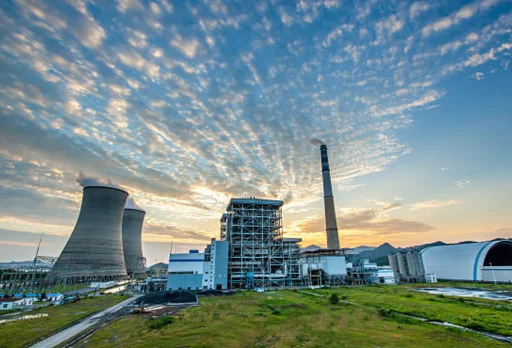
Key Benefits of Implementing Power Plant Automation
Automation of a power generation facility is not often a decision that is made based on one factor. Instead, it is a product of a tiring cost-benefit analysis that takes into account the whole lifecycle of the generating assets. When we measure the effect of these systems, the benefits are usually concentrated into two categories that are dominant, economic optimization and risk mitigation, ultimately providing greater operational control.
Enhancing Operational Efficiency and Fuel Economy
The Rankine cycle is at the core of any thermal power plant, and it is a thermodynamic cycle in which the aim is to transform heat into mechanical work in the most efficient way possible. The plant is usually at a sub-optimal equilibrium in a manual or semi-automated environment. The design heat rate is deviated due to fluctuations in fuel quality, ambient temperature and grid load.
Thousands of data points are continuously monitored by intelligent control systems, especially those based on Advanced Process Control (APC), to carry out real time optimization. These systems reduce energy drift and lower energy consumption by changing boiler combustion parameters, feed-water flow, and turbine inlet pressures with a degree of accuracy that is beyond human ability. The outcome is a quantifiable decrease in fuel usage per megawatt-hour of generation, leading to significant cost savings and lower maintenance costs. A 0.5 percent increase in the fuel economy in a 500MW coal or gas-fired plant would save millions of dollars per year. Moreover, automation ensures greater reliability by decreasing the cycling stress on parts, increasing the mean time between failures (MTBF), and decreasing the rate of expensive cold starts, which are infamous due to their high fuel consumption and mechanical damage.
Improving Plant Safety and Environmental Compliance
Outside the balance sheet, automation is the main assurer of safety in high-pressure and high-temperature conditions. Contemporary Burner Management Systems (BMS), Emergency Shutdown Systems (ESD), and safety systems are designed to work on a logic of redundancy which is fail-safe. These systems are intended to facilitate an automatic shutdown upon the identification of potential issues, like a loss of flame or a sudden rise in pressure, and take protective measures in milliseconds, much quicker than any operator could react. This quick reaction helps to avoid serious problems and disastrous equipment breakdown in hazardous environments, saving the lives of the plant staff.
Automation is the driver of regulatory compliance as far as the environment is concerned. The industry regulations now require constant emissions monitoring and compliance with the limits of NOx, SOx, and particulate matter. Automated control loops can be used to inject ammonia accurately in Selective Catalytic Reduction (SCR) systems or to adjust the parameters of flue gas desulfurization (FGD). Automation allows the plant to be a responsible citizen of the global ecosystem by keeping the combustion within a very narrow ideal window, providing greater control without compromising its operational objectives.
Core Technologies Driving the Automated Power Plant
An automated power plant architecture is based on a hierarchy of technologies that are intended to capture, process, and respond to data across key processes. At the base level, we have the Operational Technology layer which comprises sensors and actuators. Most importantly above this is the control layer which is conventionally dominated by Programmable Logic Controllers (PLCs) and Distributed Control Systems (DCS).
The brain of the automated plant is the DCS. A DCS, in contrast to a centralized computer, spreads control among different subsystems, so that failure in one area does not cause a complete system failure. This decentralized design is critical to the high-availability needs of the power industry. This layer has been supplemented in recent years by Supervisory Control and Data Acquisition (SCADA) systems and information systems, which offer long-range monitoring and control, especially in the management of geographically distributed renewable resources or substations.
The automated power plant is becoming more dependent on new technologies like Artificial Intelligence (AI), Digital Twins, and machine learning as it moves into the Industry 4.0 era. A Digital Twin is a computerized model of the physical plant that simulates performance using real-time data. Operating in the digital world, the operators can forecast the impact of a certain change in fuel or a scheduled predictive maintenance on the overall health of the plant by running the so-called what-if scenarios. This changes the paradigm of maintenance to be reactive or scheduled to predictive, whereby parts are replaced precisely when they are on the verge of failure, as opposed to being replaced on a random calendar schedule.
A Strategic Roadmap for Automation Implementation
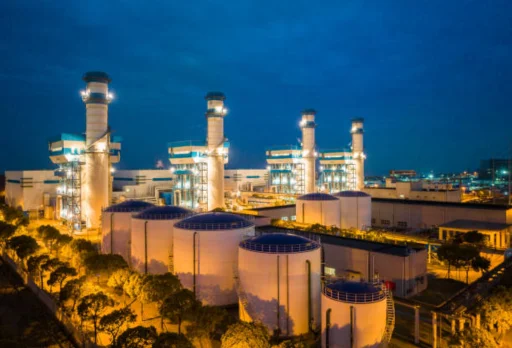
The adoption of a holistic automation strategy to incorporate power plant automation solutions is not a one-time process but a multi-year process that must be planned strictly. A Systemic Audit should be the initial phase of any roadmap. This includes the evaluation of the present condition of the mechanical infrastructure and legacy assets. The belief that advanced software can be used to offset the shabby hardware is a fallacy. Unless the underlying valves, pumps and turbines can move with precise control, the most sophisticated DCS in the world will be useless.
After the audit, the emphasis is on “Standardization.” Automation has been introduced in a fragmented manner in many legacy systems, creating a technological archipelago of isolated systems of various vendors, which lack effective communication. To implement a strategy, it is necessary to adopt universal communication protocols, including Modbus, HART, or Foundation Fieldbus. This guarantees interoperability throughout the plant.
The last phase is “Phased Deployment and Personnel Training. Instead of trying to do a complete overhaul of the plant in one outage, successful operators usually begin with non-critical subsystems, like water treatment or coal handling, and then proceed to the island of power, the boiler and turbine control. This will enable the workforce to be accustomed to the new digital tools with minimal risk to the main source of revenue of the plant. More importantly, this roadmap should have the human component. The more the plant is autonomous, the less the operator is a manual adjuster, the more he is a system supervisor. The training programs should be data literacy and emergency intervention-oriented so that the staff can be prepared to deal with the complexities of a digitized environment.
Overcoming Critical Challenges in System Integration
The road to a fully automated plant is full of technical and organizational challenges. The most important of these is the problem of Legacy Integration. The majority of the current power plants were constructed many decades ago, and they were intended to be controlled in an analogous manner. The retrofitting of these facilities needs a profound knowledge of how to close the gap between the 40-year-old mechanical equipment and the 21st-century digital interface.
To navigate the fog of legacy infrastructure, one needs to be committed to cybersecurity. With the shift of power plants to cloud-based monitoring and not air-gapped, they are now targets of advanced cyber-attacks. The integrity of the control network is no longer an IT issue, but a national security and operational safety concern. This requires the adoption of the so-called Defense in Depth measures, such as hardware-based firewalls, encrypted communication, and stringent access control measures.
In addition, there is the Human Capital Gap. Automation does not remove human expertise; it changes the character of the expertise. The contemporary plant operator needs to be as familiar with data analytics as with mechanical thermodynamics. The resistance to change and the need to offer the current workforce the required retraining is one of the most challenging issues that have been lingering in the industry.
The Impact of Automation on Renewable Energy Integration
With the world moving towards a decarbonized grid, the purpose of traditional power plants is evolving. We are shifting to a Flexible Generation model as opposed to a Base Load model. Intermittent sources of renewable energy, such as wind and solar, cause sudden changes in grid frequency and voltage. In order to stabilize smart grids, the old fossil-fuel and hydro plants should be capable of increasing and decreasing their output at a pace never seen before.
This flexibility is only made possible through automation technologies. A combined-cycle gas turbine (CCGT) utilizing natural gas can vary its output by a few megawatts per minute using high-speed control loops without reaching thermal stress limits. Automation, in this case, serves as a buffer, which takes the variability of the sun and wind and offers environmental benefits. In the absence of sophisticated automation, the adoption of renewable energy sources would cause frequent grid instabilities and localized blackouts. The future automated power plant is not only an electricity generator; it is a supplier of “Grid Inertia” and frequency regulation services for the smart grids of tomorrow.
Tailoring Automation to Diverse Power Generation Sectors
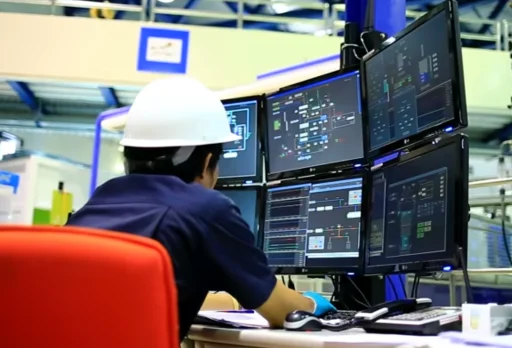
Automation is not a single-purpose solution but a customizable science that is tuned to particular fuel physics and operational stressors. Although the logic behind a Distributed Control System (DCS) is always the same, the architecture and performance standards are highly differentiated to meet the physics of the application.
In nuclear power, the paradigm is characterized by the concept of Defense in Depth, which puts deterministic safety over economic optimization. Instrumentation and Control (I&C) systems are based on SIL 3 or 4 standards, with 2-out-of-3 voting logic, based on Redundancy and Diversity. This design means that the failure of one sensor or a software bug will not affect the stability of reactors. Although hardware needs to be radiation-hardened and seismically qualified, the real treasure is in conservative, fail-safe control loops that are independent of the main efficiency-driven DCS.
Mass and inertia are handled by hydroelectric and geothermal industries. In hydro, Governor Systems use PID algorithms to control water flow to stabilize grid frequency and reduce the so-called water hammer effect, which is a surge in pressure that can destroy civil infrastructure. Geothermal automation focuses on pressure-temperature balance, which incorporates real-time chemical analysis to control flow and avoid scaling of heat exchangers. These industries demand high-torque execution hardware to attain optimum Water-to-Wire efficiency in corrosive or high-pressure environments while adhering to environmental regulations.
Combined Cycle (CCGT) plants are the agility experts of the grid. Automation should coordinate the high rate of firing of gas turbines with the slower thermal inertia of Heat Recovery Steam Generators (HRSG). Fast-Start automation applies Model Predictive Control (MPC) to predict thermal stress and modify ramp rates based on it. This enables the plant to respond to rapid grid demand without structural cracking of high-pressure headers. CCGT automation has been successful because it can strike a balance between market urgency and long-term mechanical integrity via damage-minimizing control.
Automation provides resilience, efficiency, and responsiveness of power generation by integrating advanced control logic with physics that is specific to the sector to meet modern energy needs.
The Hardware Foundation: Why High-Performance Actuated Valves are Non-Negotiable
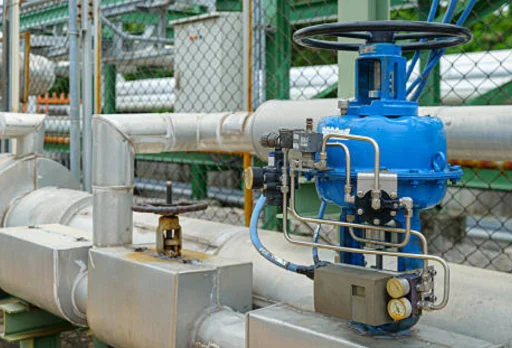
Although the digital brain of the plant is given most of the focus, the field devices do the actual work. The actuated valve is the bridge between bits and atoms in the context of fluid dynamics. All the calculations of the DCS, whether to change the flow of the steam to the turbine or the cooling water to the condenser, ultimately lead to a signal to a valve actuator.
When the valve is slow to react, has a condition known as stiction, or does not give correct position feedback, then the whole automation loop is invalidated. A standard valve will soon fail in high-frequency cycling conditions , leading to unplanned downtime, as is common in modern flexible plants. The critical components that guarantee the commands of the software are faithfully executed are the high-performance electric actuated valves and pneumatic actuated valves. These valves should be engineered to throttle accurately and quickly, frequently at severe pressures and temperatures. A single faulty valve of $5,000 can cause a forced outage that costs 500,000 a day. Thus, the choice of smart-enabled, high-quality hardware is not a procurement aspect; it is a strategic aspect.
The choice of the actuation technology is a matter of balancing the mechanical needs and the control logic. Although the signal is furnished by the automation system, the particular requirements of the loop, such as the quick isolation necessary in the event of a turbine trip or the granular throttling necessary with boiler feed-water, will determine the selection of either an electric or a pneumatic system. To help in this important engineering analysis, the table below outlines the performance features and common utility-scale uses of the two technologies.
Functie | Elektrisch bediende kleppen | Pneumatisch bediende kleppen |
Controle Precisie | Exceptional. Ideal for complex modulating and precision throttling (0.1\% resolution). | High. Achieved through high-performance digital positioners. |
Reactiesnelheid | Moderate. Governed by motor gearing; consistent and repeatable. | Rapid. Capable of near-instantaneous strokes for emergency isolation. |
Fail-Safe Logic | Requires battery backup or supercapacitors for emergency positioning. | Native. Spring-return mechanisms provide mechanical fail-safe reliability. |
Integration Method | Direct digital integration via Modbus, HART, or Profibus protocols. | Requires I/P (Electro-Pneumatic) conversion to interface with DCS. |
Maintenance Profile | Low. Minimal moving parts; no requirement for compressed air infrastructure. | Moderate. Requires clean, dry instrument air and periodic seal inspection. |
Typical Power Plant Application | Cooling water systems, chemical dosing, and remote auxiliary flow control. | Turbine bypass, main steam isolation, and high-frequency control loops. |
Vincer: Your Strategic Partner in Power Plant Flow Control
In the architecture of power plant automation, systemic integrity is fundamentally limited by its weakest mechanical link. Vincer bridges this gap as a global leader in high-performance flow control, predicated on the principle that “Smart Automation” necessitates “Smart Hardware.” With a legacy of engineering excellenceand industry expertise and over 30 patents and certifications—including ISO 9001:2015, SIL, and ATEX—Vincer delivers the precision required for the most volatile industrial environments.
Our elektrische en pneumatisch bediende kleppen are designed for more than mere operation; they are engineered for seamless integration. Maintaining a 95%+ qualification rate, Vincer hardware bridges the integration gap between legacy physical assets and modern digital architectures through versatile signal protocols and custom mounting solutions. Whether navigating complex retrofits or optimizing new utility-scale builds, Vincer provides energy-efficient, cost-effective components that withstand demanding duty cycles. Choosing Vincer is not a simple procurement of a valve; it is a strategic investment in a rigorously tested asset. We ensure that when your automation logic dictates a critical adjustment, our valve executes with absolute, unwavering reliability.
Conclusie
The automation of power plants is the natural outcome of the pursuit of efficiency, safety, and sustainability. As we have observed, the new technologies that have led to this change, DCS and AI to the advanced logic of renewable integration, enabling fast decisions in the best of modern engineering. Nevertheless, the effectiveness of these digital systems is still essentially pegged on the quality of the mechanical hardware at the field level.
The path to a completely independent power plant is complicated and needs a roadmap that acknowledges the strength of new software and the physics of fluid control. With the emphasis on the synergy between the state-of-the-art control logic and the state-of-the-art hardware, the operators of the plants will be able to make sure that their facilities are not only up to date with the current standards but also robust enough to dominate the energy markets of tomorrow. Ultimately, power plant automation is the art of transforming information into action and in that conversion, all the parts, the algorithm, the valve, etc., must act with flawless precision.
FAQS
Q: What is power plant automation?
Power plant automation is the integration of intelligent control systems (such as DCS and PLC) with information technology to manage the energy production process automatically. Its primary objective is to maximize generation efficiency, equipment longevity, and grid stability while minimizing manual intervention and ensuring peak operational safety while minimizing human intervention.
Q: What are the 4 types of automation systems?
In the industrial context, these are categorized as:
- Fixed Automation: Designed for high-volume, repetitive tasks with a rigid sequence (e.g., coal conveyor systems).
- Programmable Automation: Systems where the sequence of operations can be changed via software (e.g., PLCs executing specific logic).
- Flexible Automation: Capable of producing a variety of tasks or handling shifting conditions with virtually no downtime for changeovers.
- Integrated Automation: A fully digitalized facility where the entire plant operates under a single, unified computer architecture (e.g., a total DCS solution).
Q: What is SCADA and PPC?
- SCADA (Toezichthoudende besturing en gegevensverwerving): A high-level software system used for monitoring and data collection. It gathers real-time data from plant sensors and provides a remote interface for operators to make informed decisions.
- PPC (Power Plant Controller): A specialized hardware controller (common in renewable energy) used to regulate power output. It ensures the plant’s active and reactive power meets “Grid Code” requirements, maintaining frequency and voltage stability.
Q: What are the 4 stages of process automation?
- Measurement: Sensors gather physical parameters such as pressure, temperature, and flow rate.
- Evaluation: The controller (the “brain”) processes this data based on programmed logic and setpoints.
- Control: Actuators (the “muscle,” such as actuated valves) execute physical movements based on the controller’s signal.
- Optimization: Continuous feedback loops fine-tune the process to achieve the highest possible efficiency and stability.
 English
  French
  Spanish
  Italian
  German
  Dutch
Dutch  Portuguese
  Korean
  Russian
  Chinese
  Finnish